
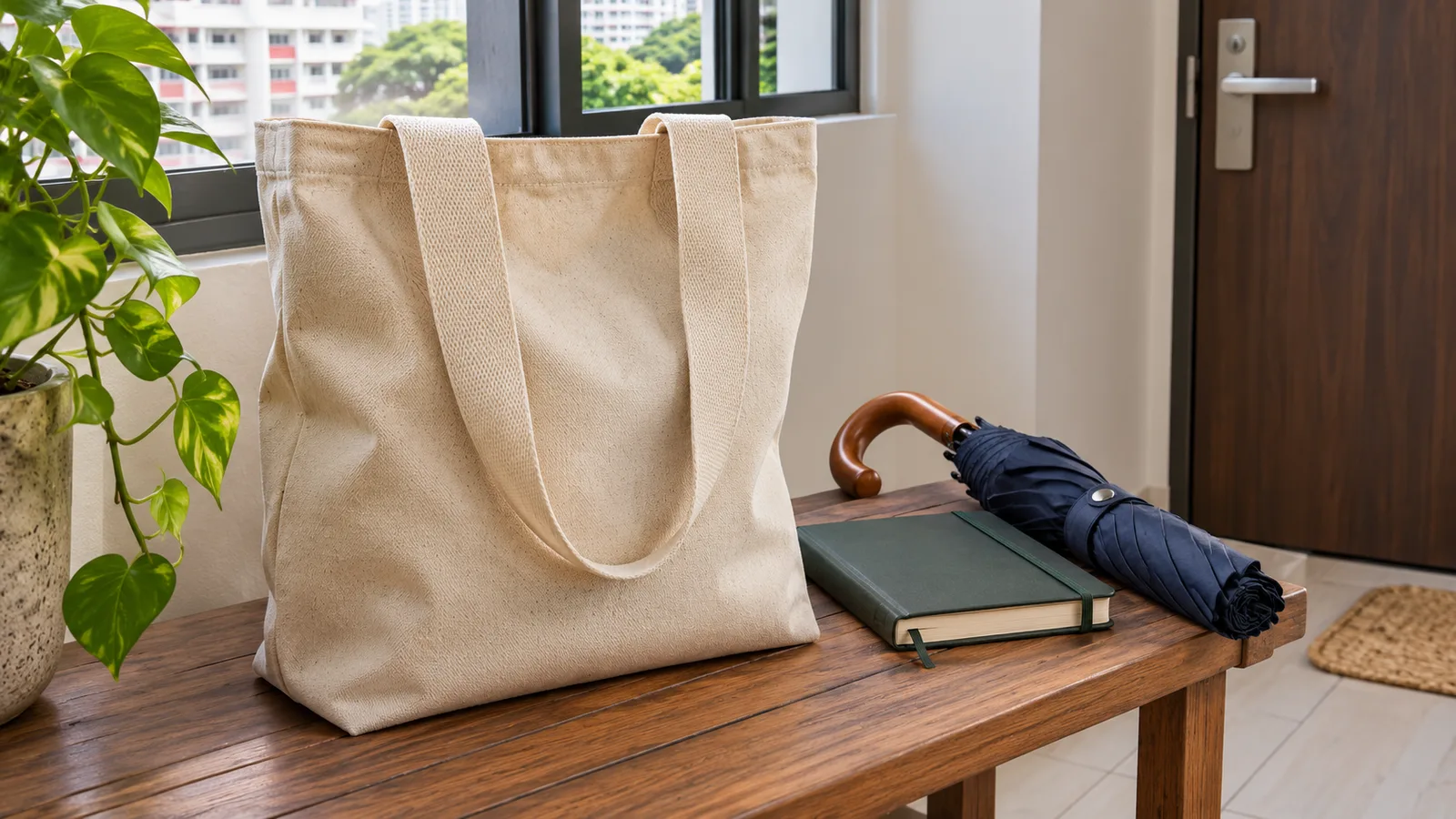
Buy for the width, height and access you actually need
Choose your largest frequent load. It might be a laptop and water bottle, groceries, a book and umbrella or a set of clothes and shoes. Lay it out, then measure each item with its protective case. Take the bag’s smallest relevant dimension, such as its opening or the pocket you want to use, because the body size can look larger than the space you can reach.
| Product | Published specification | Useful check before purchase |
|---|---|---|
| UNIQLO Canvas Tote Bag, item 485677 | 30 cm base width, 35.5 cm height, 13 cm depth. The listed handle length is 56.6 cm. The product page describes six internal pockets and a side drawstring. | Measure the opening and the load you will place inside, and find out how the closing system works for you. |
| IKEA FRAKTA medium, item 40611112 | 45 × 18 × 45 cm and 36 L. The Singapore page displayed S$0.90 at the check. | Suitable to compare for errands with larger objects. Check how you would keep smaller items inside and whether you can carry the wider shape on the planned trip. |
The exact sizes are on the UNIQLO product listing and IKEA product listing. A handle length describes the strap’s measurement. For shoulder use, try the drop from the top of the opening to where the strap rests and test with your normal clothes.
Try carrying your usual load through a short journey
Test the bag with the amount you will actually carry. Walk, sit and turn through a doorway. Notice whether the strap stays in place and whether the base bumps your leg or seat. A wider utility bag may work well for bringing something directly home. For a daily commute, the question is how it behaves when it must fit beside you, under a table or on a crowded route.
Write down which handle you intend to use. A shorter strap can work better by hand, while a longer drop can leave room for comfortable shoulder use. If the bag is for someone else, ask the seller about exchange or returns and compare their normal load. For a work device, use the laptop buying guide to find the size and accessories you might need to carry.
Read the cleaning and return policy before making it an everyday bag
Check the exact care label or the model page. A canvas exterior, separate synthetic lining and any printing or decorative material can call for different treatment. Ask whether the item can be washed, wiped or needs spot cleaning, and whether a liner detaches. For a grocery bag, plan how you handle a leak or damp load and where you will dry the bag before storing it.
Compare the delivered price, any printing or customisation and the cost of a separate protective insert or pouch. If buying for an event or several people, check one sample and its print before ordering the lot. Keep a record of the product code and allow time for exchange or collection before you need to start using the bag.
Use the base, opening and handle for different parts of the test
The tote may taper from its opening to a smaller base. On the UNIQLO example, the published 30 cm figure is the base width. If your largest item is 32 cm including a case, ask whether it can stay in the intended position and whether the opening actually closes with it in place. An item that enters diagonally can still make a bag hard to carry. Measure the fit, depth and angle together.
For a utility bag, imagine the most awkward load. Put a long carton on a cardboard outline of the base, map its centre of weight and decide whether you can keep it level while carrying it. If you need to bring a wet or heavy object home, check the seller’s use and care instructions. Plan how you will carry and clean it before using the same tote for a laptop or papers.
Pick a configuration you can use in Singapore rain
Ask which part of the bag, lining or closure the maker says will keep the contents dry. A water-resistant outer material can still leave an opening exposed. Use a case suitable for the item you will carry and decide where a wet umbrella will go. If you stop for a meal on the way home, check whether the tote can stand beside you or needs a hook and whether the base can be cleaned afterward.
When you want a tote as a gift or for printing, buy a sample first and verify where a logo or artwork could go. Compare that printable area with seams, pockets and straps. Use the print specification checklist for questions about proof approvals and deadlines if the tote order also includes packaging or labels.
Check everyday storage before buying a larger bag
Put the folded or empty bag in the place you will store it between errands. For a commute, reserve space at work for the same size when full. Keep one small pouch for loose items if the model has few pockets and test where you will put it before ordering the bag.
Sources
- UNIQLO Singapore Canvas Tote Bag 485677Product sizes, material, opening and pockets.
- IKEA Singapore FRAKTA medium 40611112Published 36 L size, Singapore price and use information.