
Choose by recipient, budget and luggage
| Buy for | Specific gift and price | Where to look and how it packs |
|---|---|---|
| Several people on a small budget | Cat Socrates lists individual Singapore City postcards at S$3.50. The designs include CHIJMES and a Chinatown eating house. For magnets or pouches at Bugis Street, compare stall prices before buying multiples. | Cat Socrates at 78 Yong Siak Street or 448 Joo Chiat Road. Pack cards flat against a notebook. Shop stock and available designs can differ from the website. |
| Someone who loves kaya toast | Ya Kun sells a 290 g kaya jar. Its FAQ also lists gift packs subject to outlet stock, and says the kaya contains eggs. Ask the outlet for its current price. | Try Ya Kun at 18 China Street in Far East Square or its Funan branch at #B2-06. Use checked luggage if the container exceeds 100 ml and check the destination's food rules. |
| A family or colleagues | Mdm Ling Bakery lists a six-cookie Singapore Heritage Travel Tin for S$14.80 and a 12-piece Nanyang Gift Set for S$18.80. The travel tins show shophouses, city landmarks or tile patterns. | Jewel Changi Airport, Level 1, #01-231. Choose the individually wrapped cookies for sharing and keep the original outer packaging for customs. |
| A tea drinker | TWG lists its 15-bag Singapore Breakfast Tea at S$30, a green and black tea blend with vanilla and spices. Confirm stock or choose another blend at the counter. | Use TWG's store locator for a city boutique or Changi's directory for your terminal. A box of dry tea bags takes less space than a bulky tea set. Check plant-product import rules. |
| Someone who likes fragrance | Sifr Aromatics lists Singapore-made samples at S$7 for 2 ml and travel sprays at S$30 for 10 ml. | 42 Arab Street. Try the fragrance at the atelier if buying for yourself. The small bottles go in your clear liquids bag when flying. |
| A display piece | Supermama lists the 15 cm Singapore Cityscape plate at S$52. It comes boxed with an acrylic stand. The maker labels the porcelain as made in Japan. | Check stock at its Henderson Road flagship or ask about a museum store. Cushion the box and protect the rim. Use hand luggage if your airline's size and weight allowance permit. |
For four inexpensive gifts, four S$3.50 postcards come to S$14 at the listed price. If you are shopping for three households, the bakery lists a three-tin price of S$39.90 at Jewel. Check those offers before making a separate trip.
Where to shop if you only have one stop
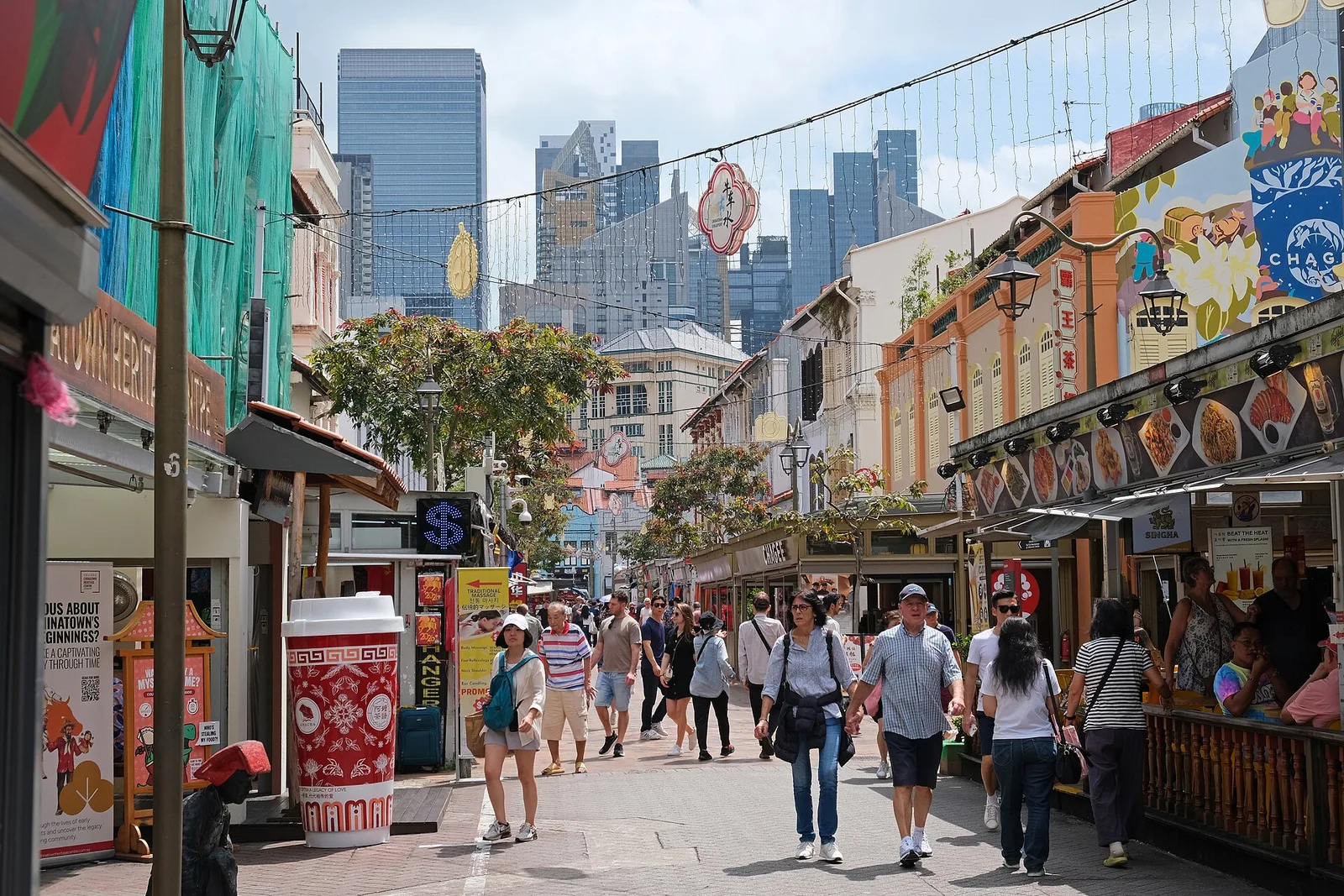
Bugis Street and Kampong Gelam. Start at Bugis Street for several small gifts in one stop. Compare the price per item, check magnet backs and pouch zips, and ask which country made the item if origin matters to you. Continue on foot to Kampong Gelam for textiles and perfume around Arab Street. Sifr lists walk-ins from 10am to 5pm, with appointments later in the day.
City Hall, Chinatown or Orchard. For city-themed homeware, try the Supermama stores at the Asian Civilisations Museum on Empress Place or the Peranakan Museum on Armenian Street. The retailer says both shops are open to people without museum admission. For market souvenirs and personalised calligraphy, try Chinatown Street Market around Smith Street. If you are already shopping on Orchard Road, DORS at 250 Orchard Road brings homegrown brands together on Level 1. Ask the shop about the maker and where the specific product was manufactured.
Jewel or the departure terminal. Jewel is in Changi's public area and links directly to Terminal 1 Arrivals. Buy the Mdm Ling Heritage Travel Tin there. Travellers staying in the transit area should use Changi's shopping directory and filter by terminal and airport area for tea, other snacks or a non-food gift. Reaching Jewel during a layover requires clearing arrival immigration, eligibility to enter Singapore and time to return to your departure gate.
Can you take kaya, laksa paste or perfume in your carry-on?
Treat spreadable or pourable gifts as liquids, aerosols or gels at security. Changi allows each hand-carried container to hold up to 100 ml, in one transparent resealable bag of up to one litre that closes fully. The limit is the container's capacity in millilitres. A weight such as 290 g on a kaya label tells you how much product it contains, so use the actual container capacity for the security check. Keep a 10 ml perfume in the clear bag too.
If the jar or bottle is over 100 ml, pack it in checked baggage before dropping off your bag. Keep the sealed jar in a leakproof second bag, pad it with clothing and put it away from the outer shell of the suitcase. If you are travelling with hand luggage only and cannot confirm the container size, choose postcards, a fabric pouch or a dry snack that the destination allows.
For a purchase over 100 ml in Changi's departure transit area, ask the retailer whether the product qualifies for its security tamper-evident bag arrangement and whether it is accepted on your itinerary. Where permitted, keep it sealed with the receipt visible. A connecting airport can screen you again, and some routes have special airline requirements. Check the connection and airline before buying.
Check destination customs before buying food or plants
Security screening covers what you can carry on the aircraft. Your destination's customs and biosecurity authorities decide what can enter the country. Look up the ingredients and country of manufacture, especially for bak kwa, fish skin snacks, meat floss, egg-based kaya and pastes with seafood or meat. A vacuum seal keeps a product packed for travel, while import rules still apply. Keep the ingredient label, receipt and packaging accessible, and declare anything required on arrival.
Flying to Australia? Its agriculture department publishes separate conditions for meat, eggs and shelf-stable baked goods. Pig-meat jerky is prohibited for personal import under its traveller guidance. Check the current BICON conditions for the particular product rather than using a general rule for fruit jam on a spread containing eggs. If you are unsure what the incoming passenger card requires, Australia's advice is to declare it.
For a live orchid or another plant, check the receiving country's permits before paying. NParks can provide phytosanitary certification when required. An orchid illustration on a card or plate is a simpler gift if you are travelling soon.
When the Singapore tourist GST refund matters
For a higher-value souvenir, ask the shop to confirm it participates in the Tourist Refund Scheme before paying. Singapore Customs lists a S$100 minimum including GST for eligible purchases. It allows up to three same-day receipts with the same shop name and GST registration number to make up the total. Prices at different stalls do not automatically count toward the same purchase group.
Eligible travellers leaving by air from Changi or Seletar claim at an eTRS kiosk. Follow the Singapore Customs instructions for the terminal. For goods in checked luggage, start before you hand over your bag. For hand-carried goods, use the transit-side kiosk. Keep the goods, receipts, passport and boarding pass ready if asked for an inspection.
Choose one larger gift and keep the rest flat
If you are buying for several people, make a two-column list before you shop. Put a single item for each household on one side and individual gifts for friends or colleagues on the other. A tin of cookies or a box of teabags works for a household that will share it. Postcards, small prints and fabric pouches are easier to carry if you need something for six or eight individual recipients.
At the listed prices above, a S$14.80 cookie tin and four S$3.50 postcards total S$28.80. That gives you a household gift and four separate ones. A S$52 porcelain plate and a S$30 box of tea take the basket to S$82 before any wrap or additional items. Compare the two baskets by who receives each piece and how you will get it home. A fragile item may be a good choice for a direct flight with room in a cabin bag and a harder choice if there are several connections and changes of aircraft.
Put the tallest box or widest object beside your available bag before buying a second of the same item. Ask the shop for the box measurements if you are ordering in advance. Leave the tiles, ceramics or cards in their protective packaging until you arrive. A card from the place where you found the gift adds a short, specific note without taking bag space.
Read the label if the maker or country of origin matters
Look for three details before buying around a theme such as Peranakan tiles, Singapore’s skyline or local breakfast. Find the maker, the material or ingredients, and the place of manufacture. A plate can carry a Singapore-designed scene and use porcelain made abroad. A bag can show a Singapore building while being manufactured elsewhere. If you are buying for someone who cares about local design, tell them who produced the design and where you bought it.
For snacks from different stalls, photograph the packaging if you are buying multiples. Compare ingredient lists and allergens while you still have the original packets. If someone has an allergy, choose a labelled, sealed product they can check before opening. Ask for a receipt with the product name if you may need to identify the purchase at the airport or when returning to the seller.
Sources
- Singapore Tourism Board shopping guideBugis Street, Arab Street and gift shopping by neighbourhood
- Singapore Tourism Board Chinatown Street MarketMarket location and available gifts
- Cat Socrates Singapore City postcardsPostcard designs and individual price
- Cat Socrates shop locationsTiong Bahru and Joo Chiat shop addresses
- Ya Kun kaya jar290 g jar size
- Ya Kun FAQs and outletsGift packs, stock and egg ingredient
- Ya Kun outlet directoryFar East Square and Funan branches
- Mdm Ling Bakery at JewelHeritage Travel Tin, assorted gift prices and shop location
- TWG Singapore Breakfast TeaTea blend, tea bag count and price
- TWG Singapore storesBoutique locator
- Sifr Aromatics fragrance samplesSingapore-made 2 ml samples, price and Arab Street atelier
- Sifr Aromatics travel perfumes10 ml bottle, price and production at the Kampong Gelam atelier
- Sifr Aromatics shop informationArab Street address and walk-in hours
- Supermama Singapore Cityscape platePorcelain price, size, box, stand and origin
- Supermama shopsFlagship and museum-store access
- Design OrchardDORS retail store and Orchard Road address
- Changi Airport shopping directoryTerminal filters and shop listings
- Changi Airport transfer and Jewel directionsPublic-area location and immigration requirement
- Changi Airport baggage restrictionsContainer size, liquids bag and transit purchase rules
- Australian agriculture department traveller import rulesFood categories, biosecurity declaration and BICON link
- NParks plant export guidanceImporting-country requirements and phytosanitary certification
- Singapore Customs Tourist Refund SchemeEligibility, receipt threshold, claim locations and inspection