
Use the model and steering design to identify the device
PMD stands for personal mobility device. The Land Transport Authority active mobility rules distinguish a motorised PMD such as an electric scooter and a non-motorised PMD such as a kick scooter. An e-scooter is a motorised PMD with handlebars. A device with pedals or something advertised as a seated mobility scooter may have a different classification. Look at the manufacturer’s model and design, then check the LTA definition for that device before relying on the route or registration rules.
A power-assisted bicycle has separate technical, registration and riding requirements. The LTA also treats qualifying wheelchairs and mobility scooters as personal mobility aids. A device advertised as a mobility scooter can fall elsewhere, so use the official comparison when a listing is ambiguous. The LTA’s personal mobility aid rules cover assessments, dimensions and registration timing.
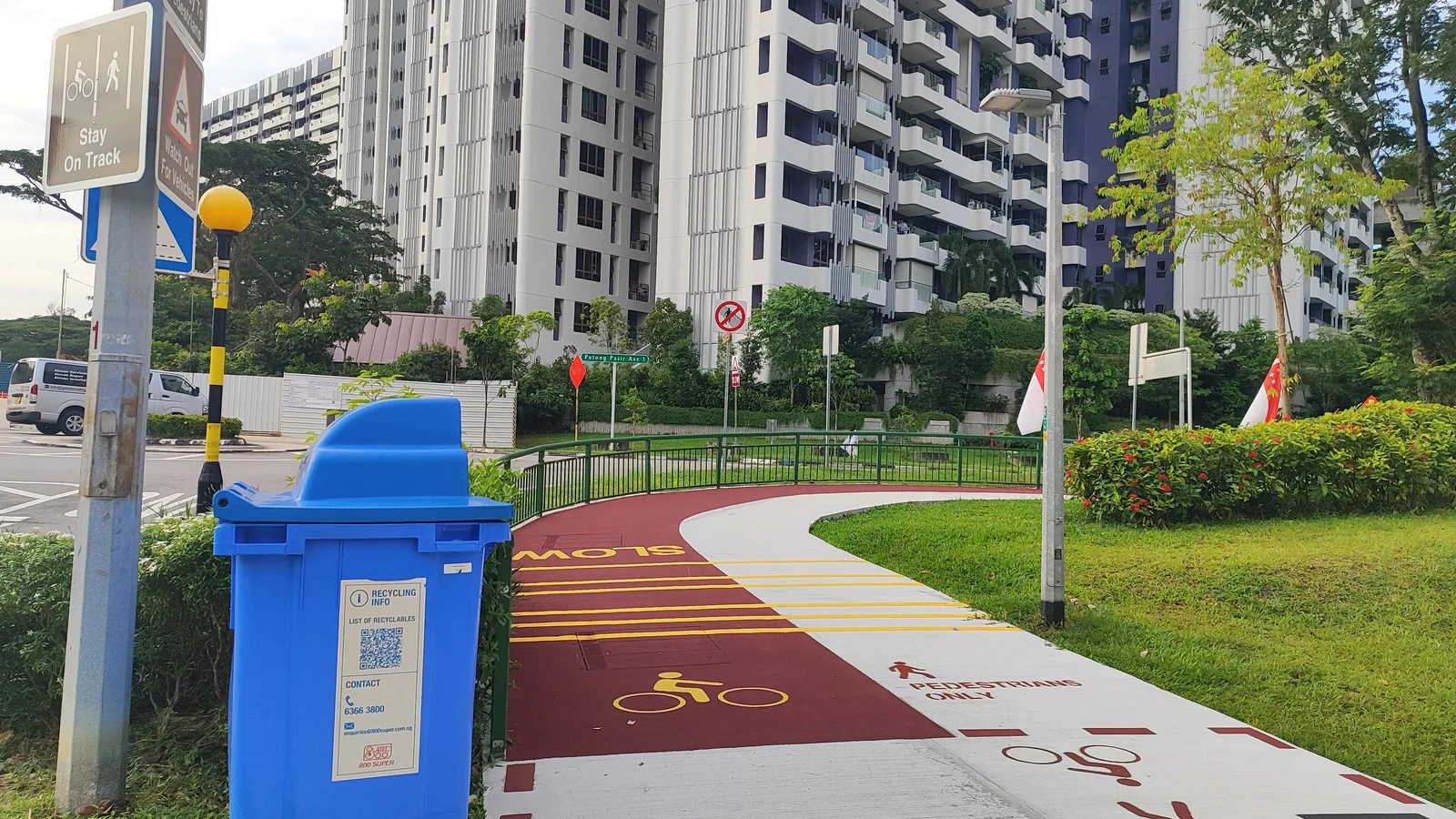
Choose the path by its markings
| Path or road | Motorised PMD, such as e-scooter | Manual PMD, such as kick scooter |
|---|---|---|
| Footpath beside a road or within an estate | No | Yes, up to the 10 km/h footpath limit |
| Pedestrian-only path | No | No |
| Cycling path with cyclist markings | Yes | Yes |
| Shared path with cycling and pedestrian markings | Yes | Yes |
| Road | No | No |
The LTA path-use chart distinguishes ordinary footpaths from pedestrian-only paths, cycling paths and marked shared paths. LTA applies a limit of 25 km/h on cycling and shared paths. Read the actual designation and any no-riding signs before choosing the route. The allowable limit gives the upper speed for that path. LTA asks riders to slow down where pedestrians are present and give way to them.
If a dedicated cycling path runs next to a pedestrian-only path, use the cycling side. Some former footpaths adjacent to dedicated cycling paths have been converted to pedestrian-only paths. LTA’s general guidance explains how to handle a brief necessary crossing into the adjacent space and return to the cycling path. Use the signs and markings whenever the pavement splits, and dismount and push at a no-riding sign in accordance with LTA’s guidance.
An MRT station to home trip may include a marked cycling path for most of the way, then an ordinary footpath inside the estate. For an e-scooter, plan where to stop riding and walk the device, subject to the access rules at that location. Trace the full route before purchase if you rely on the scooter for commuting. Verify any alternative across a road junction and follow LTA’s instructions to stop and look out for traffic before crossing.
Check e-scooter requirements before paying
- Ask for the exact model and confirm the e-scooter’s compliance against the LTA technical criteria and UL2272 list. Check the device itself and the registered model against the listing. LTA specifies up to 20 kg unladen, up to 70 cm wide and a maximum motorised device speed of 25 km/h.
- Check the UL2272 certification and keep the model information for future inspection. Since 1 June 2026 the LTA also prohibits keeping a non-UL2272-certified e-scooter. If you already have one, use the disposal route linked in the LTA rules.
- For a new e-scooter, check the retailer has arranged the required inspection and registration before sale. OneMotoring’s e-scooter page says registration by individuals is no longer available. Before completing a private purchase, verify the existing registration and plan its transfer.
- Find the unique registration or identification details on the scooter and compare them with the relevant records. LTA requires the identification and registration marks to be affixed and displayed according to its specifications. An unreadable mark is an issue to resolve with the seller or the inspection centre before riding.
An overseas listing may claim an e-scooter suits local paths. Before ordering an imported device, use the LTA import-control guide for approvals and local requirements. If a seller cannot confirm the device class or certification, ask LTA or a recognised retailer about the model before handing over money. A generic electrical safety label gives you less information than a matched device model on the LTA certification list.
Complete the transfer and check the next inspection
For a second-hand e-scooter, OneMotoring says the registered owner initiates the transfer online within seven calendar days of the scooter changing hands. The incoming owner has five calendar days to confirm. If that window passes, the transfer lapses and the previous owner stays on the record. Keep the transaction details until both sides can see that the transfer succeeded. Agree with the seller on the handover date and exchange the necessary information directly through the official process.
LTA calls registered e-scooters in for inspection every two years. Find the due date and use the current OneMotoring guidance to choose a centre. The published base inspection charges are S$31.50 before GST at STA and S$28 before GST at the listed JIC or VICOM inspection services. Verify the total with the specific centre before booking. A scooter can be deregistered if it fails the compliance inspection or misses the deadline.
For an upcoming inspection, check that the registration mark remains upright, intact and visible on the scooter. OneMotoring gives the process for seeking more time or asking whether a damaged mark can be accepted. Contact LTA before the deadline if there is a problem with the notice or the device. A scooter purchased close to its inspection date may need an appointment soon after the transfer.
For a scooter passed between household members, make sure the registered owner receives OneMotoring notices and each person planning to ride checks the applicable theory-test and supervision rules. If a bike shop accepts a scooter for servicing close to the inspection deadline, coordinate the appointments and check the official record after inspection.
Check condition and compatibility during a handover
The LTA explanation of the UL2272 standard says modification can invalidate certification and increase fire risk. If you are buying used, ask the seller to show the charger, battery and any servicing receipts and compare the device with the original configuration. Ask whether the device has been repaired or whether any battery, controller or charging components have changed. Confirm questions about a specific part with the device maker or an authorised service provider before charging or using it.
If a shop advertises an additional battery or a higher speed for a used scooter, have LTA or the manufacturer confirm compliance before purchasing. LTA’s route and registration checks apply to the actual device you ride. The original registration or sticker may predate a modification, so compare the model and the current hardware. Use the LTA disposal guidance for a non-compliant device you already own.
If you keep a compliant scooter, follow the maker’s charging and servicing instructions. The LTA rules link to safe charging practices and advise against non-original batteries. For a commuter relying on the scooter daily, set aside time for servicing and check the inspection dates before you plan a period in which the device needs to be available.
Check the rider’s requirements and plan the trip
LTA requires e-scooter riders to pass the mandatory theory test before riding on cycling paths. A rider below 16 can only ride on those paths with supervision by an adult aged at least 21 under LTA’s published conditions. Consult the LTA test and supervisor links for the specific rider. For riding in the course of work, OneMotoring also lists approved third-party liability insurance requirements.
Before leaving home, check the brakes, tyres and lights and put the phone away while riding. LTA requires a front white light and rear red light while riding in the dark. Slow down at bus stops, path intersections and other points where pedestrians can enter the path. If you use an e-scooter on a busy park connector, leave room to stop and give priority to people on foot.
An MRT or bus connection adds a separate carrying check. LTA’s inclusive public transport guide gives the folded dimensions limit for qualifying devices as 120 cm long by 70 cm wide by 40 cm high. The foldable PMD transport rules direct passengers to keep the device folded in stations, interchanges and on board, and switch motorised devices off on trains and buses. Measure accessories as part of the folded device and ask staff if the station or interchange has a designated route.
If you meet a sign, crowd or incident on the path
Pick a place to slow and stop before a busy junction, bus stop or segment with temporary signs. If your proposed alternative is a road or ordinary footpath, use it on foot with the e-scooter where walking with it is permitted. At a crossing, follow the traffic signals and ask LTA about unusual access markings on a route you use regularly.
LTA’s code tells riders involved in an accident to stop, help, exchange particulars and make a police report. Prepare to identify the exact location, including the estate block, crossing or path marker and direction of travel, if you need to explain where it happened. The LTA active mobility rules group together the accident duty and riding requirements.
Sources
- Land Transport Authority — Active Mobility Rules and Code of ConductPath rules, specifications, UL2272, rider age, theory and safe riding
- Land Transport Authority — Where Active Mobility Devices Are AllowedPath marking and speed comparison by device class
- OneMotoring — E-Scooter Registration and InspectionRegistration, transfer, marks, periodic inspection and fees
- Land Transport Authority — Import Control for Motorised PMDsApproval and device requirements for imports
- Land Transport Authority — Inclusive Public Transport SystemCurrent size and carriage rules for qualifying devices
- Land Transport Authority — Bringing Foldable PMDs on Public TransportFolding and power-off requirements
- Land Transport Authority — UL2272 Fire Safety StandardDevice certification and effects of modifications
- LTA personal mobility aidsOfficial requirements and assessment information for mobility aids.