
Find the current Singapore UV Index and check the time
Use the NEA UV Index or the MSS UV display. Check the observation timestamp and category before making an outdoor plan. The station measures in an open field at Changi and publishes a reading every 15 minutes from 7 am to 7 pm Singapore time.
For example, a 12.15 pm reading represents the preceding 15 minutes at Changi. It is a weather observation you can compare with the time of your outing. Outside the reporting window, or if no new value is available, use the timestamp to identify an earlier value before treating it as current.
The panel above uses the separate NEA open UV dataset, which timestamps the preceding-hour average. It labels values older than 90 minutes as last available. Accessed 19 November 2026 from data.gov.sg under the Singapore Open Data Licence.
Read the number and category together
| UV Index | Category |
|---|---|
| 0–2 | Low |
| 3–5 | Moderate |
| 6–7 | High |
| 8–10 | Very High |
| 11 and above | Extreme |
The number describes solar ultraviolet radiation at the surface. A higher value means greater potential for harm to skin and eyes. For general protection guidance, follow NEA’s published advisory.
Why one Changi reading can differ from conditions on your route
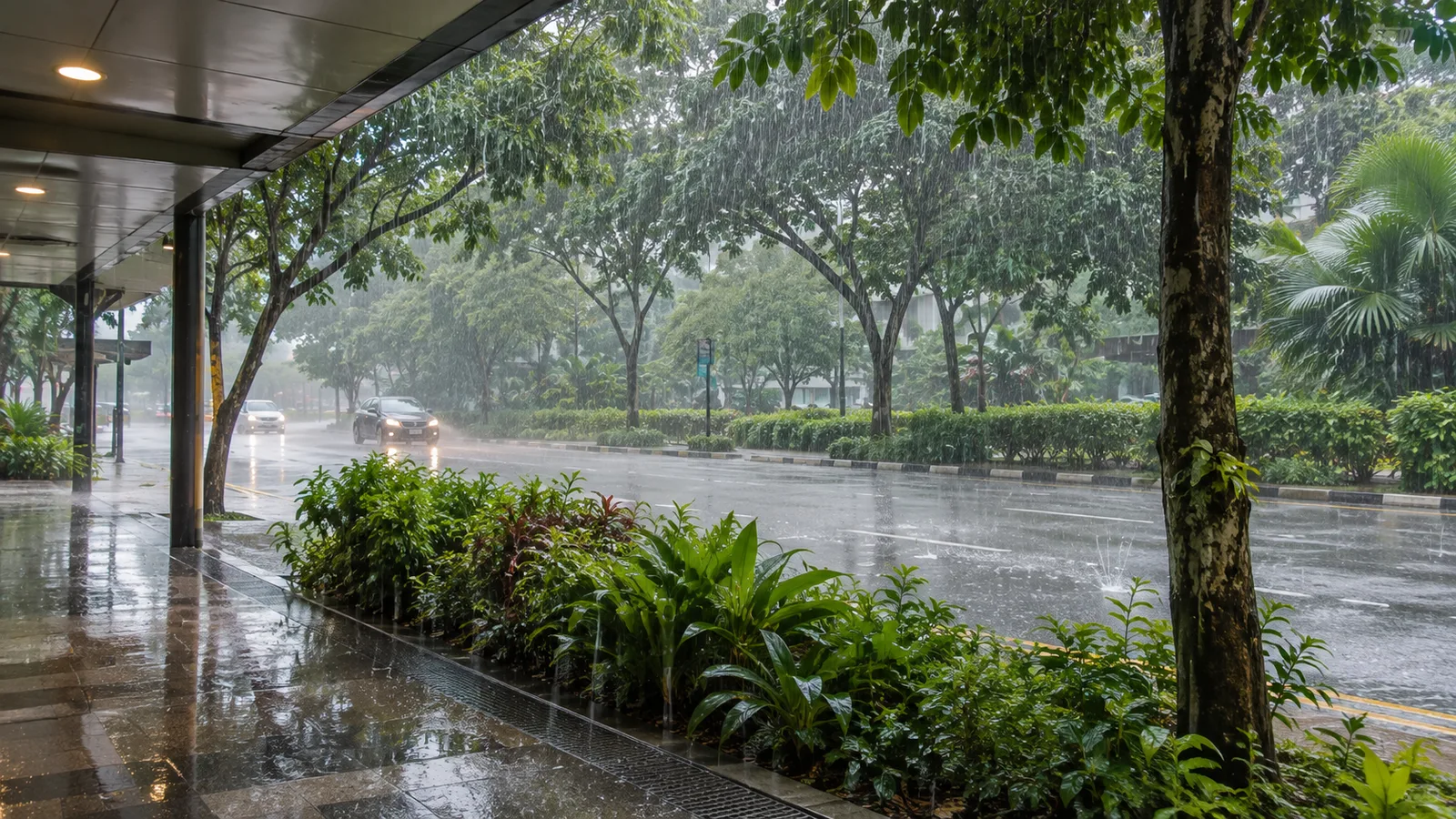
Sun angle and cloud cover affect the radiation that reaches the surface. On a day with little cloud, NEA says Singapore can reach Very High or Extreme values between about 11 am and 3 pm. Thick cloud or rain at Changi can lower the reported value even while another district has clearer skies. Weather that feels cool or a drop in air temperature also tells you little about the UV Index.
The NEA background page explains how it summarises daily peaks using the highest 15-minute average for each day. That is a different figure from the most recent observation at a particular clock time.
What to check before an outdoor outing
Imagine a noon walk near Marina Bay. Look up the latest Changi UV observation and consider whether your route has a shaded stretch or a covered stop. Refresh the official reading before departing and check the town nowcast and radar separately. Rain, lightning and UV come from different readings, so a break in the rain does not resolve the UV question. For daylight planning later in the day, use the Singapore sunset calculator for sunset time.
Sources
- NEA hourly UV open dataHourly UV observations and source timestamps.
- NEA Singapore Ultraviolet IndexObservation station, reporting interval and hours, current reading and general advisory.
- NEA UV radiation and UV IndexOpen-field sensor, daily peak definition, cloud and midday variation.
- MSS UV IndexCurrent observation display and category boundaries.