
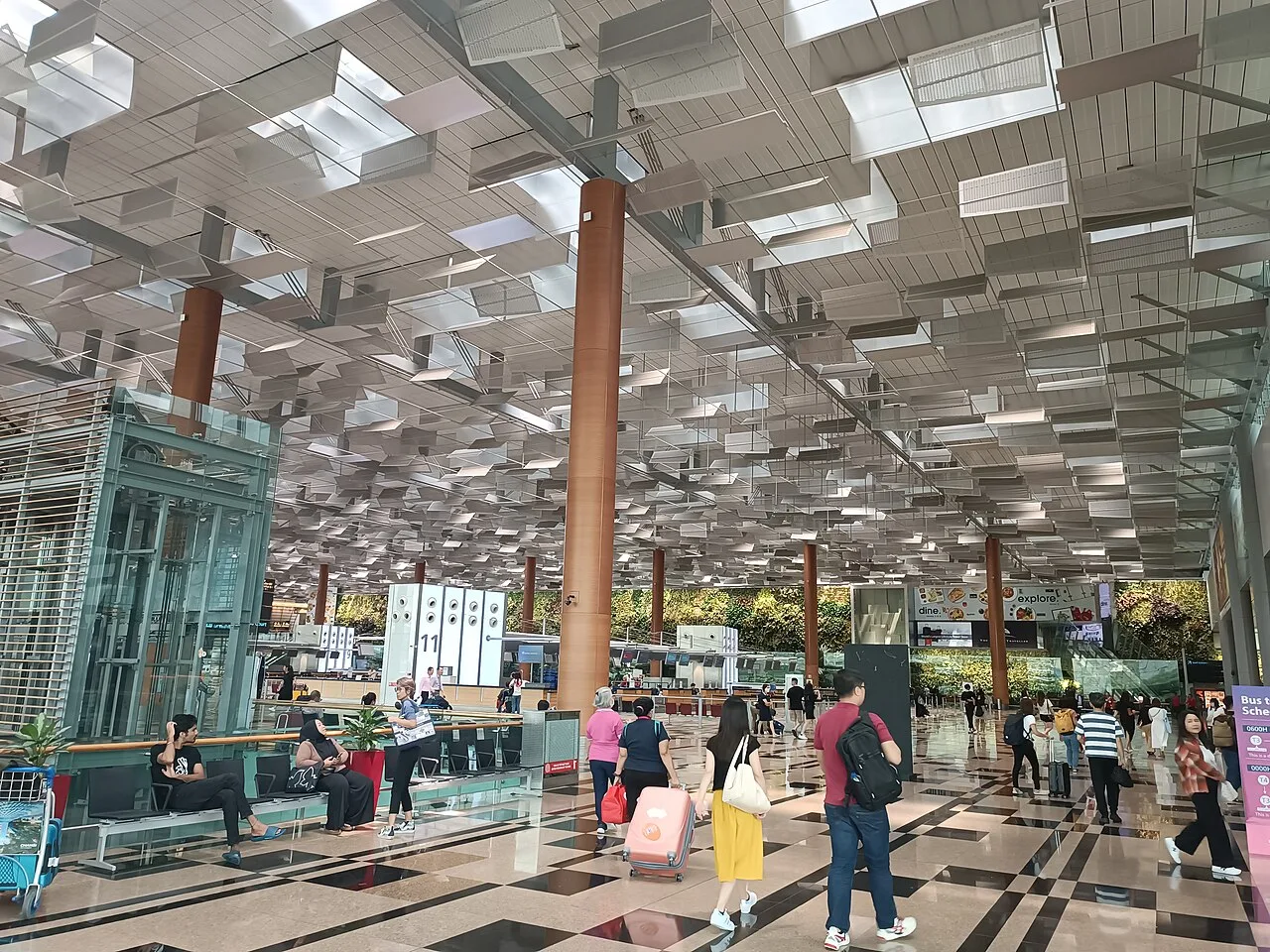
Choose Centrair and check the day you arrive
Singapore Airlines' Nagoya route uses Changi (SIN) and Chubu Centrair (NGO). The booking may show Central Japan International Airport or Nagoya Centrair. Use NGO when opening a flight search or booking ground transport. Japan is one hour ahead of Singapore. In an example where the flight leaves Singapore at 09:30 and lands at 17:10 Japan time, the scheduled flight is 6 hours 40 minutes.
Look at the scheduled arrival and the time you need to reach the city before choosing a fare. Landing before a train leaves is only the start of the calculation because immigration, luggage and the station walk come first. The Centrair airline directory lists Terminal 1 check-in for Singapore Airlines on the return. Read your actual flight and the airport's departure board for the operating carrier's current counter and terminal.
Decide whether to pay for a reserved Meitetsu seat
Centrair's train guide places the airport railway station at Access Plaza, linked without stairs from the passenger terminal building. Meitetsu calls it Central Japan International Airport (TA24). For central Nagoya, get off at Meitetsu Nagoya (NH36). There are ordinary-car services and a faster μSKY, for which every car requires the first-class supplement.
In the operator's published sample fare search, the ¥980 base fare applies to ordinary seating between Nagoya and the airport. Meitetsu's airport guide gives ¥450 extra for the μticket used on μSKY and first-class cars on marked trains. That makes ¥1,430 for the adult sample with a reserved seat. Two adults pay ¥1,960 in ordinary cars or ¥2,860 with the supplement. Confirm the dated service and price when buying.
Compare departure and arrival times for the next trains. If an ordinary express leaves first, a later 28-minute μSKY may reach the city little earlier. The reserved seat can still be useful with children or after an overnight flight. Look for the first-class car markers before boarding. For a service with mixed cars, use the ordinary section with the base fare or buy both tickets for a first-class seat. Meitetsu's ticket instructions describe automatic ticket machines, sales points and reserved-car conditions.
Use the stop that suits your hotel or onward train
| Destination | Route to check | What to allow for |
|---|---|---|
| Nagoya Station or Shinkansen | Meitetsu train to Meitetsu Nagoya | Walk to the correct JR gate or hotel exit. |
| Sakae or Fushimi | Airport bus if the stop is convenient, or Meitetsu and city subway | Road conditions and the walk from your stop. |
| Ghibli Park, Nagakute | Airport coach if the arrival timing fits, or city rail and Linimo | Timed entry and walking inside the park. |
| Takayama and Gifu | Nagoya connection to JR or a highway coach | Railway gate or the specific bus departure terminal. |
| Tsu and Mie | Tsu Airport Line high-speed boat or rail via Nagoya | Port transfer and timetable in both directions. |
Meitetsu Nagoya and JR Nagoya are in the same station district. Check the walking route between their gates on the JR Central station maps. For Kyoto or Shin-Osaka, give yourself time to exit Meitetsu, find the Shinkansen hall and collect or activate the next ticket if required. For a Sakae or Fushimi hotel, the airport bus table lists about 55 minutes and ¥2,000 for the cited service. Confirm the current operator stop because some other bus services in the same table are suspended.
When deciding between Sakae and Nagoya Station, place the first evening and the next morning on the same map. A hotel by Nagoya Station can save a transfer for a Shinkansen departure, while a hotel near a Sakae bus stop may make arrival easier. If travelling with several large bags, ask which hotel entrance serves a taxi. The address advertised for pedestrians and the location where a vehicle can stop may differ.
Leave space between the airport and a timed Ghibli Park visit
Centrair lists a coach to Aichi Commemorative Park at about 85 minutes and ¥2,000. Ghibli Park's directions also describe the bus and Linimo rail access. The Linimo station is Ai-Chikyuhaku Kinen Koen, with the park just outside Exit 2. In the city, confirm the current Meitetsu Bus Center boarding stop. For the rail route, compare the subway to Fujigaoka and the change to Linimo against the bus for the day you are visiting.
If your park ticket has a designated admission window, leave time from the stop to the specific area. An international arrival with checked bags is hard to match to a narrow timed entry. If your flight is delayed, read the ticket's entry conditions before rushing straight to the park. For many itineraries, a visit the next day gives you more control and leaves room for airport and hotel baggage handling.
Check the airport bus operator before reserving a timed park ticket
Meitetsu Bus's Fujigaoka and Aichi Commemorative Park route publishes separate schedules from the airport and from the city side. Its November 2026 notice flagged some temporary work-related diversions and delays on that route, illustrating why the airport's representative 85 minutes and the live travel date both matter. Confirm the actual departure and the park stop, especially if an itinerary uses Fujigaoka for a rail transfer.
The park's overseas ticket instructions give admission conditions for each ticket. For a covered Grand Warehouse reservation, they say to enter within an hour of the reserved time. In a sample arrival with a 12:00 flight landing, immigration and the bus departure can use a sizeable part of the afternoon before the 85-minute road run. For an important timed visit, stay in Nagoya the first night and set out from the city the next day. Pick the park entry and the train or coach only after checking their dates together.
Use Nagoya for the mountains or take the ferry for Mie
For Takayama, compare rail from JR Nagoya with the Nohi Bus route. It gives about 2 hours 40 minutes as a representative coach journey. Check the booking deadline, exact Nagoya boarding stop and whether your bus also calls at JR Nagoya. A Meitetsu airport ticket does not include either the intercity coach or onward JR travel. If you intend to continue to Shirakawa-go, treat that as another seat or booking and check the rules on the service that operates it.
Centrair's high-speed boat guide lists a 45-minute crossing to Tsu Nagisamachi at ¥2,980 at the time checked. Walk from Access Plaza to the boat terminal. For Ise or another Mie destination, add the ride from the Tsu port and compare against the route through Nagoya. Keep a land-based alternative if conditions affect sailings. On the way back, follow the airport's connection advice and airline cutoff. Add the trip to the port and the time to reach the airport check-in desk to the 45-minute sailing.
Compare through travel via Nagoya with a first night in town
If you plan to continue straight to Takayama, build around the slowest possible part of the first afternoon. For example, allow a hypothetical 45 minutes to come through arrivals, 20 to find and wait for a Meitetsu departure, 36 on the train, and 20 to navigate to the intercity bus boarding point. That is 121 minutes from landing to the bus stop in the example, before the coach ride and any check-in requirement. Going straight through can work if you have a flexible bus booking and late reception at the hotel. Staying near the station lets you catch an earlier intercity coach the next day.
If travelling onward to Kyoto, check the operator's current timetable to select a train that stops at Kyoto and gives you time for the separate station gates. In a multi-city trip you can continue west and return to Singapore from Kansai, depending on available flight dates. When a suitcase is too large for the ordinary rail setup, check baggage-space rules before assigning the shortest connecting service. The Japan flight overview explains how to price a one-way rail leg against returning to the first airport.
Build a backup before relying on the Tsu crossing
A night near the ferry side can suit an early Mie itinerary, but use the port and train stations as different addresses. Confirm how to reach the accommodation from Tsu Nagisamachi and which station makes sense if you need to switch to land transport. If the return flight leaves before a plausible boat-to-terminal connection, look at a final night near Centrair or on the Meitetsu airport line. Compare the full transfer if travelling with a group. Four adult tickets at the airport's dated ¥2,980 boat fare total ¥11,920 before local rides. Add the cost and waiting time to reach the port for a fair comparison.
Plan a return transfer to the right platform and terminal
Meitetsu Nagoya serves many destinations. Meitetsu's airport-bound boarding guide says to choose a train marked for Central Japan International Airport and distinguishes the boarding areas for reserved seats and ordinary cars. If an arriving train is headed for Kōwa or Utsumi, wait for the airport service. Save the airport code, terminal and a dated planner result for the return trip.
If you need a late or early road option, the airport bus directory lists a Nagoya Station West Gate service timed for certain flights. Check its departures and operator details before relying on it. An airport hotel can also make sense when the earliest city train leaves little time at the terminal. If you are starting the final day in Takayama or elsewhere, work backwards from the check-in deadline and count each connection separately. A last night near an airport train station can remove a time-sensitive intercity leg.
Sources
- Singapore Airlines Nagoya routeNonstop SIN–NGO and approximate journey time.
- Centrair Singapore Airlines directoryReturn check-in terminal and current counter caveat.
- Centrair airport rail guideAccess Plaza and fastest μSKY time.
- Meitetsu airport boarding guideAirport station layout and first-class supplement.
- Meitetsu sample Nagoya airport farePublished example base and supplemented fares.
- Meitetsu airport-bound ticketing and platformsCity airport direction and correct train guide.
- Meitetsu general ticket informationPurchasing normal and first-class fares.
- Centrair airport bus directorySakae, Ghibli Park and airport-night bus examples.
- JR Central station mapsJR Nagoya and Shinkansen station layout.
- Ghibli Park official directionsLinimo and airport/city bus routes.
- Nohi Bus Takayama–Nagoya lineCoach run, booking process and station stops.
- Centrair high-speed boatTsu ferry fare, running time and boarding location.
- Meitetsu Bus airport–Fujigaoka and park lineSpecific routes, timings and road notices.
- Ghibli Park overseas ticketsTimed admission and ticket conditions.
- JR Central Shinkansen timetableNagoya to Kyoto and beyond.