
Start with the airport that serves the beginning of your trip
The Japan National Tourism Organization's Singapore flight guide groups international gateways and onward domestic routes. Airline booking calendars are useful once you know whether your first stop is within easy reach of the arrival airport. Choose the airport by code, especially when a search engine lets you enter a city or region and shows several airports for it.
| First part of the trip | Airport to search | Decision after landing |
|---|---|---|
| Tokyo, Yokohama or eastern Honshu | Haneda (HND), Narita (NRT) | Map your hotel or connecting rail station from both airports. |
| Osaka, Kyoto or Kobe | Kansai (KIX) | Choose the onward train or coach for the actual destination. |
| Nagoya, Gifu or central Honshu | Chubu Centrair (NGO) | Compare the Meitetsu train to Nagoya with any direct regional service. |
| Fukuoka, Kumamoto or Nagasaki | Fukuoka (FUK) | Connect through Hakata for much of Kyushu or compare a direct regional bus. |
| Okinawa main island | Naha (OKA) | Choose the Naha monorail, a coast-bound bus or a car based on the accommodation. |
| Sapporo, Otaru or a Hokkaido ski trip | New Chitose (CTS) | Compare the airport train with a resort coach, and check the flight dates you need. |
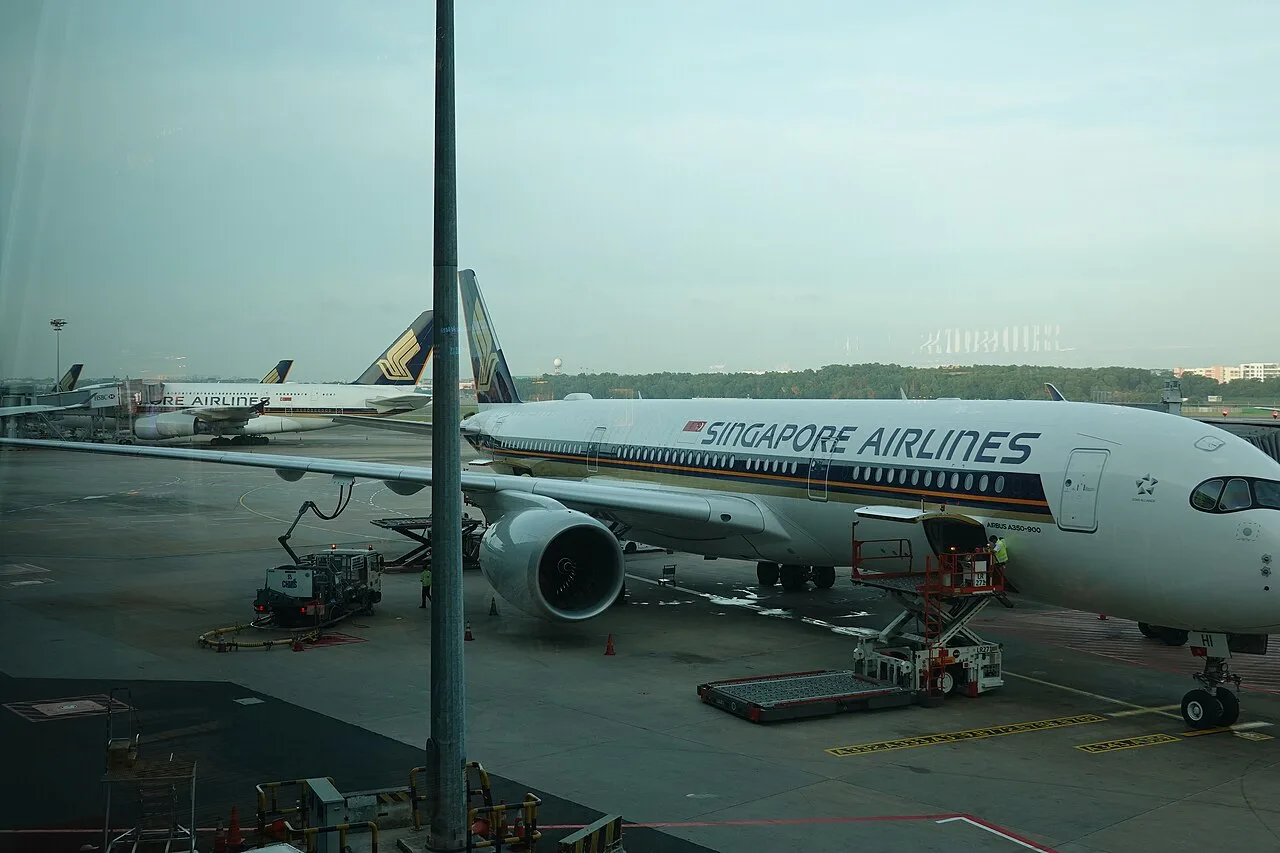
Singapore Airlines publishes direct service from Changi to Tokyo, Osaka, Nagoya and Fukuoka. Sample flight times are about six hours to Fukuoka and about seven hours to Tokyo, with variation by service. Japan is one hour ahead of Singapore. For example, 10:00 in Singapore to 17:40 in Japan is a 6-hour-40-minute scheduled journey. Use local clock times when matching the flight to a hotel transfer.
Choose the Tokyo airport for the rail journey you will actually take
For a trip that starts in Tokyo but heads west immediately, price Haneda plus the Keikyu ride to Shinagawa and a Shinkansen from there. If you land at Narita and stay for a night first, compare the rail option to the hotel district before booking a timed train to Kyoto. A hotel around Ueno sends you toward a different arrival route from one near Shinagawa or Tokyo Station. The Tokyo airport breakdown shows the station choices. If you can reach either airport at roughly the same time, that city-side geography may settle the decision before an airfare difference does.
For Osaka or Kyoto only, start with KIX and compare the available nonstops before adding a domestic connection through Tokyo. For Kyoto and Nagoya together, use JR Central's corridor timetable to test an itinerary arriving in one region and leaving from the other. If airport access to the first or last hotel is strenuous for someone in your party, budget a direct coach or car and include that difference in the cost comparison.
Price an open-jaw route when the itinerary moves in one direction
Consider a trip starting in Tokyo and ending in Osaka. In the airline booking search, choose multi-city, enter SIN to HND or NRT for the outbound and KIX to SIN for the return. Compare the complete price with a Tokyo round trip on those same travel days. The return ticket to Tokyo can only be compared fairly after adding the Shinkansen or domestic flight from Osaka, the separate link to the Tokyo airport, and any hotel night needed to make the connection. Keep that time cost visible even if the fare difference is small.
An illustrative Tokyo round trip at S$680 plus S$150 in additional rail and airport costs comes to S$830. An S$790 multi-city ticket is S$40 less on those assumptions, even though it has the higher airfare. Use actual quotes, and include baggage and seat fees both ways. If you plan to stay in Tokyo at both ends, backtracking may already be part of your itinerary. In that case, set both flights around the districts and stations you will use on each end.
Use the Shinkansen for a route that passes through its stations
JR Central's timetable covers the corridor from Tokyo and Shinagawa through Nagoya, Kyoto and Shin-Osaka, with onward lines across western Japan. A Tokyo to Kyoto to Osaka trip can fit the rail corridor without another domestic airport visit. Compare the train from the station that suits your first hotel. If your accommodation is by Osaka Station, allow for the final train or taxi from Shin-Osaka. Check which service stops at your destination before paying for a seat.
SmartEX lets you search for individual journeys and seats within the Tokaido, Sanyo and Kyushu Shinkansen network. Price the actual segments you plan to ride, including any local airport links, before considering a pass. Plan to reserve journeys with fixed check-in or event times. JR Central says Nozomi services switch to all-reserved seating in designated peak periods, so check the current notice if your trip overlaps a holiday.
Compare seasonal and connecting flights for Hokkaido and Okinawa
The Okinawa tourism authority identifies Scoot's direct Singapore–Naha route. Search for your actual outbound and return dates. On days without a workable nonstop, compare a same-airport connection against moving your trip by a day. The date change can be worth checking before adding another airport and baggage check. If your final stay is on an outer island, look up its onward flight or ferry before deciding how much time to spend in Naha.
For Hokkaido, the November 2026 Singapore Airlines release announces a seasonal period from 30 November 2026 to 24 January 2027. Use the current timetable and booking search for your specific dates. Also check which winter resort coaches serve your accommodation. If the return coach leaves too late to make the Singapore flight, reprice a city or airport-area night before booking a seven-night resort stay. Our Hokkaido flight and transfer guide covers these ground choices in detail.
Check who handles baggage at your first airport in Japan
For a domestic connection in Japan, look up the first airport's process and ask the airline what happens to any checked bag. Haneda's international-to-domestic guide explains procedures by terminal and onward route. Narita's corresponding instructions direct passengers through immigration at the international arrival terminal. Budget for immigration, customs, any collection and recheck, terminal movement and a domestic departure cutoff. Save the departure terminal and airport code from the actual booking.
If a travel website combines flights under a self-transfer, verify whether each airline handles changes on its own ticket. A condition that requires you to collect a bag can make the connecting itinerary unusable after a delay. Also check for a change from Haneda to Narita or vice versa. The Tokyo flight guide covers those airport options and the separate transfer. A same-airport connection with a longer buffer can make sense when your first night's booking depends on reaching a small town.
If you are switching airlines on a through itinerary, identify the carrier at each airport that can change your booking. Save both flight numbers and check how the connection is sold on the ticket receipt. A route search can show another airport with the same city name. Check that both airport codes match before judging the connection by the hours alone.
Measure bags for rail as well as weighing them for the flight
For the Tokaido, Sanyo and Kyushu Shinkansen, consult SmartEX's baggage dimensions notice and reservation instructions. A case that measures 80 by 50 by 35 cm has a total of 165 cm. It falls within the over-160 cm to 250 cm threshold described by the operator and requires the appropriate baggage-space seat on the covered services. Check exemptions and train-specific instructions with your operator. Airline allowance can use weight, dimensions and separate item limits, so check both transport legs.
Yamato Transport also offers hotel, airport and counter delivery where available, with timing and acceptance varying by address. A useful case is forwarding a large suitcase from the first Tokyo hotel to the last Osaka hotel while carrying a small bag for an intermediate stay. Ask both hotels whether they can accept the shipment, verify the cutoff and cost, and pack one night's essentials with you. Confirm the exact airport counter and collection date if the final pickup precedes a flight.
Build the booking around the least flexible leg
For a ski coach, ryokan dinner or island ferry, confirm the cutoff before locking in an inbound flight. Work backwards from that deadline and compare a daytime landing, a first night near the arrival airport and a nonstop on a different day. Suppose your coach asks for 90 minutes between scheduled flight arrival and departure. A flight arriving at 14:35 and a coach at 16:00 leave only 85 minutes. An arrival at 13:45 leaves 135 minutes, enough to meet that example's minimum with 45 minutes to spare. Use each operator's actual rules and check whether it moves your reservation if the inbound flight is late.
Give the last travel day its own plan
Search the city-to-airport route first for the return leg. For a morning KIX departure after a final night in Kyoto, check the first workable train or coach from your actual hotel and the airline's terminal arrival advice. For an afternoon flight from Tokyo after a morning in Nagoya, account for the railway connection, the handoff from Shinkansen to airport rail and the airline cutoff. A flexible ticket can be useful if the written plan has several separate bookings.
Keep the most distant day trip away from your departure day unless you have a long buffer and a backup route. A short local activity near a station may fit better if you need to collect bags after checkout. Record the terminal, pickup address, checked-bag deadline, and backup bus or taxi in one offline note. Those details help you compare flight times by door-to-door cost and usable time at the destination.
Sources
- JNTO Singapore flight and regional access guideInternational gateways and domestic network context.
- Singapore Airlines Japanese destinationsMain nonstop city pairs, representative durations and time difference.
- Official Okinawa international flightsSingapore–Naha routing.
- Singapore Airlines November 2026 network updateAnnounced seasonal Hokkaido operation period.
- JR Central timetable and reservation noticesRail corridor and peak-period Nozomi seating.
- SmartEX reservation workflowExact station and seat booking process.
- SmartEX baggage rule noticeOversized baggage dimensions and covered trains.
- SmartEX baggage seat guideBooking a seat with luggage space.
- Haneda international to domestic transfersAirport and terminal-specific transfer procedures.
- Narita international to domestic transfersArrival immigration and onward procedures.
- Yamato luggage delivery FAQHotel participation, availability and delivery conditions.