
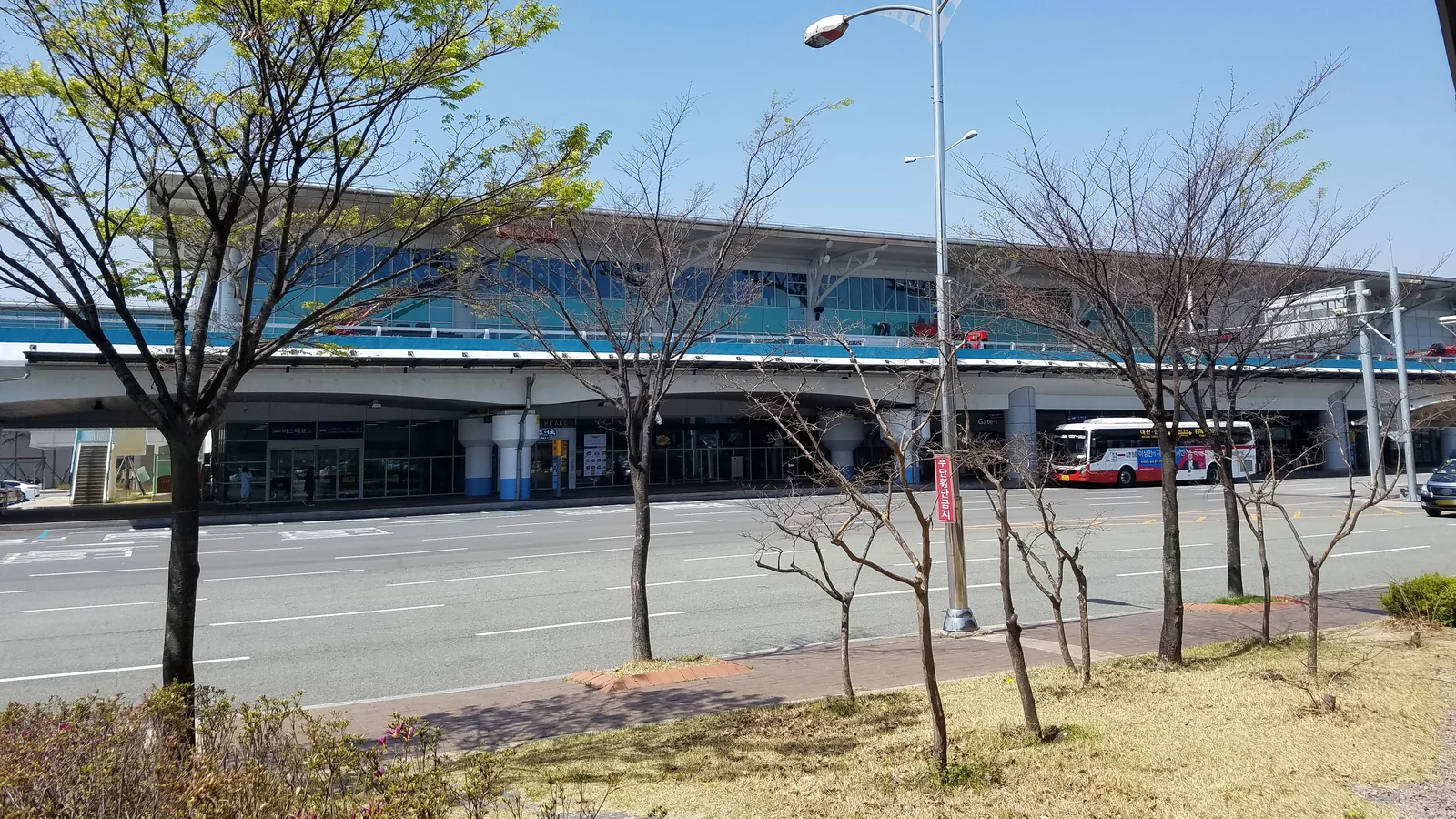
What it means to arrive at Gimhae
Singapore Airlines’ route page gives the typical nonstop duration. Korea uses UTC+9. If the flight leaves Singapore at 09:00 and takes 6 hours 35 minutes, the illustrative arrival is 16:35 Busan time. A flight that departs later in the day could reach Korea the next morning. Use the local date from the ticket for a hotel, driver or onward ticket.
Gimhae International Airport is on the west side of the metropolitan area. The distance to your hotel depends heavily on whether you are going to one of the western stations, Seomyeon, the city’s main high-speed rail station or a beach hotel further east. A central station on the rail map can still leave an above-ground walk or a short car ride. Get the Korean address and the specific entrance from the property before choosing between train and taxi.
Choose between the two easy light-rail changes
| Destination | Route to test first | Detail that may decide |
|---|---|---|
| Seomyeon | Light rail to Sasang, then Metro Line 2 | Pick the correct exit for the hotel and locate lifts if needed. |
| Haeundae or Centum City | Light rail to Sasang, then a Line 2 service towards the east | Compare the final walk with a taxi from a convenient station. |
| Busan Station (KTX) | Light rail to Sasang, Line 2 to Seomyeon, and Line 1 towards Busan Station | Allow time for two changes and the walk to the main rail concourse. |
| A Line 3 destination | Light rail to Daejeo and change to Metro Line 3 | Use the travel-date schedule to check both trains. |
| Gimhae city | Light rail in the opposite direction to the Sasang route | Confirm the station and direction on the platform. |
Korea Tourism Organization’s Gimhae guide identifies Sasang and Daejeo as the two metro interchanges. Check the airport transport list for the station and road options and follow the station signs from the correct arrivals hall. Treat the two metro lines as different ways to reach the final address. One is faster only if it removes a change or serves a closer station for your specific trip.
Compare the last train you can use across both systems
Look at the light rail and metro as two services with different timetables. A train leaving Airport Station before closing can still put you at Sasang after the last Line 2 train you need. Check the next two departures and the connection time at the interchange. Verify any planned works on the day and allow for late baggage. The light-rail operator’s map helps identify the stops and interchanges.
For a later arrival, price a road trip to the exact address before leaving Singapore. A transfer to Haeundae, for example, may be a cross-city car ride. Compare the total for everyone, bag space, any late-hour charge and the ease of meeting the driver. If the light rail is still operating but the onward metro is ending, price a taxi from a nearby interchange against doing the whole trip by road. For a first night with an early KTX departure, it may help to stay near Busan Station itself.
Get to your train on the same day
Busan Station is a different destination from the airport light-rail station, and the city does not have a one-seat airport-to-KTX train. Put the address and the actual train departure into the journey plan. Add the platform wait at the airport, each interchange, the walk to the main concourse and time to find the platform. If you arrive at 17:00 and your KTX leaves at 19:00, the two hours start on arrival, before immigration or baggage claim. A flexible departure or later train can buy room for a queue.
Use Korail to compare the exact railway station and time. If a transfer to Gyeongju is part of the itinerary, check both the arrival railway station and its distance from the accommodation. Booking a city name alone can hide the last road leg. If your trip starts in the Busan area, a night in the city may make a regional visit easier than arranging it during the airport exit.
Consider the domestic terminal for Jeju
The airport publishes separate terminals and a terminal shuttle. If your next flight departs the same day, confirm where you collect, carry and recheck any bags, plus the onward airline’s deadline. If you plan to leave the terminal campus to eat or visit someone between flights, test the return route for the actual hour and watch the gate time. On a separate ticket, calculate what a new fare would cost if the original connection is missed.
A flight to Jeju after a night in Busan can be an easier fit than immediately changing terminals. Check the last domestic departure before choosing the earlier Singapore flight, and compare the Singapore to Jeju nonstop if Busan is only a connection. The travel time difference can change if a useful domestic departure is several hours after you land.
Use the return airport as a separate decision
A trip that starts in Busan and ends in Seoul may be better served by a multi-city ticket. Add up any KTX backtracking, local trips, one extra hotel night and the time spent getting back to the airport. For a Busan return, find the Airport Station route in the direction of PUS and verify that both the metro and light rail start early enough for your flight. With an early check-in and no workable public transport, compare a prearranged pickup with moving your final night west.
Compare a west-side start with a beach-area start
The best booking can change if you have a late PUS arrival and an early plan at the opposite side of Busan. For example, if the first plan is a beach morning, a taxi direct to your Haeundae address can avoid moving hotels or taking a long first train with luggage. If the first plan is a KTX departure, a stop near Busan Station lets you take the airport transfer once and walk to the train the next morning. Compare only journeys you would actually make.
For a short stay, map the trips to your first two places and the route back to PUS. Two days around different neighbourhoods can work better from Seomyeon if the route makes both day trips simple. A stop on Line 3 may justify using Daejeo at the airport even when most airport instructions lead through Sasang. The difference is the connection to your address.
Sources
- Singapore Airlines BusanNonstop duration and time zone.
- Gimhae Airport public transportLight rail access, bus and terminal transfer.
- Korea Tourism Organization GimhaeLight rail interchanges and onward transport.
- Busan–Gimhae Light Rail TransitStation map and line navigation.
- KorailRail journey search and station names.