
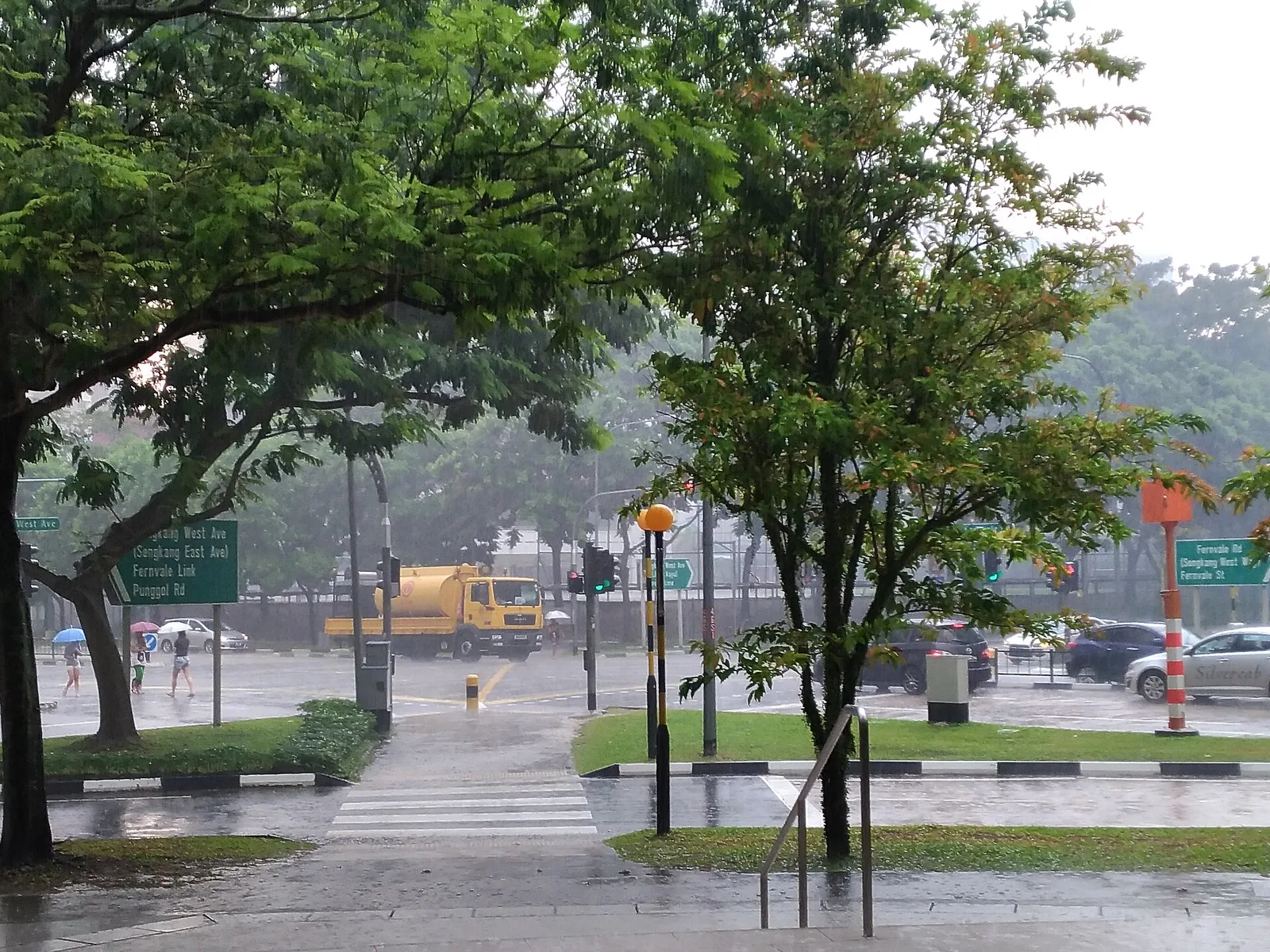
Typical patterns by part of the year
| Period | Typical weather pattern | How to plan an outing |
|---|---|---|
| December to early March | Northeast Monsoon. The earlier wet phase can bring prolonged rain during monsoon surges. The later phase is usually drier. | Keep an indoor option nearby for a full-day plan and check the outlook if the forecast mentions a surge. |
| Late March to May | Inter-monsoon. Winds tend to be light and variable and thunderstorms often form in the afternoon or early evening. | Put the longest exposed leg earlier if that day’s forecast supports it. |
| June to September | Southwest Monsoon. Sumatra squalls can bring thunderstorms and gusts, often in the early hours or morning. | Check before setting out for an early coastal or park outing. |
| October to November | Inter-monsoon. Afternoon or early evening thunderstorms are common, and this period is generally wetter than the earlier inter-monsoon. | Pick a sheltered meal or museum stop near the walking route so you can change plans locally. |
Check a forecast for the place and time you’ll be outside
Season descriptions are long-term patterns. For an outing, check the two-hour nowcast for the destination, then check both ends of a route if you plan to cross the island. Rain near your starting point does not establish what is happening at the destination.
Use the monsoon update to put a stretch of wet or dry weather in context. For a walk, choose a segment with an exit point and keep a second plan close by. The NEA and MSS information is a better basis for same-day decisions than a monthly average alone.
Plan a wet-weather fallback
On a waterfront outing, plan a shorter stop and one indoor venue in the same area. For a family outing, choose your lunch stop or an indoor activity in advance so you can change the order. Confirm access conditions before travelling specifically for an activity that is outdoors or weather-dependent.
What a surge or a squall means for a particular outing
A forecast that mentions a monsoon surge calls for a different plan from one that mentions an afternoon thunderstorm. Meteorological Service Singapore says a wet-phase surge can bring widespread rain that persists. If your plan needs a long dry window, such as walking the Rail Corridor with no scheduled indoor stop, move the walk to another day if the outlook stays wet. For a short local thunderstorm, check the exact destination again later and keep a sheltered stop nearby.
A Sumatra squall can move across the island from the west and can bring gusts and thunderstorms even early in the morning. If you are starting at East Coast Park at breakfast, check the official town forecast and the timestamped radar sequence before leaving. A recent dry observation at your home tells you what happened there. The movement across several recent radar frames helps you see why conditions at the coast may soon differ. Follow any weather-related instructions at the venue, especially before starting a session on the water. MSS explains Singapore’s rain-bearing systems.
Match the source to how far ahead you need to decide
For a trip that is still several months away, use the MSS climate overview to decide how much of the itinerary should be flexible. A December plan that depends on a completely dry afternoon has a different exposure from a visit built around an indoor attraction. For travellers choosing between two weeks, compare the long-term seasonal pattern and make sure any important walking or water activity can be rescheduled.
As the visit approaches, open the fortnightly outlook for projected conditions and recent observations. Check which days it covers. Mention of widespread rain or more localised afternoon showers can help you choose how to group activities, while the specific town forecast and radar become more useful nearer departure. Don’t carry a dated fortnightly outlook forward to a week it does not cover.
For a booking that starts in a few hours, note the exact location, arrival time and time when the activity would finish. Check the town and the places where a route starts and ends. The duration that matters includes any exposed walk from public transport and time needed to reach shelter. If it is a venue with weather policies, use its own instructions on delays, closures or changes.
Plan two weather versions of the same day
Waterfront plan. Choose a short stretch and a station or indoor place near each end. If the weather deteriorates, finish at the closer one. Use the Merlion Park guide for a short bay view or the light show guide for a plan tied to a specific start. Check the operator’s status if the show is the fixed part of the evening.
Family plan. Pick one attraction and one meal within the same precinct. Give priority to the stop with the strictest entry time or age conditions. Put a nearby playground or outdoor walk on the flexible side of the plan. If it becomes too wet to walk comfortably, use the indoor activity first and revisit the outdoor plan when the short forecast improves.
Park or cycling plan. Mark where you would turn around, return equipment or get to public transport. Look at how far the route runs from a sheltered stopping point. A brief shower at the start can be different from being a long way into the ride when thunder is observed. Follow local venue and official weather instructions for the activity. Use the park guide or operator map to see the points where you can cut the route short.
Compare observations before treating a neighbourhood report as islandwide
A rainfall reading gives the amount collected in a specified time at that station. A radar image shows the pattern estimated over an area, with its own timestamp. A forecast describes expected conditions for a place and time window. Use the rain radar guide to compare those three views. For planning, check when the observation was made and whether the measured station represents the area you will visit.
Look at successive radar frames to see how rain areas have evolved. An isolated patch may change size, and a line of storms can pass a sequence of locations. Keep the short-range forecast beside the frames to inform the decision. Being able to see dry weather through your window gives a direct observation at that moment and place. A longer route or a later arrival time deserves a check for its own location and period.
If you are bringing a group across town, decide when you will make the final call. For example, you might check the destination at home, reassess before making the exposed leg and follow the site’s instructions if the weather changes during the visit. Set a meeting point under cover and give the address to everyone so you can make the same change together.
Read the notice for the reference period it describes
When MSS says a period was wetter or drier than usual, look at the region, station and period being summarised. A short thunderstorm can contribute a large share of a day’s measured rain in one place. A month or monsoon summary combines many such days. Use climate records for comparing periods, and look at the latest valid forecast for the actual time you will be outside.
Longer Pacific climate signals, such as El Niño, can shift the odds of wetter or drier conditions in particular parts of the year. The relationship varies with the month. Consider that wider context when reading a seasonal outlook, then return to the monsoon and town forecasts for the outing. If visibility or smoke is part of your decision, use the regional readings and official air-quality outlook for that separate question.
Decide where your plan has the least flexibility
Keep one fixed point in the day and give the rest some room. For an early departure, check the conditions before leaving and choose a route with a short exposed transfer. For an outdoor booking, read the organiser’s last entry and weather change instructions before travelling. Share the organiser’s status page with anyone meeting separately so they can see the same update before carrying on to the venue.
Check the time of day in a seasonal plan
Use the local climate description to see when particular weather systems are most commonly observed. During the inter-monsoons, MSS describes thunderstorms as common in the afternoon and early evening. During the Southwest Monsoon, Sumatra squalls can arrive earlier in the day. These are patterns that help you decide when to check the latest forecast and when a fallback matters. They leave room for rain outside those hours.
For a morning trip to an exposed park, look at the latest conditions before you start, even if you chose morning to avoid afternoon thunderstorms. For a timed visit after work, tell the group how you will decide whether to go ahead. Open an accurate pin for the entrance and make sure there is a dry place nearby to wait while an organiser makes its decision.
On a week with repeated rain, compare two or three short options near different transport stops and select one on the day. A museum visit can be followed by a walk if conditions improve. Keep an open-air part of the plan within the time it actually takes to get back to a sheltered stop. For a group with young children or limited mobility, put that shelter decision before the distance or number of places you want to cover.
Sources
- MSS climate of SingaporeMonsoon seasons, squalls and inter-monsoon weather patterns.
- MSS two-hour nowcastCurrent location-level forecast for near-term planning.
- MSS monsoon updateCurrent monsoon context.
- MSS weather systemsHow monsoon surges, Sumatra squalls and local thunderstorms differ.