
Key dates in Singapore history
| When | What changed |
|---|---|
| 14th century | Archaeological evidence from Fort Canning and near the river shows an established trading settlement on the island. Temasek is one of its historical names. |
| 1819 and 1824 | A treaty with Sultan Hussein and the Temenggong allowed the British East India Company to establish a trading post in 1819. A separate agreement in August 1824 ceded Singapore to the company. |
| 1826 and 1867 | Singapore, Penang and Malacca formed the Straits Settlements in 1826. The settlements became a British Crown Colony in 1867, administered from London. |
| 1942–45 | British-led forces surrendered to Japan on 15 February 1942. The city was renamed Syonan-to under Japanese occupation. Japanese forces formally surrendered to the Allies at the Municipal Building, later City Hall, on 12 September 1945. |
| 1959 | The new constitution brought internal self-government. Singapore elected a Legislative Assembly, Lee Kuan Yew became prime minister and Britain retained responsibilities including defence and external affairs. |
| 16 September 1963 | Singapore joined the Federation of Malaya, Sabah and Sarawak in forming Malaysia. |
| 9 August 1965 | Singapore separated from Malaysia and became a sovereign country. The proclamation cites a separation agreement dated 7 August. |
What was here before the British trading post?
Start with the evidence from the old waterfront. Excavations at Empress Place have recovered ceramics, coins and other objects that show exchange with the region by the 14th century. Fort Canning has produced finds from the settlement too. The surviving Singapore Stone fragment carries a damaged inscription that has yet to be fully deciphered. Its exact date and reading remain open, even though it offers evidence of a much earlier past.
The story in the Malay Annals about Sang Nila Utama and the naming of Singapura belongs to a different kind of evidence. Read it as a literary tradition, and use archaeology when asking where people lived and what they traded. For the colonial period, distinguish the 1819 permission to trade, the March 1824 Anglo-Dutch agreement between European powers and the separate August 1824 cession treaty with Sultan Hussein and the Temenggong. The National University of Singapore’s law library lists the treaty texts and where to read them.
Why 1959, 1963 and 1965 all matter
In 1959, an elected Singapore government took over most internal matters. The merger in 1963 made Singapore part of an independent federation with a federal government handling foreign affairs, defence and internal security. Separation in 1965 changed Singapore’s constitutional status again, this time to a sovereign state. Read the Proclamation of Singapore alongside the Albatross File exhibition. The first records the public declaration. The exhibition examines what happened during the negotiations.
Nation-building had roots before 1965. The Housing and Development Board was established in 1960 to tackle housing shortages. HDB began its Home Ownership for the People Scheme in 1964, and the use of CPF savings for public housing purchases followed in 1968. Listening to oral histories and looking through HDB’s early archival footage adds the experience of daily life to constitutional dates.
Housing and transport changed how much of the city people could reach in a day. The original MRT service opened in November 1987 with five stations from Toa Payoh to Yio Chu Kang. LTA’s North–South Line history includes an image from that first route. Take that part of today’s much longer line if you want to see how the first stops fit into the modern network.
Where to see Singapore’s history in person
| If you want to see | Go here | Plan your visit |
|---|---|---|
| Archaeology and Singapore before 1819 | Fort Canning Heritage Gallery | NParks lists free admission, 10am–6pm, closed on the last Monday of each month. Give yourself extra time for the uphill approach or plan a drop-off. |
| The fall of Singapore in 1942 | Former Ford Factory, 351 Upper Bukit Timah Road | See the site of the British surrender and the wartime exhibition. The archive lists Tuesday–Sunday, 9am–5.30pm with last admission at 5pm. Free entry covers Singapore citizens and PRs, children aged six and below, people with disabilities with one caregiver, and Friends of the Museums members with one guest. The standard foreign visitor ticket is S$7.13. |
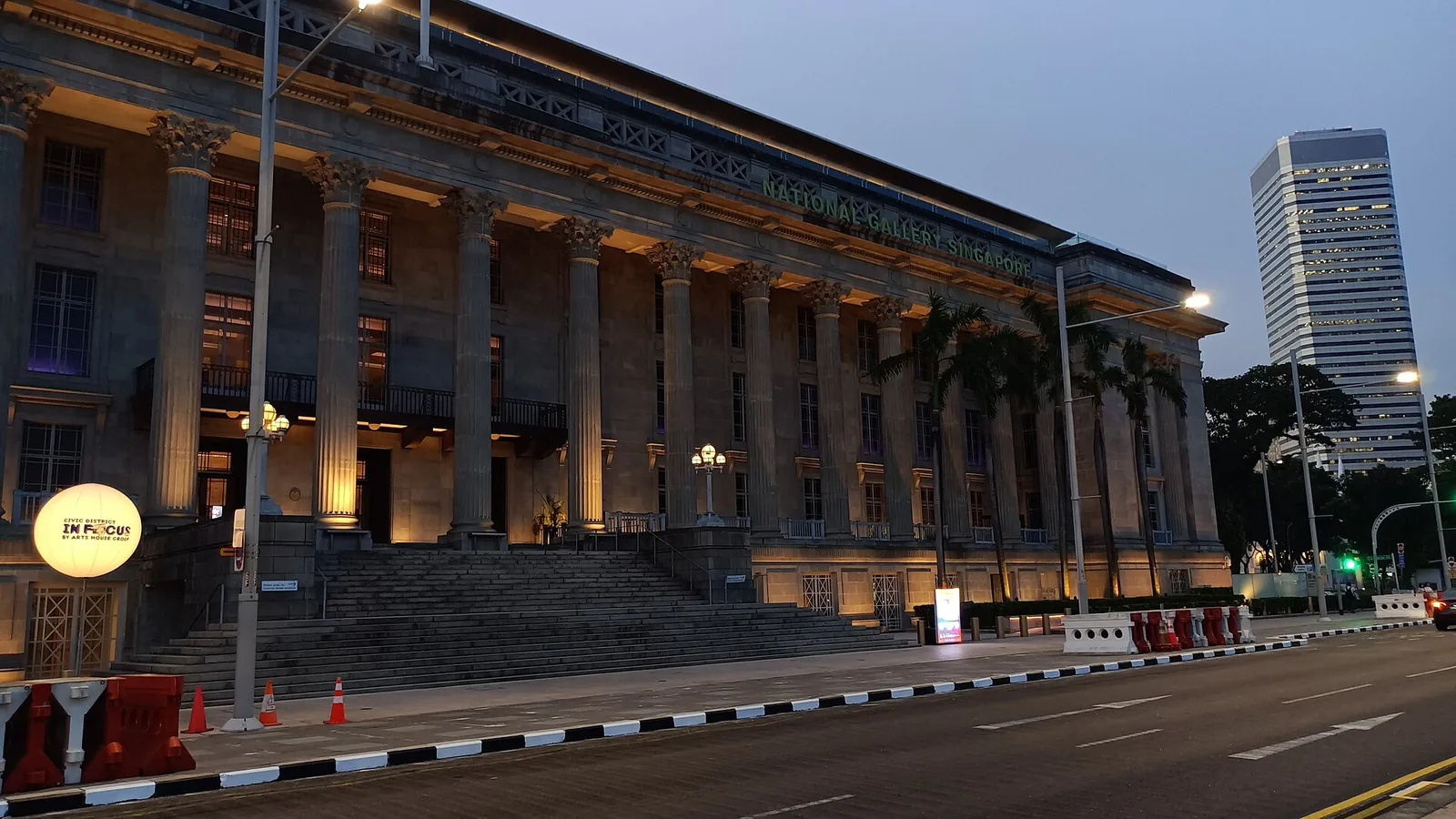
| The Japanese surrender in 1945 and post-war government | National Gallery Singapore’s City Hall wing | Use the building-history audio guide for the surrender stop at the Level 2 City Hall Foyer. Look for the City Hall Chamber, where Yusof Ishak was inaugurated as head of state in December 1959. Check gallery admission if you also want to see the art exhibitions. |
| Merger, separation and the road to independence | The Albatross File at the National Library Building | Book a free timed ticket for Level 10, 100 Victoria Street. Read the proclamation before going so the exhibition documents have a date and context. |
For a Civic District half-day, start at Fort Canning and finish either at the old City Hall or the National Library, depending on the period you want to explore. Check the National Museum’s current exhibitions if you want an indoor stop near Fort Canning. For a focused wartime half-day, start at the Former Ford Factory and allow for a separate journey to City Hall if you also want to see where Japanese forces surrendered.
How the port, the river and migration shaped the settlement
The early colonial port worked by bringing ships, goods, labour and credit together. A trader arriving from another part of Asia might buy or sell goods from several ports during a single stop. Warehouses and merchant premises near the Singapore River helped goods move between vessels and the town. Read the National Library’s colonial-era guide for sources on the port and its communities. When you walk around Boat Quay or Commercial Square, today’s Raffles Place, read the street pattern as the geography of a working port that has been extensively rebuilt.
Migration changed both the economy and daily life. Trade and jobs brought people from China, India, the Malay Archipelago and elsewhere. Religious buildings, shops and associations helped new residents find familiar languages, food and forms of mutual help. You can study one example at Thian Hock Keng on Telok Ayer Street. The temple’s relationship to seafarers makes more sense once you know that the street was on the waterfront before reclamation. Its present inland address tells a second story about how the city grew.
For family or neighbourhood history, start with a name and an address. Search an old map and a newspaper from the same decade, then compare the results with the archives. The National Library’s list of primary accounts can help you choose a starting point. Record who wrote each account and the people or work it describes. Views from a merchant office, a household and a government department can illuminate different parts of a single street.
Follow the occupation through a place and an object
At the Former Ford Factory, begin with the surrender site and then ask how the occupation changed the lives of people outside that room. The exhibition covers civilian experience as well as the campaign. Wartime currency is one way into that story. A surviving note shows what the occupation authorities issued. A source describing what people could buy, how they found provisions or how prices changed can tell you why the number printed on the note mattered in practice.
Keep February 1942 and September 1945 separate when reading a caption or looking at a building. The first date belongs to the British surrender to Japan at the factory. For the September ceremony, go to the National Gallery’s City Hall wing. Looking at both venues helps trace the end of British military resistance in Singapore and the subsequent end of Japanese control. They also show two quite different uses of buildings that had been part of pre-war Singapore.
Read a constitutional milestone alongside a change in daily life
The Parliament history helps put 1959 in context. The Legislative Assembly created under the Rendel Constitution first sat in 1955, with elected and appointed members. That is a different stage from the elected assembly and internal self-government of 1959. To see how government changed, ask who could elect representatives, who had authority over defence or foreign affairs, and which decisions the next constitution moved to a different level of government.
Pair that timeline with a housing or transport source. Watch an early HDB film from the National Archives and note which problems and benefits the film emphasises. Then seek a resident’s recollection of moving home, commuting or finding neighbourhood services. A government record can show what the scheme was meant to do. An oral history describes an individual’s experience within that larger change.
One way to keep the later dates straight is to write three questions beside them. What could Singapore govern for itself in 1959? What became federal in 1963? What changed in the legal relationship with Malaysia in 1965? A visit or document that answers one of those questions is easier to place in the wider timeline.
Sources
- National Heritage Board on Singapore before 1819Archaeological evidence and early maritime trade
- National Heritage Board Singapore Stone collection storySurviving stone fragment and undeciphered inscription
- National Heritage Board colonial treaty historyLocal signatories, 1819 and 1824 treaties and Straits Settlements
- NUS law library guide to treaties and statutesHistorical documents and their repositories
- Parliament of Singapore historical developmentConstitutional milestones, self-government and merger
- National Archives Proclamation of SingaporeOriginal independence text and date of separation agreement
- National Archives HDB filmHDB’s formation and original archival footage
- HDB archival press release on housing policyHome ownership and CPF milestones
- NParks Fort Canning heritage visitsArchaeological exhibition and gallery visiting hours
- National Archives Former Ford Factory overviewLocation and 1942 surrender history
- National Archives Former Ford Factory visitor informationPublic opening hours and admission prices
- National Gallery Singapore architecture and historyFormer City Hall, 1945 surrender and 1959 inauguration
- National Gallery Singapore surrender audio stopLocation for the building-history audio guide
- National Museum of Singapore upgrading noticeGallery availability and planned changes
- LTA North–South Line historyOriginal five-station MRT service in 1987
- National Library colonial-era research guideHistory of the colonial port, early trading accounts and source routes.
- National Library primary accounts before 1942First-hand accounts and other archival sources for colonial Singapore.