
Albatross File tickets, hours and location
| Detail | What to know |
|---|---|
| Admission | Free timed ticket, required for visitors of every age. |
| Location | National Library Building, Level 10, 100 Victoria Street. Take the lift to the exhibition. |
| Opening hours | 10am–9pm daily. Closed on public holidays. Closes at 5pm on Christmas Eve, New Year’s Eve and Chinese New Year Eve. |
| Nearest useful stations | Bugis (EW12/DT14) or Bras Basah (CC2). City Hall (NS25/EW13) works if already in the Civic District. |
| Best for | Self-guided visitors, especially ages 10 and up according to NLB. Younger children can attend with tickets. |
- Open the official booking page, choose a slot and include everyone in your party. A personal booking can cover up to 12 people. One verified email can hold one active personal booking.
- Save the QR ticket on your phone or print it. Keep your reference number. To change a booking or free up the space, go to the booking site and choose “Retrieve Booking”.
- Reach the Level 10 entrance five minutes early for check-in. If you miss the slot, the next available space could be on another date. Schools and organisations should use the separate Organised Group booking form.
Temporary closure in January 2027
NLB lists the gallery as closed from 4 to 8 January 2027 inclusive. Pick another day in the booking calendar.
What is in the original Albatross File?
Dr Goh Keng Swee kept papers on the negotiations that led to separation. The file includes cabinet papers, memoranda and handwritten notes about discussions with Malaysian leaders. The National Library exhibition follows that story using archival photographs, videos, interview recordings and interactive displays. The Albatross File: Inside Separation is the companion book. Use the exhibition for a visit and the book for a longer reading of the negotiations and their documentary record.
Before going, read the dates on the Proclamation of Singapore. Malaysia was formed on 16 September 1963. The separation agreement was made on 7 August 1965, two days before Singapore became a sovereign state. Try following what was agreed before the public announcement, then find the accounts of how the news was made public. This gives the notes, interviews and later recollections a clear order.
How to plan the visit around your group
The exhibition is self-guided. Give yourself around an hour as a planning estimate if you want to stop for the recordings and read the documents. NLB allows private, non-commercial photography and video without flash, tripods or selfie sticks. Food and drinks stay outside. The exhibitor suggests bringing a jacket because of the gallery temperature. Leave bulky bags behind if possible, since lockers are limited.
For access or other support, use the contact in the NLB visitor FAQ before booking. Toilets are by the Level 10 lift lobby. NLB publishes downloadable exhibition guides in English, Malay, Chinese and Tamil on its exhibition page. With younger visitors, start with the difference between joining Malaysia and becoming independent, then focus on one display and one recorded account.
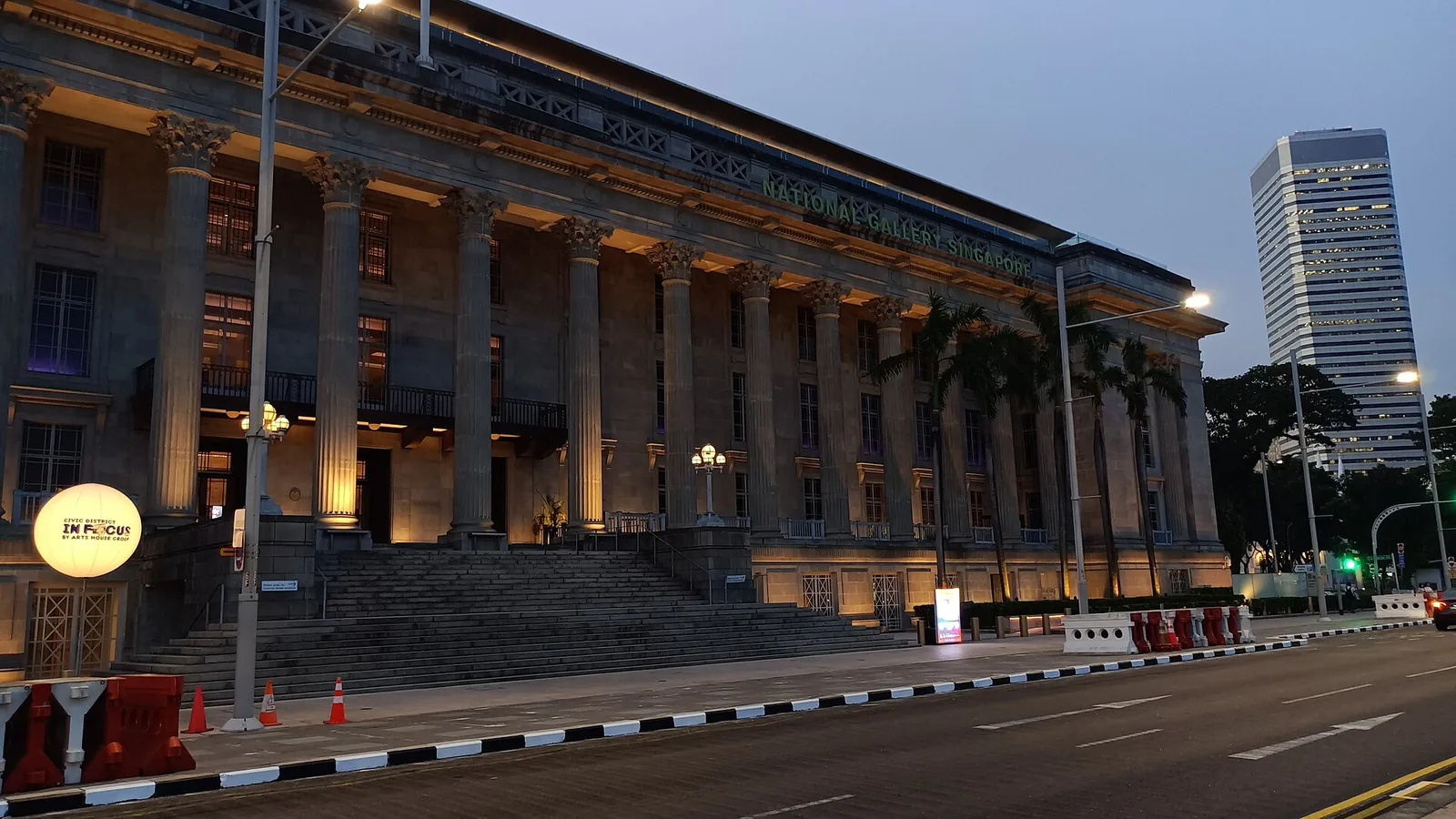
For two stops on foot, go from the library to City Hall, pictured on this page, where the 1963 proclamation of Malaysia was delivered, or make the library your booked stop before an unhurried walk toward Kampong Gelam. If you cannot visit in person, read NLB’s interview on the negotiations and pair it with the original proclamation.
See three types of evidence in one visit
Start by making a short timeline of what happened publicly and when the records were made. At the exhibition highlights, look for a document or object tied to a date. Then look for a recording that recalls the same events from a later point in time. Finish by opening the published proclamation and finding the date when the change took effect. Write each date beside where it appears. It is easier to understand the display when the time of an event and the time of someone’s account have their own lines.
Read a handwritten or private note for what it can show about the discussion at that moment. Ask who wrote it, who was supposed to see it and what they were trying to achieve. A later interview can tell you what a participant remembered or thought was important. A public proclamation records what the government announced. Set the three alongside each other before drawing a conclusion from one striking sentence.
For a student, one useful prompt is to choose a claim about the timing of the separation and find where it appears in two sources. Write the title and date of each one. Note whether the speaker was present, was recalling the event later, or was writing from the published record. The NLB resource list provides references to follow after the visit.
Ways to read the account before or after your ticketed visit
For a short introduction, use the Singapore history timeline to see where the exhibition’s two years sit in the larger transition from self-government through merger to independence. Read the proclamation for its date and the wording of the declaration. At the exhibition, look for a source that sets out why a participant thought an agreement could be reached and a source that shows how the public learned of it.
If you have more time, compare NLB’s recorded discussion of the negotiations with the document list. Keep individual recollections attached to the person giving them. The book and the archive can help you locate the document or interview behind an account that is summarised on display.
Build a short route around the booking
Tell everyone to meet at the National Library Building at 100 Victoria Street, then allow time for the lift to Level 10 before check-in. If a family member wants fewer stops, plan to spend the booked time on one set of documents and one recording. Save the detailed reading for afterward. If you are pairing the exhibition with City Hall, look up the Gallery’s own opening and admission details for the specific spaces you want to enter. Leave the walk flexible so you can stay longer at the documents if they interest your group.
Sources
- NLB Albatross File exhibitionPermanent exhibition, opening hours and dated closure
- NLB Albatross File FAQBooking conditions, group size, transport and access
- NLB timed admissionOfficial free ticket booking
- NLB BiblioAsia interview on the negotiationsFile context and companion book
- NLB BiblioAsia on the separation agreementNegotiations and separation timeline
- National Archives Proclamation of SingaporeProclamation and dates of formation and separation
- Ministry of Digital Development and Information Proclamation of Malaysia1963 proclamation at City Hall
- NLB on the National Library BuildingNational Library address on Victoria Street