
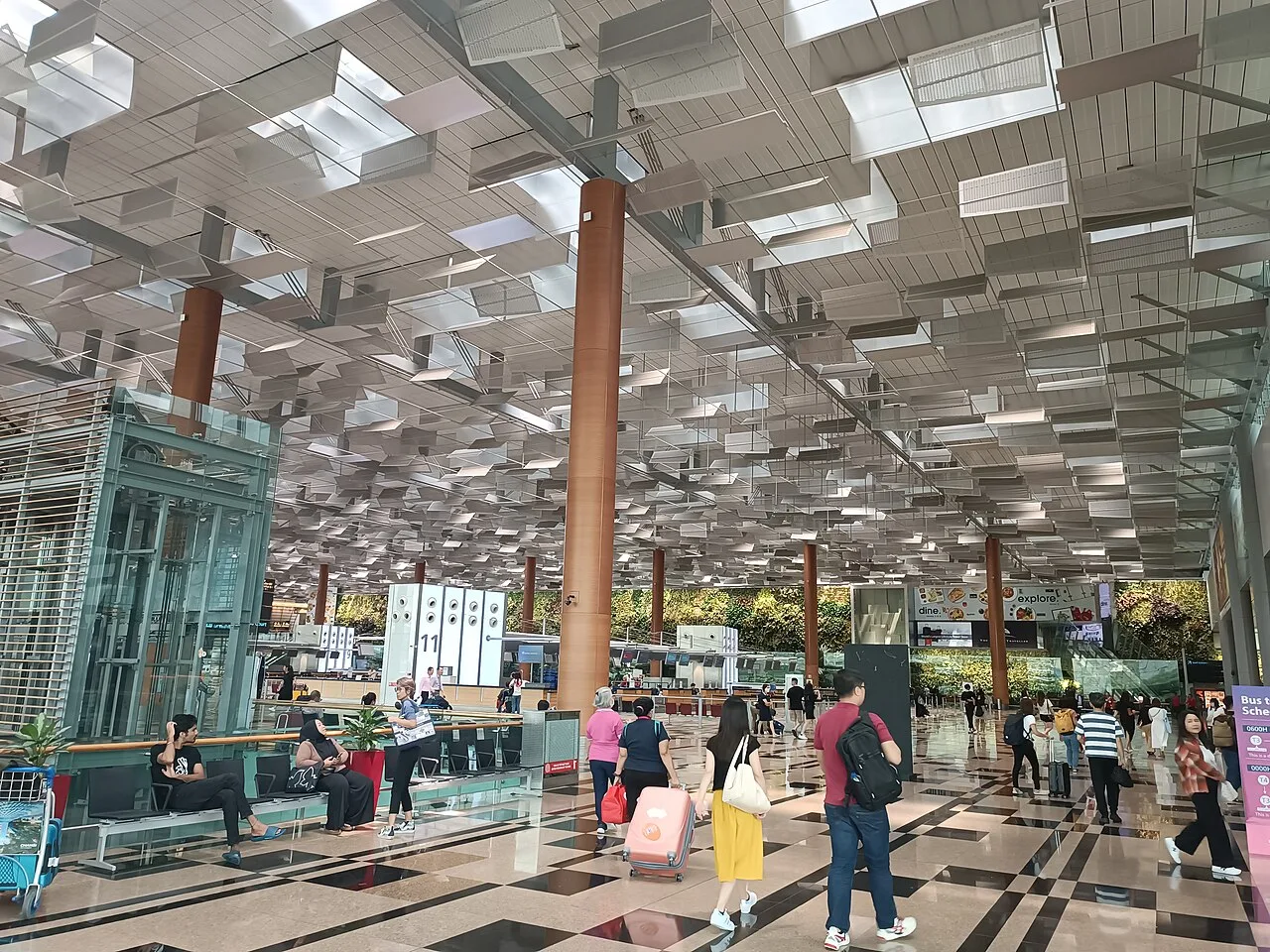
Decide where you want to shop or collect
If you are departing from Changi and collecting at the airport, check your departure terminal and the shop or collection point on your order. For a return to Singapore, check whether the product can be collected at your arrival terminal and whether the order is convenient for your own arrival time. Keep a copy of your itinerary in case a flight change affects the pickup. Compare the final price and size against the same product in a regular shop, especially for perfume sets, travel exclusives and electronics packages.
The airport’s iShopChangi shopping guide lists ordering from 30 days ahead up to 12 hours before the flight in its traveller workflow. Verify the available deadline and collection options for your flight in checkout. Collect with the order confirmation, boarding pass and passport ready. For a tight connection or an airline rebooking, check the seller’s collection or change instructions before buying an order with a short pickup window.
Changi’s guide to duty-free shopping at the airport identifies Lotte Duty Free for wines and spirits and The Shilla Duty Free for beauty products. Look up the terminal and exact store if you are buying in person. The iShopChangi non-traveller mode also offers GST-absorbed pricing on selected products available for Singapore delivery. If you are leaving Singapore, check the destination’s arrival rules and any onward transit checks before shopping, particularly for liquids.
Check whether you qualify for duty-free liquor on arrival
Under the Singapore Customs duty-free concession rules, travellers must be 18 or older and have spent at least two days outside Singapore before arrival. The liquor must be permitted for import and for your own consumption. Travellers arriving from Malaysia cannot use the liquor concession. Customs says clearing immigration in Malaysia before reaching Singapore counts as arriving from Malaysia. Check the actual journey into Singapore when a return itinerary passes through Malaysia.
Customs applies the concession to eligible liquor bought overseas or at Singapore duty-free shops. Count bottles packed overseas as well as a Singapore arrival shop purchase. The allowance is for the traveller’s personal consumption. Customs says concession liquor may not be sold or given away and lists goods carried for other people among goods to declare and pay for. Crew members have a separate table on the Customs page.
| Option | Spirits | Wine | Beer |
|---|---|---|---|
| A | 1 L | 1 L | — |
| B | 1 L | — | 1 L |
| C | — | 1 L | 1 L |
| D | — | 2 L | — |
| E | — | — | 2 L |
Choose the single option that matches what you carry. Customs classifies sake as wine and soju and umeshu as spirits. A 720 ml sake and a 700 ml whisky fit the wine and spirits quantities in Option A for an eligible traveller. A 700 ml whisky and two 360 ml bottles of soju total 1.42 L in the spirits category. Check the above-concession declaration before proceeding. The same rule applies to small bottles left over from the trip. For quantities that require a permit, use the separate instructions in Singapore Customs’ Customs@SG guide.
Count calendar days to determine GST import relief
The Singapore Customs guidance updated on 2 November 2026 counts the departure day through the day before the return date for GST import relief. Use the dates of departure and arrival even if one of the flights was close to midnight. If you leave on a Friday and return on Saturday, only Friday counts. If you leave on Friday and return on Sunday, Friday and Saturday count. Check the arrival date on the ticket, especially for a flight due back just after midnight.
A qualifying traveller away for at least two days can receive relief on up to S$500 of eligible goods. For a shorter trip, that figure is up to S$100. If a qualifying traveller coming home after one counted day brings S$320 of eligible new goods, S$220 is above that relief. For someone who qualifies for the S$500 relief and brings S$680 of eligible goods, S$180 is above it. Use Customs’ valuation and declaration instructions for the GST payable. Liquor has its own concession and tobacco has neither concession nor GST import relief.
The S$100 and S$500 limits are subject to the traveller’s status and the goods. Customs excludes crew members and holders of specified Singapore-issued passes from relief for newly acquired goods. It also excludes goods for trade or business and goods carried for other people. If you live overseas and are visiting Singapore, check the section for non-residents on goods you will use during the visit and leave in Singapore, and the separate rules for temporarily imported personal belongings.
Which purchases count as newly acquired goods?
For a resident returning to Singapore, Customs includes overseas purchases and gifts, along with GST-free or duty-free purchases obtained near departure that the resident brings back. That includes eligible online retail orders collected on the way out. Include an item purchased overseas even if you removed its price tag, used it on the trip or bought it second-hand. Foreign sales tax paid on a purchase is also separate from the Singapore import calculation.
Picture a resident returning with a watch they already owned and a second watch bought abroad. The first belongs in the check for personal belongings already owned before departure, subject to Customs’ conditions. The second goes in the newly acquired goods tally. If the second watch was a gift with no receipt, Customs may assess value using comparable goods. Save receipts, invoices and proof of purchase for higher-value items, and keep the documents handy when entering Singapore.
Cigarettes and tobacco products have no duty-free concession or GST import relief, including Singapore duty-paid cigarettes taken away and brought back. Singapore Customs also publishes standardised packaging requirements, so review its tobacco guidance before bringing any. Check controlled goods separately before you travel. Obtain any required permits or approvals separately from duty and GST payment.
Declare before you arrive or at the checkpoint
- Gather invoices, terminal purchase confirmations and quantities you expect to bring in. Open the Customs@SG web application instructions before your trip to see which goods it can handle. Check the actual date and place where you will enter Singapore.
- Submit and pay for eligible declarations up to three days before arrival. If you prepare further ahead, save a draft and complete the payment once the window opens. Keep the declaration number, email and e-receipt where you can open them at the checkpoint.
- After you fully declare and pay for the applicable goods, you can use the Green Channel for those goods and show the receipt if stopped. If you have extra items that were missing from the online declaration, Customs directs you to its Tax Payment Office after immigration.
- Use the Red Channel or speak to a checkpoint officer for items you still need to declare, for permitted controlled goods requiring checks or if you are unsure. The Customs Red and Green Channel guidance explains the process. If your arrival date changes after you have paid, Customs asks you to bring the e-receipt and your airline’s notification to the Customs Tax Payment Office.
If you arrive by land or sea, start from the same Singapore Customs traveller guide for the declaration process at your checkpoint. For an individual duty or GST calculation, prepare the actual product, quantity and price information. Have permission documents ready for any controlled article before presenting it for clearance.
Three arrivals to compare before buying
| Itinerary | Shopping decision |
|---|---|
| Short same-day or overnight return from Malaysia | Check whether other purchases qualify for any GST relief. If you are arriving from Malaysia, the liquor concession is unavailable even if a shop calls its stock duty free. |
| Friday departure and Sunday return from Thailand | Singapore Customs counts two days for GST relief. Check the conditions on both GST relief and liquor before committing to a purchase. |
| Return after buying a bag on departure and collecting drinks on arrival | Keep the departure receipt for the bag and count it under the conditions for newly acquired goods if you are a resident. Review the alcohol quantities against a single concession option, including anything you bought overseas. |
For a flight rebooked via a different airport, look at whether you will clear immigration en route and where you officially arrive in Singapore. Ask Singapore Customs about the exact itinerary and product when the route or classification is unusual. If you are also planning the ground leg of a Malaysia itinerary, see the Kuala Lumpur to Singapore transport guide for the distinction between flight and overland arrivals.
For an arrival on the same trip as another adult, keep track of which goods each traveller purchased and carries, and have the relevant receipts ready if Customs asks. If you are buying for someone else or expect to collect orders for others, check the official reporting requirements before purchase. Ask the seller about order changes as well if the purchase will put you above your concession.
Sources
- Singapore Customs — Duty-Free Concession and GST Import ReliefUpdated 2 November 2026, liquor eligibility, categories and GST calendar-day examples
- Singapore Customs — Customs@SG Web ApplicationAdvance declarations, payment, e-receipts and date changes
- Singapore Customs — Red and Green ChannelsRules for declaring goods at arrival checkpoints
- Singapore Customs — Traveller’s GuideArrival workflow and declaration routes at checkpoints
- Changi Airport — iShopChangi Shopping and Airport CollectionOrdering timetable, collection documents and shopping modes
- Changi Airport — Duty-Free Shopping at ChangiAirport retailer names and available product categories