
Compare by facility rather than park name
| Playground | Best fit | What to verify |
|---|---|---|
| Forest Ramble, Lakeside Garden | Nature-themed adventure stations with inclusive play elements. | NParks lists 8am–10pm from Tuesday to Sunday and public holidays, with maintenance on Mondays. If Monday is a public holiday, maintenance shifts to Tuesday. |
| Bishan–Ang Mo Kio inclusive playground | Barrier-free approach from Carpark A with nearby accessible washrooms, according to NParks. | The inclusive and adventure playgrounds open 24 hours. The water playground has separate hours. |
| Coastal PlayGrove, East Coast Park Area B | Play tower, nature play and a separate water area. | Use the facility-specific age guidance and operating hours in the NParks listing. |
| Marine Cove, East Coast Park Area C | A different family stop on the same coastal promenade. Convenient when the day includes a meal here. | Confirm the Area C approach and avoid navigating to Coastal PlayGrove by mistake. |
Choose a plan for a water-play day
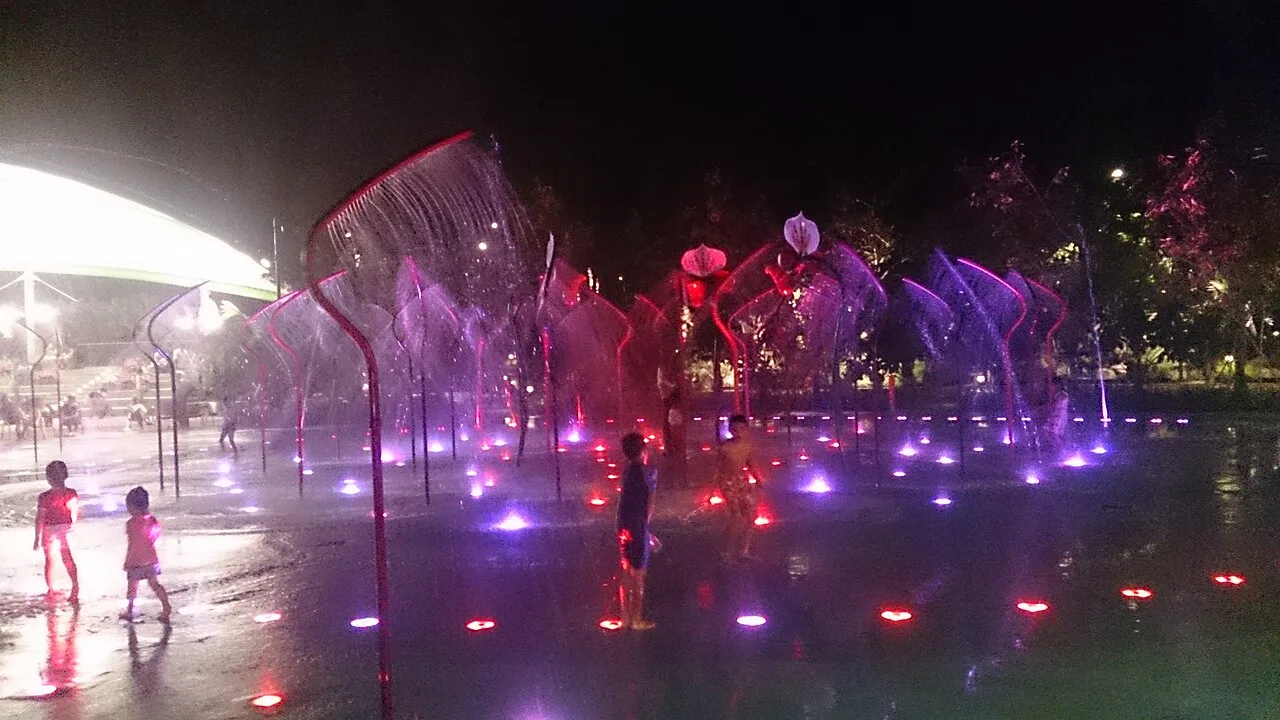
At Bishan–Ang Mo Kio Park, NParks lists water play on Thursdays to Sundays and public holidays during two windows, 8am–11am and 4pm–8pm. Have a dry activity in mind if you arrive during the gap. Coastal PlayGrove has its own published water-play timetable. Read the water-area listing specifically rather than assuming an open park means the pumps are running.
Keep a change of clothes and verify changing or washroom access before a long outing. If you have children of different ages, check the posted age or height guidance for climbing equipment as well as water play.
Plan the arrival around your group
For a child using a mobility aid, start with the confirmed route to the inclusive playground and toilets. For family members who want shade or a break, check where they can sit within sight of the play area. A nature-play course can have uneven or wet sections even if the main park approach is paved.
For a wet-weather plan with level indoor surfaces, use the free indoor play guide. For exact park entrances, see our East Coast Park area map guide or Jurong Lake Gardens rail approach as a starting reference. Forest Ramble is in Lakeside Garden rather than inside Chinese Garden proper.
Where to take children who play at different speeds
Choose a base where one adult can see a younger child while another supervises a climber. At Jurong Lake Gardens, the Forest Ramble map and activity descriptions organise play around animal-inspired stations. Start with one easy station and let the older child choose a second, instead of treating every feature as part of a required route. At East Coast Park, the Coastal PlayGrove operator page lists separate age guidance for the tower, water play and nature play. Pick which one to supervise first.
On any of these outings, choose a named meet-up point outside the equipment. If one child is done first, an adult can stay with the other while the rest of the group heads for water or the toilets. Pack a dry activity if your plan depends on a splash area that could close.
Compare playgrounds in the north, west and city centre
Admiralty Park for a mix of slide sizes. NParks’ Admiralty playgarden guide describes 26 slides across Junior Play, Adventure Play and Family Play in a hilly landscape. The different areas are useful if a group includes cautious children and experienced climbers. Start in the zone that fits the youngest child. Ask the older child to choose one slide to add afterwards. The venue page identifies an inclusive playground, too. Confirm the shortest route to the desired equipment before arriving, especially if someone in the family uses a mobility aid. NParks places the South Entrance near the playground opposite Republic Polytechnic.
West Coast Park for climbing and a picnic. The park directory links to the map and lists several different carparks. Find the Adventure Playground by name. The NParks map and walk guide places it in the western part of the park near the Grand Lawn. Combine one play section with a meal on the same side. Give a younger child a lower activity before they watch the older group attempt a higher feature. Use the current facility signs before telling children that a particular attraction is open.
Jubilee Park for city-centre dry play. NParks describes Jubilee Park at the western foot of Fort Canning Hill, with swings, seesaws, logs and slides that use the slope. Choose this entrance if the aim is play. A visit to the heritage buildings farther uphill is a separate walk that may work for adults or older children. Use Fort Canning’s map and directions to choose the approach and verify accessibility when the day depends on avoiding stairs or steep slopes.
Check both entry and the exact play feature
Separate three questions when the children are excited about one piece of equipment. Can the group enter the park? Is the play section operating? Does the child meet the individual feature guidance? At East Coast Park, the Coastal PlayGrove page gives ages 13 and above for the Vertical Challenge and ages 5–12 for the separate water area. It lists nature play at ages 3–12. Use those as planning categories and follow the posted instructions at the site.
The Jacob Ballas Children’s Garden guide describes a children’s garden for visitors up to age 14, with separate water-play guidance for ages 2–12. It describes an approximately 10-minute walk from Botanic Gardens MRT Exit A through Bukit Timah Gate and lists access and accompanying-adult rules. Check the current notice on its Tree House and individual features. If your whole group is meeting a family there, look at the admission and adult-accompaniment conditions before treating it as a general garden entrance.
For a child deciding between water and climbing, put the feature with shorter hours first. Pack the spare clothing and plan the toilet stop before turning on to the waterfront path. If two children cannot use the same part of the site, name the area each adult is responsible for and agree where to meet before leaving. This is easier than trying to supervise two different features from an in-between point.
What makes a route suitable for a particular child?
| Need | What to look for | How to plan the outing |
|---|---|---|
| Firm, level approach | A venue map that identifies a barrier-free route from transport or parking. | Confirm the route to equipment and a usable toilet. At Bishan–Ang Mo Kio, start with the official Carpark A approach. |
| A way to play without climbing | Swings, low-level features or ground-based activities the child can use. | Choose one good station before entering the site. Check nearby seating and whether the adults can supervise from there. |
| A dry alternative in the same park | An adventure or nature-play area alongside the water facility. | Use the water-feature schedule, then change course if it is closed or too slippery. |
| An option for a child who needs space | A public area with somewhere to wait outside the busiest equipment. | Plan a quieter first stop and let the child choose whether to move on to busier play. |
An accessible entrance alone does not establish that every part of a playground suits the same child. If the venue calls out specific accessible equipment, confirm the approach and the equipment itself. Use NParks’ Bishan–Ang Mo Kio listing to see where it identifies barrier-free access and disability-friendly toilets.
Keep the return as easy as the arrival
Pick the person likely to get tired first and work backwards from their transport home. Leave the last activity near your public exit, carpark or drop-off. If there is a long gap between playground and pickup, take water and leave room for a snack or a separate stop. For a first visit, one shaded break can be more useful than another play section.
If local rain is likely, check any opening or works notice and choose a backup you can actually get to. Free indoor playgrounds compares enclosed options and helps distinguish them from covered outdoor playgrounds. For a hot day outside, think about how much of the route is exposed and whether there is a short walk out once the children have finished.
Check the site map when an equipment area closes
Open the venue’s feature page and the current notices before making the trip. At Bishan–Ang Mo Kio Park, NParks has published a map of an Adventure Playground closure. Check the current status of that exact area. A works notice for Adventure Play can affect a different location from the inclusive playground or water area. Keep the playground name with your screen capture so you can compare it with signs on the ground.
When one part of a park is closed, compare the route to the alternative before setting off. The NParks nature-playgardens directory covers several additional sites. Choose an alternative the family can reach in the same travel window.
For a simple outing with a stroller, consider meeting another family directly at the alternate entrance. If you are taking a bicycle as well, agree whether there is room to park it near your first stop and have an adult stay with younger children through the crossing. Send the change of location to everyone before they arrive. A precise park pin is helpful when a park has several names for areas and landmarks.
Sources
- NParks Forest RambleInclusive elements, opening and maintenance hours.
- NParks Bishan–Ang Mo Kio Park playgroundsInclusive approach, washrooms and distinct play hours.
- NParks Coastal PlayGrovePlay facilities, rules and availability by zone.
- NParks Marine CovePlayground configuration and location.
- NParks Admiralty Park nature playgardenPlay zones, slides and inclusive equipment
- NParks Admiralty Park park directorySouth Entrance by the playground
- NParks West Coast Park directoryPark map, carparks and facilities
- NParks Fort Canning park featuresJubilee Park location and equipment
- NParks Fort Canning visitor informationPark access and location
- NParks Jacob Ballas Children’s GardenGeneral age, water play, current restrictions and rail approach
- NParks nature playgardens directoryAdditional park alternatives
- NParks Bishan–Ang Mo Kio Adventure Playground works mapSpecific playground site affected by works