
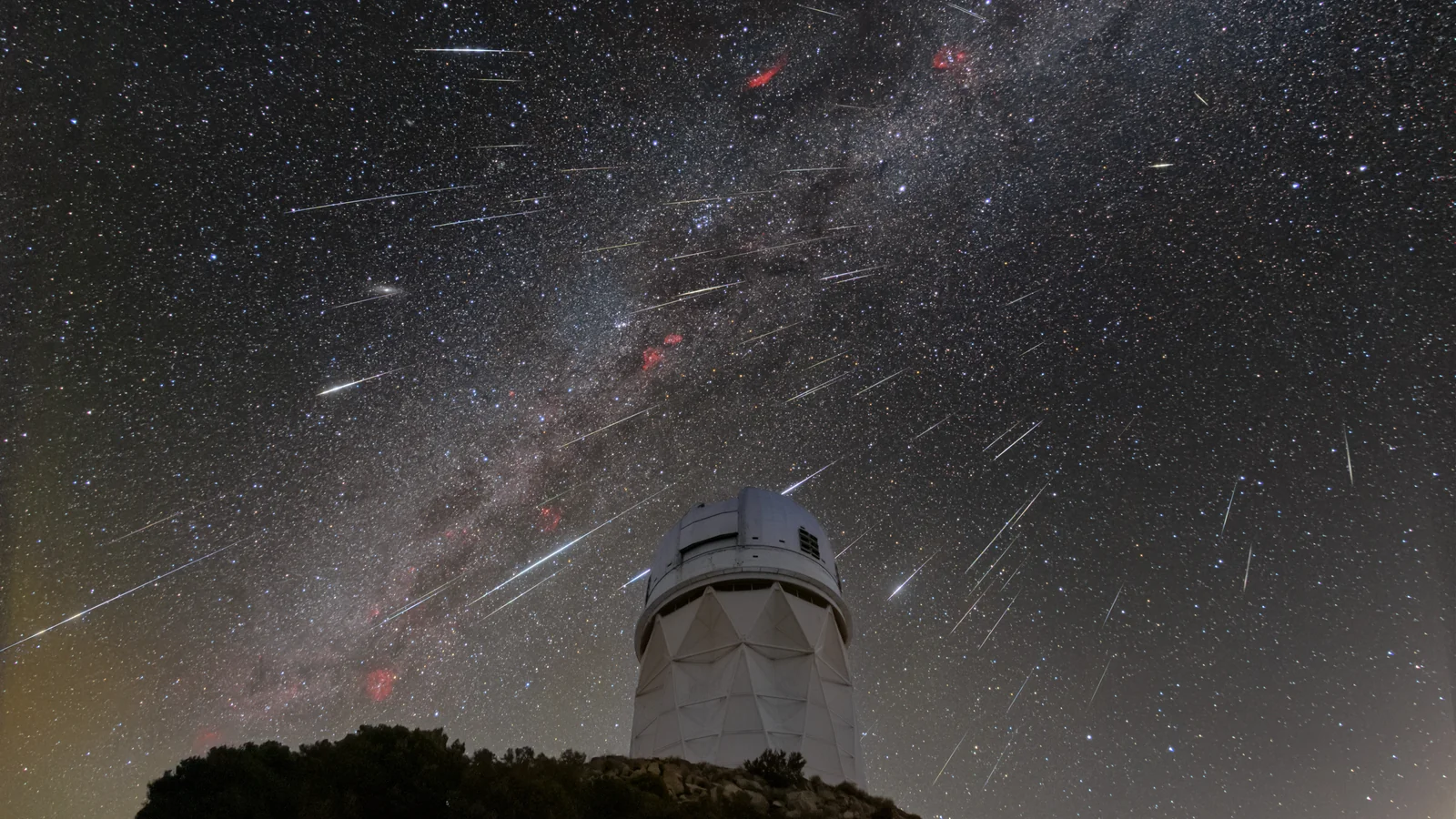
Geminids 2026 in Singapore
Start with Monday 14 December after 10pm, Singapore time, and keep the early hours of Tuesday 15 December open if the sky is clearer then. The International Meteor Organization's detailed 2026 calendar estimates a broad maximum centred around 14:00 UTC on 14 December. Adding eight hours gives 22:00 in Singapore. The calendar describes a broad peak, so use that time to choose a night instead of treating it as a short appointment. Sunday night into Monday morning is a reasonable backup if the forecast is much better.
NASA lists activity from 4 to 17 December and gives the general peak night as 13–14 December. The detailed UT estimate helps place the strongest part of the window on a Singapore clock. Moonlight is less of a concern in the detailed calendar for this peak than cloud and local lighting. Check the cloud forecast and see whether your chosen patch of sky is actually visible before making a late trip. These are viewing windows. The number of meteors seen in the city will depend on the conditions where you stand.
Choose a Singapore viewing window
Look up the shower, its activity dates and whether its radiant spends time above Singapore during the local night. The radiant is the point from which a shower's meteors appear to spread. It helps you choose a time. The trails themselves can appear elsewhere in the sky. If the forecast peak lands in daylight for Singapore, compare the dark portions of the nearest nights. Use the IMO calendar for the active window and convert any Universal Time it specifies to Singapore time by adding eight hours. Check whether the addition moves the date forward.
NASA identifies the Geminids in mid-December as a dependable annual shower and the Perseids in August as another annual example. These are names to look up in a calendar for the current year. Their practical visibility can vary with the radiant's position, moonlight, rainfall and clouds. An annual headline rate is an estimate under specified observational conditions. A short session beneath Singapore's sky glow can yield only a few clear sightings. Use a wide view and give the outing enough time that it is worthwhile even if no bright meteor appears.
Pick an open public place with an easy way home
| Possible spot | What makes it usable | What to confirm |
|---|---|---|
| A familiar open space near home | You can try again after a short shower or cloud break. | Public access, trees, surrounding buildings and direct lighting. |
| East Coast Park | Some open spaces have a broad view on the seaward side. | Check the specific area, lighting, access and transport. Choose somewhere set back from traffic and the water. |
| A managed public session | Staff can explain the sky or share telescope views of other objects. | Check the operator's date and weather terms. A regular observatory session may have a different purpose from meteor watching. |
NParks' East Coast Park information gives the areas and facilities. Its Coastal PlayGrove page, for example, lists a 24-hour location in Area B. Inspect your proposed viewing position first and pick an open public spot that is easy to reach and leave. Direct lamps near paths or a bright building behind you can still limit what you see. Find the nearest pickup or exit when it is light, and check the last available service from that location.
Some nature parks and reserves close at night. NParks explains these access rules and lighting restrictions. For a simple plan, use an explicitly open public area with enough space off busy paths and a way to leave if the sky closes in. A patch of sky near home gives you an extra chance if clouds move. For a longer trip, plan it around a friend, a short walk or a place you would enjoy even without any meteor sightings.
Look up, let your eyes adjust and watch for a whole interval
Give your eyes time to adapt. Choose a place where you can see a wide stretch of sky without staring into a streetlamp, then keep phones and torches dim when you use them. NASA's viewing guidance suggests allowing about 30 minutes for your eyes to adapt. Sit with a clear view towards a wide, dark patch of sky. A telescope or binoculars limits how much sky you see at once, while a meteor can appear and fade quickly anywhere in view.
If you want to log what you see, note the Singapore date and time, the part of sky and where each trail appeared to move. A shower meteor seems to trace back towards the radiant when its path is extended backwards, although you will also see unrelated meteors on some nights. A steadily moving light or repeated aircraft flashes usually looks different from a brief streak. Write down the weather and minutes watched so a slow night has a useful record. Avoid comparing a short casual count to an idealised hourly rate.
Make the final decision using clouds and transport
Check the Singapore rain radar for active showers and review a current weather forecast for cloud. Radar can flag rain without showing the whole cloud picture. Use a clear patch you can actually see as well. If the sky is fully covered, look for a second night within the shower's active window, even if the estimated peak is past. Moonlight also varies with sky position and hour. If the Moon is plainly bright in your chosen view, try a clear direction away from it.
For example, suppose a shower peak is estimated late on Monday, but Monday brings widespread cloud and Sunday's forecast has a clearer period. Check how far each night lies from the recorded active interval and whether your route is easy at that hour. A short Sunday attempt from a familiar open space can be a better use of time than travelling to a closed or inaccessible site on the peak night. Use the Singapore map to compare the station or pickup point if you choose an outing further away.
What to bring and when an observatory visit helps
For one person or a small group, a light mat or folding chair and water usually make the wait easier. Bring a way to check the weather and reach your transport, then put the screen away while looking. Keep lamps low and away from other viewers. A wide-angle camera on a stable mount can record a sequence if you know how to operate it in the dark. Use the rest of the group as a guide to when a technical setup is taking too much of a short clear spell. Keep the setup clear of other visitors' routes.
If you want a guided introduction to the sky, Science Centre Singapore describes its observatory sessions. Check the published programme and weather arrangements for the intended visit. Those sessions can help you learn to identify parts of the night sky. A meteor shower is best enjoyed with an open view, so keep an independent, simple observing plan if the shower itself is your main reason to go out.
Keep a record of the next clear session
Write down the source and clock conversion when you plan a viewing night. Later summaries sometimes list the night for a different time zone. The detailed original estimate makes it easier to see which evening you actually need. On the day, review the same calendar and take another look at the sky close to the proposed hour. A long shower can be attempted on more than one evening if your first place is cloudy.
For observers reporting to a meteor organisation, follow its event format and record your location, time and sky conditions precisely. For a casual outing, the most useful note is the hour you could see clearly and the spot with the best unobstructed view. Keep that for the next shower. It can make the next plan quicker than choosing a new location in the dark.
Sources
- International Meteor Organization 2026 calendarGeminids activity, maximum in UT and viewing conditions.
- International Meteor Organization current calendarCurrent shower dates and observational notes.
- NASA Geminids2026 activity period, radiant and naked-eye observing advice.
- NASA meteor showersAnnual showers and their characteristics.
- NParks East Coast ParkPark facilities and access.
- NParks Coastal PlayGroveExample opening hours and area.
- NParks on responsible accessNighttime restrictions and ecological reasons.
- Science Centre Singapore observatoryGuided observing context in Singapore.