
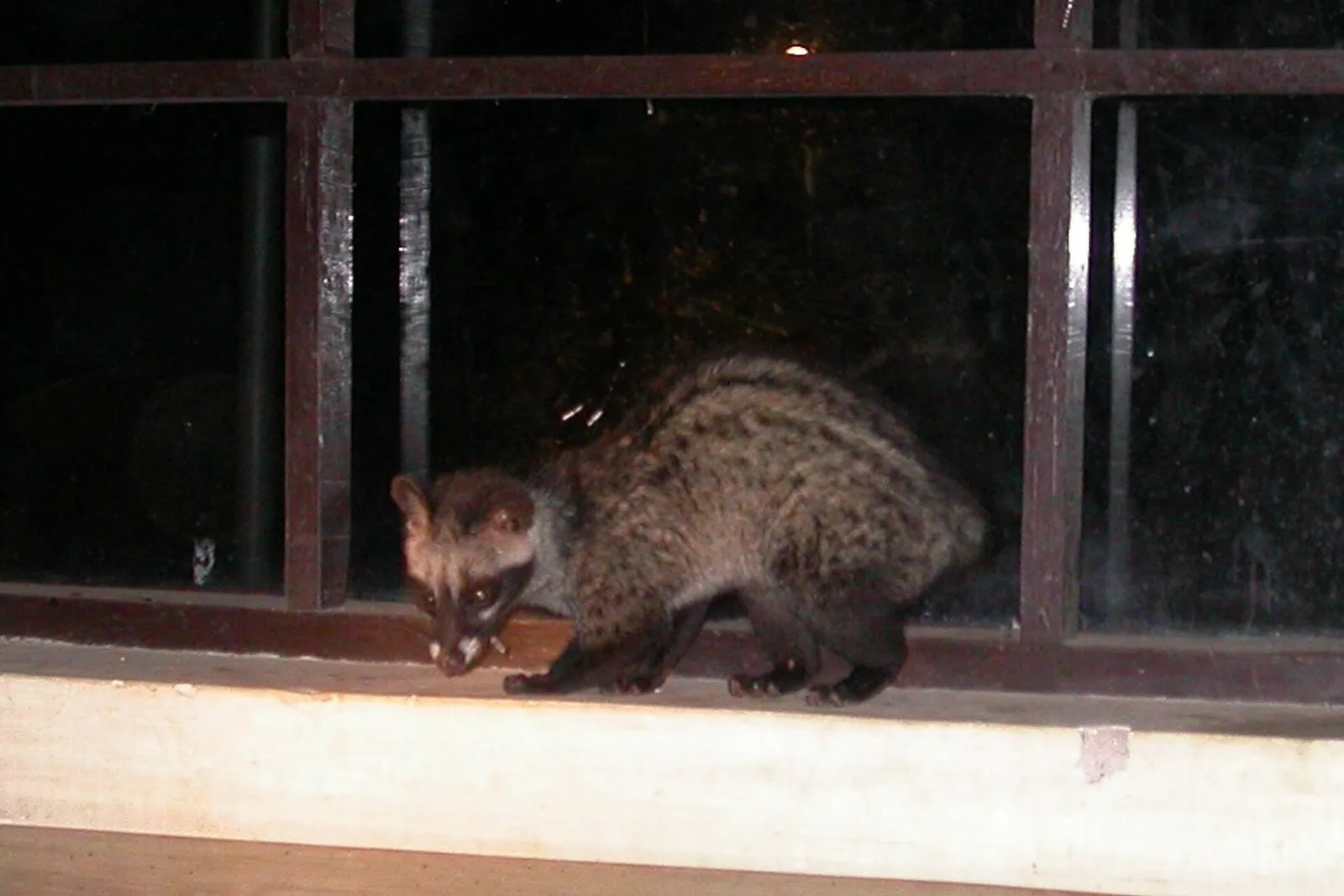
Identify the animal from a distance
The common palm civet, Paradoxurus hermaphroditus, is one of the civets seen in Singapore. AVS describes its small ears, long muzzle and long tail. Look for a dark facial mask, spots along the sides and stripes on the back. “Civet cat” is the familiar name, while the animal is related more closely to mongooses than to domestic cats.
AVS describes the species as nocturnal and often found in trees or other high places. A sighting at night along a roofline or near a fruiting tree fits this behaviour, but a silhouette alone is not reliable identification.
Respond to the situation you actually see
| What you see | What to do |
|---|---|
| An animal passing through | Leave a clear route out and watch from a distance. Avoid approaching, feeding or cornering it. |
| A trapped, injured or distressed animal | Call the AVS Animal Response Centre at 1800-476-1600. Give the location and let trained staff handle it. |
| Repeated activity near a home | Keep pet food and leftovers indoors, and check AVS’s exclusion guidance. Get advice if you suspect animals or their young are inside a roof space. |
Why civets matter in Singapore
Civets consume fruit and can spread seeds through their droppings. They also eat small animals and insects. Their ability to move through trees helps explain why urban greenery and nearby buildings sometimes share the same animal routes. Follow the agency’s practical advice if a sighting becomes a recurring issue at home.
Distinguish an animal passing by from an animal in the roof
One sighting in a garden or on a roof: allow space for the animal to move on. Note the time, direction of travel and location. Look from a doorway or window at a safe distance. A blurry outline is enough to report a possible sighting when you need help, and there is no need to approach to confirm the species.
Repeated activity around one tree or wall: remove accessible pet food and talk to the property manager about what you have seen. AVS’s civet guidance describes how a high route can let civets move between trees and rooftops. It suggests pruning overhanging branches to limit roof access. Ask the property owner to coordinate any tree work after the animal has moved on.
Noise from inside a roof or suspected young: get advice before any openings are closed. Check from a safe place and tell AVS or the property manager whether the noise is coming from inside, how often it happens and whether there may be young. If an animal is trapped or injured, give the Animal Response Centre the exact building and access instructions.
For an observation record, use a distant photo if you already have a clear line of sight. Keep people and pets away from the animal’s exit and wait for it to leave under its own power.
If fruit trees draw repeat visits
AVS advises picking ripe fruit regularly or protecting ripening fruit with cloth or mesh bags. In a shared garden, ask whoever manages the trees to coordinate that work. Avoid leaving food out to see whether the same animal returns.
What you can identify from a distant view
At night, look first at the outline and where it is moving. A civet’s low body, long tail and activity in trees or along high edges fit the AVS description. If it is already far enough away to watch safely, look for the longer muzzle and dark areas around the face. When the angle or light hides those details, record it as a possible civet. A well-lit photograph from a secure indoor spot can help someone review it afterward.
Keep uncertain facts separate from clear ones. For example, you may know that an animal travelled along a wall at 10pm and disappeared into a tree. You may be unsure of its face shape. Write down the first two facts before guessing the species. When neighbours report the same animal, compare times and places instead of assuming every nocturnal sound came from one civet.
Use the location and timing to decide who needs the report
For one animal moving through a communal garden, give it room and note how it left. Mention the date to the site manager if the sighting affects access or people are crowding it. For recurring visits, make a simple record for the property manager with the date, time and part of the building, such as the courtyard or the edge of the roof. Write down whether anyone actually saw it enter a space. That distinction matters if the manager is deciding whether the animal is still inside.
If you need to call the Animal Response Centre about an injured or trapped civet, give the exact block, street and nearest access point. Describe whether it is moving, what makes it appear injured or what it is trapped in, and where you can see it from without getting closer. Keep the phone free for follow-up questions and follow the agency’s instructions. A property manager can help staff access a common or secured area.
Avoid making a regular wildlife route more attractive
Review where food can be left outside or reached, such as bowls for pets, uncovered scraps or ripe fruit collecting below a tree. Secure rubbish according to your site’s rules, and ask whoever manages any fruit trees about routine maintenance. Tell neighbours how to let an animal move through without approaching it. If a pet usually goes into the area at that time, give the animal a clear exit before reopening access.
For an issue around a house or shared estate, use professional advice where site work or a possible occupied space is involved. Share the agency guidance with whoever is deciding what to change. If the animal is simply travelling between trees and leaves by itself, the most useful response may be to keep the neighbourhood routine from becoming a reliable feeding stop.
Give other people a simple account of the sighting
In a building chat or community notice, describe the location in general terms and ask people to let the animal leave. Share the AVS contact for a trapped or injured animal. Direct details about access, exact location and possible shelter to the property manager or responders so they can deal with the situation safely.
Sources
- AVS civets in SingaporeIdentification, ecology, Animal Response Centre number and handling guidance.
- NParks common palm civet profileSpecies reference.