
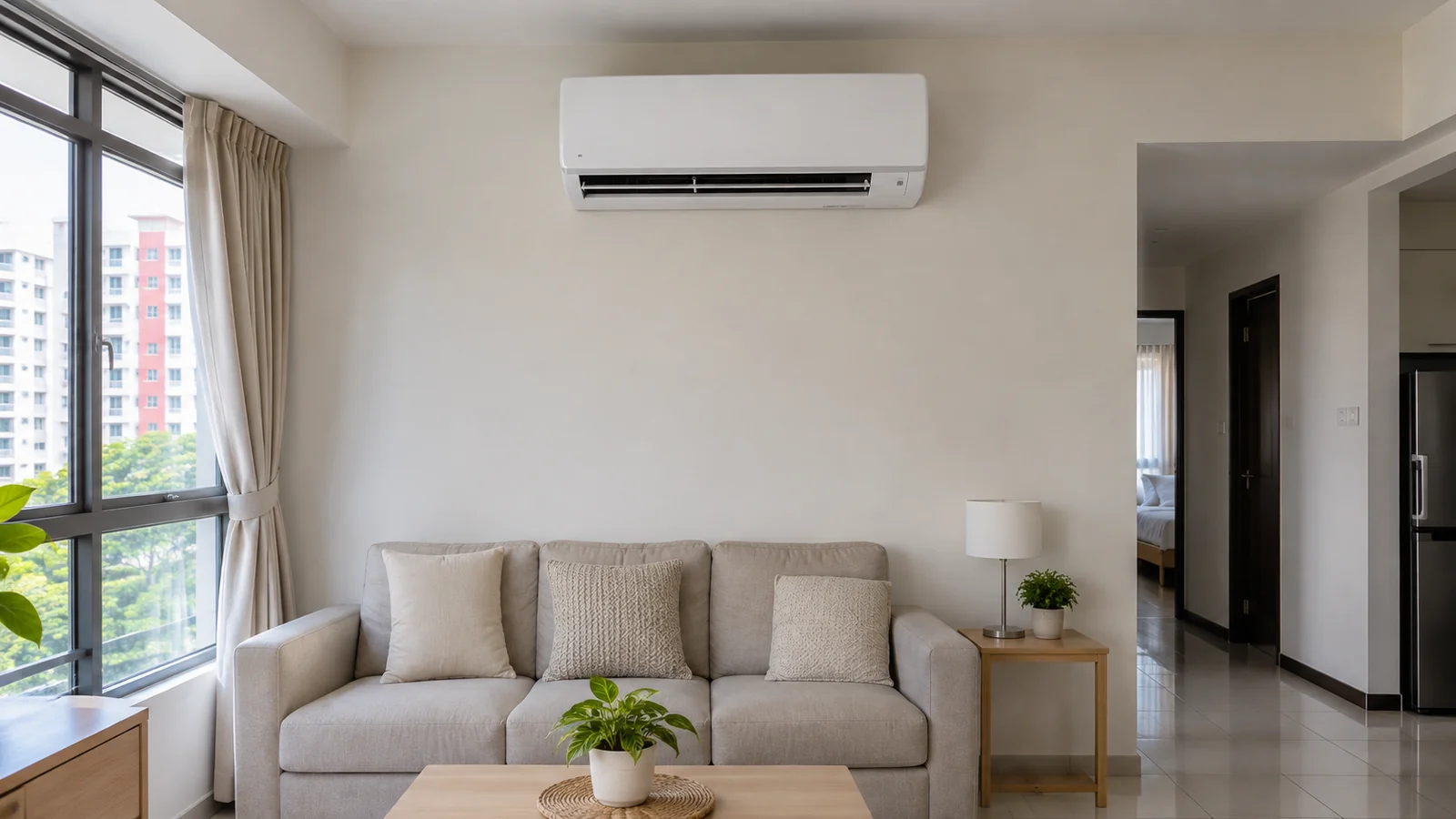
Check HDB requirements before ordering the equipment
HDB distinguishes flats with 30 A and 40 A main switches. It identifies blocks completed on or after 1 January 1994 and flats upgraded under the specified programmes as categories with higher electrical loading. Check the actual flat’s electrical loading through HDB and ask the Licensed Electrical Worker to assess the proposed equipment. In the 30 A category, an existing approved 15 A point or 20 A isolator can be used without an installation permit where the published conditions are met. Creating a new point or isolator in that category requires a permit. Other limits can apply to the chosen aircon. HDB installation guidelines and HDB electrical permit guidance
Ask for the name of the BCA-trained air-conditioning unit installer and use BCA’s official route to check. Confirm who will file the HDB installation report. HDB’s guidelines give 14 days after installation for submitting it to the HDB branch. Ask for a copy and make sure you know who will arrange any checks for new wiring. For a condominium or other managed property, ask management about approved outdoor locations, work hours, lift access and any deposit or form. Give those conditions to each bidder so they quote the same job. BCA air-conditioning safety guidance and HDB general conditions
Choose the equipment for the rooms that will run together
A System 1 pairs one indoor unit with one outdoor unit. A multi-split can pair several indoor fan coils with a single condenser. Start with a list showing which rooms need cooling at the same time. Three bedrooms used together every night and a bedroom plus a living room used at different hours make different demands on the outdoor unit. Tell the installer which rooms have afternoon sun, a large window, an open doorway or other persistent heat sources.
The sum of indoor labels is an incomplete picture of simultaneous cooling. Mitsubishi Electric’s Singapore catalogue publishes exact combinations for outdoor units such as the MXY-3H28VG. Use the row that matches all the indoor units in the quote and the conditions that apply to your dwelling. Ask the installer to explain the shared capacity, the running-current restriction if any, and the placement of each fan coil. Get all equipment codes in writing before comparing quotes. Mitsubishi Electric combination tables
To compare energy consumption, use the NEA Energy Label for the quoted equipment combination. The label uses a standard cost basis for comparison. For single-phase air conditioners it uses eight hours of operation and 16 hours of standby daily at S$0.27/kWh. Your hours, electricity tariff and which rooms run together affect the bill. NEA specifies that the label for split systems is on the outdoor unit. NEA Energy Label assumptions
What two installation providers publish
The listings below were checked on 19 November 2026. Use them to see which boundaries to ask about in your itemised quote. The costs for the exact equipment, property and routes depend on the survey.
| Provider example | What the listing says | Question for your quote |
|---|---|---|
| Kim’s Aircon residential installation | Up to 10 m of piping per indoor-to-outdoor unit. One survey trip and two installation trips listed. Dismantling and disposal included when replacing through the provider. | Get the price for each longer run and how false-ceiling and electrical work are priced. Scope and extras |
| Kim’s Aircon Starmex package pages | Listing starts at S$1,310 for the single-split range and S$1,980 for the configurable MXY-3H28VG range, with GST. | Choose and price all fan coils. The multi-split starting figure is for a configurable listing and can change with each fan coil selection. Single-split listing and MXY-3H28VG listing |
| Jex Aircon extra-work schedule | S$32 per metre per route beyond 15 m. An extra trip is listed at S$150 and a standard condenser bracket at S$150. | Check whether your selected package uses this schedule and ask for the final GST-inclusive amount and the cost of any separate electrical work. Published extras |
For a job with three routes measured at 9 m, 13 m and 18 m, a 15 m allowance for each route leaves 3 m of chargeable excess. At the listed Jex example rate that is S$96 for length. A 10 m allowance for each route leaves 11 m chargeable on the same layout. Ask the second provider for its rate. Unused metres on one route may have no value on another, so get the measurement and billing method in writing. Example of a 10 m allowance and Example of the 15 m threshold
Agree on the route for pipes, trunking and drainage
Walk the route with the installer before approving the job. Ask them to mark the position of each indoor and outdoor unit, where trunking will pass and the proposed drainage point. Check which sections a future technician can reach if the route passes behind a wardrobe or through a false ceiling. Ask who checks and finishes any wall opening and who is responsible for repainting. An agreed route drawing or marked photos are easier to use if some of the work happens before you move in.
Have each quote describe the refrigerant pipe specification, insulation, drain pipe, cable and trunking, along with any work they will retain from the old installation. The model’s requirements and survey should guide that material list. If you are offered a cheaper reuse option, ask what was assessed, how the installer will verify suitability with the new equipment, and whether retained items are covered. Price the same system with new routes if solving a recurring problem such as leaks is part of the job. Example listed materials and HDB care and drainage guidance
For a staged renovation, write down which visit covers concealed work, when another contractor may close the ceiling and when final setup takes place. Put any access equipment, building protection, debris removal and ceiling repair in the quote. In an occupied flat, agree when each room will be accessible again and what work remains after the initial visit.
Compare repairs, replacements and multi-room changes
If the main problem is one room, tell the contractor which fan coil is failing, what you see and whether other rooms still cool normally. A recurring water leak, noise or intermittent fault needs diagnosis before you decide the scope. Ask for a repair quote with the faulty part and warranty, plus a replacement alternative that states what existing material it intends to retain. If the other rooms use the same condenser, ask the installer how a new indoor unit would remain compatible with the exact outdoor model. Example manufacturer combinations and HDB maintenance guidance
For a new flat that needs three rooms but may add a fourth later, compare the proposed three-room setup with a verified four-port option. Ask which future indoor combinations the manufacturer allows and what adding another room would involve for trunking, drainage and access. Request a separate price for doing work in stages. If an extra visit is required, get the labour and materials for that stage into the price comparison instead of assuming the current package includes it. Separate appointment fee example and Example of included visits
Add up the exact scope before choosing the lower quote
Ask each bidder for a base amount and a fixed or estimated price for the extras identified on survey. For a hypothetical S$2,900 equipment-and-installation quote that uses Jex’s listed extra-work schedule, a 3 m overage, a standard bracket and an extra trip would add S$396, taking it to S$3,296 before any further items. An apparently more expensive offer can include work that the other treats as extra. Ask whether the measurements and cost can change on installation day and how any change will be approved. Provider example rates
If energy cost matters to the comparison, put the installed total on one line and estimated electricity on a separate line. For otherwise suitable systems, a S$260 price difference and a S$50 annual energy-cost difference imply just over five years to recover the extra price on the label assumptions. Update that calculation for your usage and include any ongoing service cost if quotes differ. NEA energy label basis
Ask who covers a fault after handover
Separate the manufacturer warranty on the supplied equipment from the installer’s workmanship and materials terms. Daikin’s general Singapore warranty lists a coverage period of 15 months from delivery or 12 months from installation, whichever is earlier, and identifies workmanship on external field piping and insulation among its exclusions. The installer’s written warranty should state who handles leaks, drainage faults and access costs, and when an inspection or repair call is chargeable. Daikin warranty terms
At handover, ask the installer to confirm normal operation for every specified room, show the controls and explain what testing they carried out. Have them show the route and discharge point for the condensate and explain the plan for routine servicing. Keep the model codes, invoice, scope, warranty details and applicable installation report together. If you later see a leak or fault, that gives the technician a record of the equipment and work to check. HDB maintenance guidance and HDB installation report requirement
Sources
- HDB air conditioner installation guidelinesProperty-specific electrical load, permit requirements and 14-day reporting.
- HDB renovation permit applicationWho can apply and electrical work roles.
- BCA air-conditioning safety and trained installersInstaller credentials and exterior condenser safety.
- Mitsubishi Electric Singapore Starmex combination catalogueCooling capacities at simultaneous use for exact outdoor and indoor pairings.
- NEA air-conditioner Energy LabelComparison assumptions and location of the installed split-system label.
- Kim’s Aircon standard installation scopePer-route allowance, visits, material list and disposal scope.
- Kim’s Aircon Starmex single-split listingPublished starting price and model options.
- Kim’s Aircon MXY-3H28VG listingPublished starting price, indoor unit choices and possible installation extras.
- Jex Aircon installation and additional chargesPer-route additional length rate, bracket and separate visit example fees.
- HDB air-conditioner care guidanceExternal condenser and condensate maintenance guidance.
- Daikin Singapore air-conditioner warrantyManufacturer warranty period and separate treatment of field piping workmanship.