
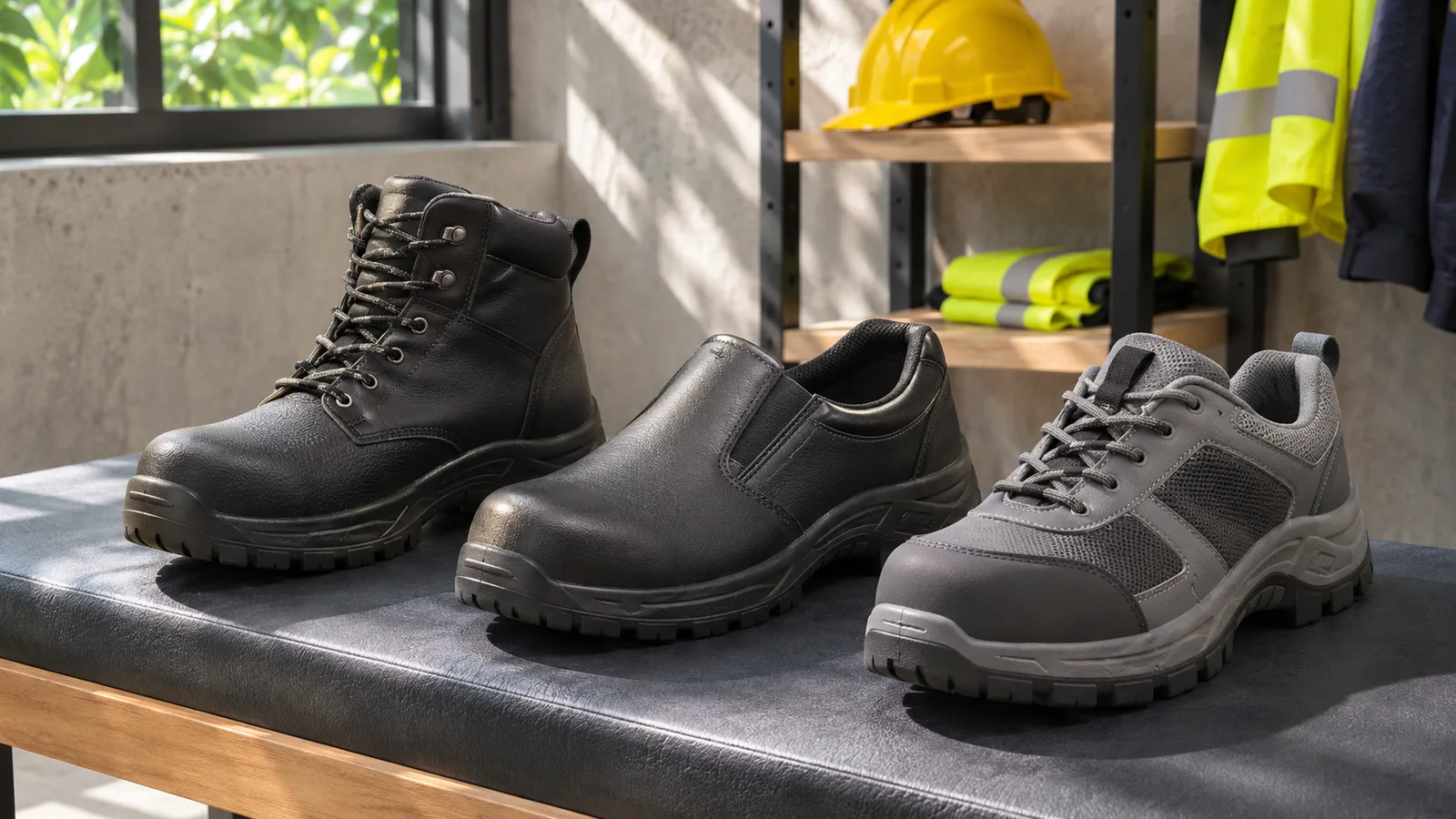
Start with the footwear approved for the task
Ask the site supervisor, employer or workplace safety contact for the actual footwear requirement. List the hazards you have to work around, such as dropped objects, sharp debris underfoot, wet floors, electrical hazards or chemical exposure. Confirm which protections and standard editions the site accepts. A product label and a matching supplier declaration are useful when a purchase needs approval. Take down the approved model and variant if the employer issues a list.
The Workplace Safety and Health Council’s risk assessment guidance describes choosing PPE within a wider set of risk controls. For a wet walk, for example, ask how slippery areas are controlled and what the employer accepts for the remaining hazard. For work around live electrical equipment or specific substances, get product selection and approval from the responsible safety professional. A generic toe-cap rating only describes the tests reflected by the marking and does not establish suitability for every environment.
Compare actual products with their stated standard
| Example | Published detail | Confirm first |
|---|---|---|
| Safety Jogger AAK low-cut at ANSAC | S$42 listed. Manufacturer sheet for AAKS1PLOW shows EN ISO 20345:2022 and S1 PS for the named model. | Ask for the supplied model, colour or revision and size chart. Confirm the actual approval and total price. |
| Safety Jogger Rena S3 at SafetySam | S$45.27 listed for the cited variant. The listing specifies a steel toe cap and S3. | Check the standard edition, required properties, size and price of the exact variant. |
| uvex 2 trend 6941347 | Manufacturer lists EN ISO 20345:2022 + A1:2024, S3S FO SC SR and a steel toe cap. Request the local quote. | Verify required approval, fit width, stock and pricing for your size. |
Product figures provide a way to check several designs and markings. Approval depends on the exact footwear supplied and the work it is used for. Use checkout for price and taxes, and keep a copy of the documentation for the variant you purchase.
Read the standard edition with the letters and numbers
ISO’s safety footwear listing identifies ISO 20345:2021 as a safety footwear standard. Product declarations may use the corresponding EN publication date when identifying EN ISO 20345. The WSH Council’s Approved Codes of Practice notice lists the Singapore footwear specifications SS 513:2024. Ask your workplace what it accepts. Keep the standard and complete marking together because you may encounter products labelled under different editions.
Bata’s standards guidance points buyers to the labels and product-specific documentation for the valid norm. Compare the actual outcome for the hazard, such as whether a specified penetration-resistant insert or slip-test marking is required. Ask the supplier to interpret codes it uses for a particular edition and obtain the model documentation. If a seller uses a previous category name in the product title, ask for the actual label before buying. The AAKS1PLOW sheet, for example, identifies both a model code and an edition you can match against the box.
Choose toe, sole and upper features for the work
Check whether the job requires a particular toe protection, penetration resistance, outsole grip, water protection or another property. A steel or composite toe feature is one component. Use the full test designation to assess the other parts. For indoor work with frequent walking, compare the weight and fit of shoes that already meet the role’s requirements. For exposed work, check the upper and outsole guidance from the maker and recognise that static-site experience can differ from frequent movement through puddles or debris.
Check the tread and cleanability of approved options against workplace surfaces. Where the job involves unusual heat, chemical or electrical exposure, select through the employer’s documented procedure. Ask what the site expects if you work in several areas with different requirements and whether a change of footwear is needed. Seek written approval before ordering multiple pairs for a new task or an unfamiliar surface.
Try the fit with the socks and equipment you use at work
If possible, try both shoes with your usual socks and any approved inserts, after you have been on your feet for a while. Use the brand’s size and width chart for the exact model. Check heel hold, toe-cap width, walking comfort and movement on stairs in a safe shop setting. A familiar size from a normal sneaker can fit differently around a protective cap. If you regularly kneel or crouch, try that movement safely and pay attention to pressure at the toes and across the top. Leave room to move normally without the foot sliding.
Ask whether the brand offers several widths. The uvex footwear guide discusses fit and product questions. Check whether a fitted insole is approved for use with the footwear. If you need an accommodation or an adjustment, ask the relevant workplace safety contact and supplier to confirm what is compatible with the specification. Get the approved model and width in writing before making a repeat or bulk order.
Check local pricing, shipping and exchanges before ordering
Compare the payable total for the exact size and conditions. If a listed S$42 pair has a hypothetical S$8 delivery fee, it comes to S$50. A S$45.27 pair you can try and collect nearby may be a better deal for an approved model. Include any delivery or return shipping and check if GST is already included. For a team order, ask when the supplier checks every shoe size and whether it can exchange an unworn pair after distribution.
Read the seller’s own terms. SafetySam’s online terms give a seven-day request window subject to approval. ANSAC’s general terms distinguish exchange conditions for new, unused items from normal return and refund policy. Confirm terms and eligibility for footwear, defect handling and same-model sizing before paying. Keep the original label and packaging and follow the seller’s rules for indoor fitting. Avoid wearing shoes to work before you know they are the right size and accepted model.
Retain the label and replace footwear after damage
Inspect a new pair for the correct model, size, markings and condition. Keep the product sheet or supplier declaration with the receipt if the workplace needs to verify it. Record when you began using the footwear. Follow the maker’s instructions for cleaning and drying. Check periodically for cuts, cracked or loose sole sections, worn tread, damaged fasteners or other changes that affect fit or protection. Ask site staff what to do after an impact or exposure that may affect safety.
If replacing one pair with a new version, check whether the revision still has the approved designation and plans for sizing. Compare several approved choices if foot shape or new working conditions change the fit. Keep a list of models that the workplace accepts and can obtain locally. For a repeat purchase, confirm delivery timing and whether the seller can provide supporting documentation before ordering.
Handle a mixed site and office day with an approved pair
Suppose you spend the morning at a desk, cross an active workshop to take stock and spend the afternoon walking between buildings. Ask where the footwear rule starts and whether the same approved shoe covers the outdoor route and the workshop. If rain makes the route slick, report that condition and ask how the site controls it. For staff who rarely use the workshop, the same rule may apply from the moment they enter. Confirm the procedure for visitors or contractors and where an approved pair can be obtained in the correct size.
For frequent transitions, bring the employer’s approved list to the shop and compare several candidates in person. Walk the shop’s permitted route in both shoes. Pay attention to heel movement when turning, width across the front when going down a step and how easily you can retie or secure the shoe before going back into work areas. If you change shoes during the day, let the workplace procedure determine where you change and whether the backup pair also needs approval. Keep that backup available if delivery for the approved replacement takes longer than expected.
Pilot a team order before committing the budget
Give the supplier a list of approved model codes, accepted standards, sizes and widths. Ask for a small fitting run to cover the size range and any alternative widths. Have each person try the exact model with their regular work socks and any approved inserts. Record the final size for each person after fitting, because someone who is between sizes in one model may fit a different width in another. Ask how much lead time the supplier needs for less common sizes and when the exchange window starts.
Price the team order from the size count after fitting. At the cited S$42 list price, eight pairs have a merchandise subtotal of S$336 before any applicable shipping, tax difference or discounts. A supplier may quote freight, size exchanges or a fitting visit separately. Confirm who handles an unworn return and let people inspect their assigned pairs promptly after delivery. For a new employee needing an urgent replacement later, record whether you can buy one pair under the same approved model and from which local stockist.
Accept the delivery against the exact specification
On arrival, match the model code on the footwear and box with the purchase order. Check both shoes for the right size and side and compare the full marking with the approved product sheet. For a multi-size order, check each box because substitutions can occur when stock is uneven. Set aside any substitute model until the safety contact approves it. A clearly documented substitute can be considered through the same procedure before use.
Use the supplier’s instructions if the shipment is missing a label, arrives with damage or includes an unexpected revision. Photograph the relevant model code or condition for the exchange request and keep the items separate until resolved. This record also makes future orders simpler because you can pass on the exact approved SKU and size when the initial invoice describes the footwear using a shortened product name.
Sources
- WSH Council risk assessmentsRisk control hierarchy and PPE context.
- WSH Council approved codes noticeSS 513:2024 footwear listing.
- ISO 20345:2021 standardSource standard title and edition.
- ANSAC AAK low-cut listingLocal price and supplier listing.
- Safety Jogger AAKS1PLOW product sheetManufacturer documentation and exact protection label.
- SafetySam Rena S3 listingLocal Rena variant price, toe material and stated rating.
- uvex 2 trend 6941347Exact standards, safety markings and toe material.
- Bata Industrials footwear standard guideReading product labels and documentation.
- uvex footwear FAQManufacturer fit and footwear guidance.
- SafetySam termsLocal return request window and approval conditions.
- ANSAC sales termsCondition-dependent exchange terms.