
Compare real local examples by what’s included
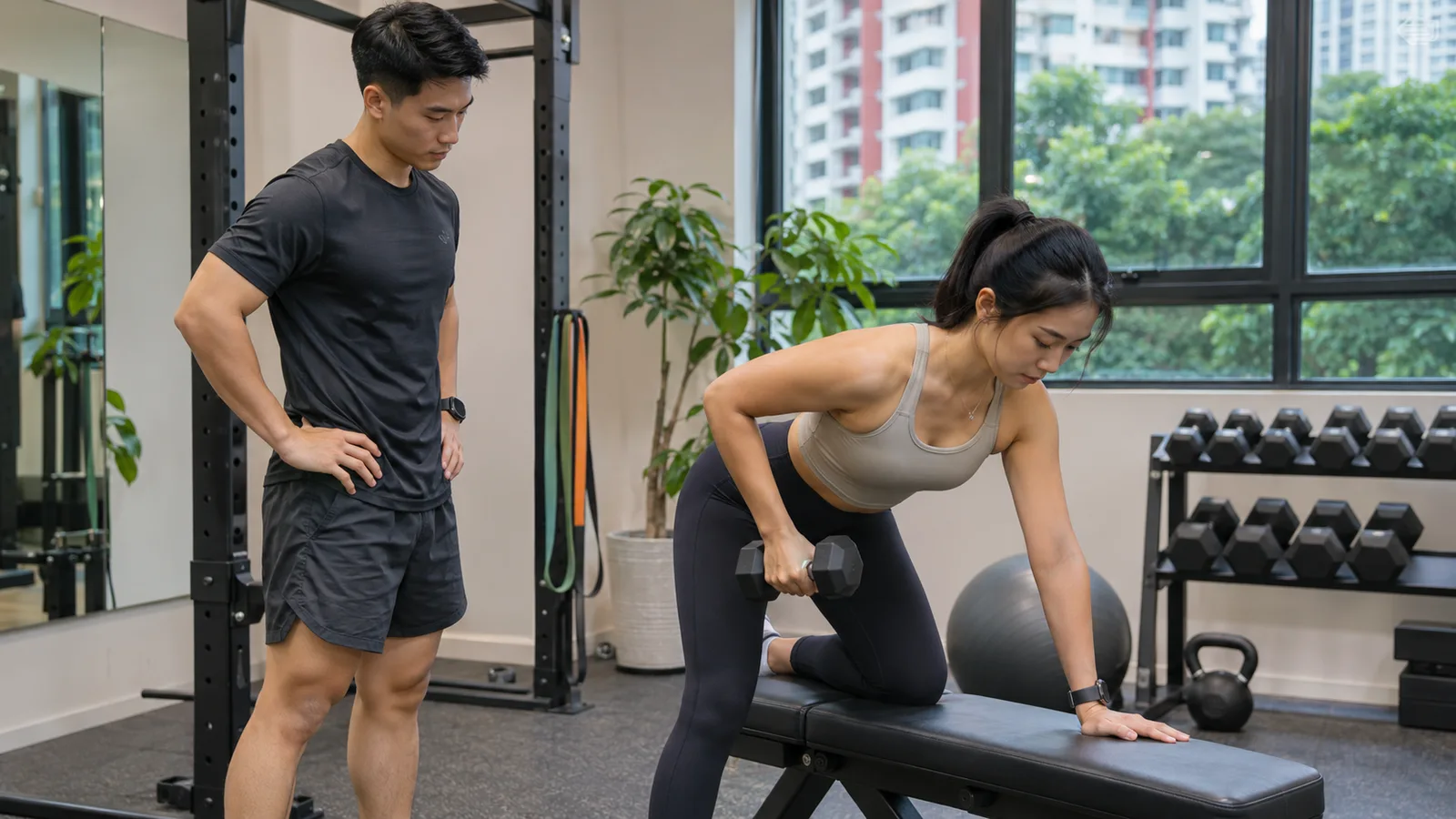
Start by deciding what you want the trainer to do. Someone new to a gym may need to learn several movements and be able to repeat them alone. Someone with an existing programme may want an occasional technique review. Another person may need every session supervised to keep a regular time. Ask for a quote that corresponds to that job. An hourly price on a provider’s page establishes one comparison point. The full cost depends on venue access, package minimum, session length and what the coach delivers between appointments.
| Provider and format | Published price or enquiry route | What to ask for |
|---|---|---|
| RAW Active, Orchard private studio | From S$150 one-to-one and S$113 per person for buddy training. | Exact session duration, number of bookings required, whether pricing is before or after tax, and which coach would train you. |
| Catalyst Performance, CBD one-to-one | From S$163.50 for a 60-minute first-time client session, including GST. The studio is in Manulife Tower above Telok Ayer MRT. | Current starter package total, assessment contents, reassessment fees and the ordinary rate once the offer ends. |
| FITLUC, home or buddy training | Home training enquiry for one-to-one or buddy sessions. | Whether the coach can use your condo or home space, whether travel or equipment is charged, and how to cancel visits. |
| The Gym Pod semi-private programme | From S$54 a session on the advertised four-session option. | Whether this programme is currently available, the total due, how matching works and how many people share the coach. |
These are published examples and operator claims about scope. They give a way to decide where to enquire. The suitability of a coach depends on the individual trainer, the actual exercise plan and the time and setting you can keep using. If information is missing, get it in a written quote before comparing.
Check credentials for the person assigned to you
Ask for the name of the coach who would take your ordinary sessions and check that person’s qualifications. Sport Singapore’s National Registry of Exercise Professionals directory is one useful check. Its public guide describes the first-aid, CPR and AED qualification for full registration, and explains provisional status. If a name is absent, ask the coach to confirm their registration or current credentials. Sport Singapore lists several reasons for absence, including registration and expired evidence or work status. The directory alone cannot tell you if the person teaches at a time or pace that suits you.
Check any specialist credentials with the issuer or ask for the certification title and date. If you are training for a sport or have particular equipment goals, ask the trainer how many clients they typically coach for a similar task and what the first month might look like. A studio page can lead you to the right person. For example, RAW Active’s profile of Glenn Ang gives an individual background to check before speaking with the team. Verify who will actually lead the trial and whether you can book that person afterwards.
Describe any exercise restrictions in advance and ask what happens if something hurts or you want an alternative. For an injury or medical condition, seek guidance from an appropriate healthcare professional before relying on a fitness programme. Establish which tasks your coach will handle and who you would contact for a question outside that role. Ask how the coach adapts a session if you are tired or a movement does not suit you.
Use a trial to see how the coach works
- Set a concrete goal. Tell the coach what you would like to be able to do. For example, you might want a walk-through of the gym equipment and a written routine for your two available days. Ask what you should bring and how much of the first appointment involves exercises.
- Ask for an example of the first month. A prospective coach can describe your starting exercises, the number of weekly sessions and what you might do between visits. See whether the plan fits your time, equipment and budget.
- Watch how the coach explains. Note how they demonstrate a movement, invite questions and change it when you are unsure. Ask how they track progress and how you will know when it is time to make a change.
- Request a written quote. Put the coach’s name, session length, price, venue access, expiry and cancellations on one page. Ask who covers them if they are away and whether you can choose to wait for the same trainer.
Ask whether a complimentary consultation, an assessment and a paid first workout are separate. For instance, Catalyst’s pricing page describes an initial in-studio assessment. Ask what you will do during that time and what there is to take home. For anyone who wants to compare a trainer’s coaching approach, give an actual supervised exercise session space in the decision. Ask whether there is a smaller commitment if either person wants to change the plan after the first meeting.
Compare the amount due, then what each usable session costs
Work out the total using the price in writing. Eight sessions at the published RAW Active starting example of S$150 would cost S$1,200 before any amounts the quote adds. A pair using its published S$113 starting rate per person would pay S$226 for one buddy appointment, or S$904 per person for eight. Check the conditions behind either rate. These are examples of arithmetic applied to advertised starting prices. The price at your studio may change with coach tier, purchase size or other fees.
Ask for the session validity dates before committing, then match them to travel and work. If eight sessions expire inside two months and you know you will be away for two weeks, ask whether the remaining weeks have enough openings. Find out whether starting a package, taking the first session or activating credits starts the clock. Ask about refunds, transfers, freezes and any administrative charge. Get the cancellation deadline and quote conditions in the same message so you can refer to them.
Add separate gym access, booking charges and travel when they apply. A home coach can reduce your travel, while the property may restrict visitors or equipment use. A trainer following you to a pay-per-use pod may need to use the provider’s trainer booking rules. See our private gym booking guide for the differences between coaching and room hire. Check the real cost before comparing pod training with a studio package that already includes use of its equipment.
Choose the setting you can keep using
In an existing gym: check whether external trainers are allowed and where they can coach. Find out if there is a separate trainer, guest or floor fee. When you already have membership, ask what the personal training quote adds and what you can use between sessions.
At a private studio: ask how many coached appointments take place in the studio at the same time. See the room you would use and check whether the particular equipment you need is available. Confirm where you will change or leave personal items if travelling straight from work.
At home or in a condo: ask what the trainer brings, what surfaces and space they need, and how they handle a session outside in poor weather. Ask building management whether a commercial trainer can use the gym. If there are no barbells or machines, see how the trainer will design the session around what is actually available.
With a buddy: discuss how the trainer will adapt exercises for different experience levels. Check the fee if only one of you attends. Agree who handles changes and which dates you both already know you can make.
After the trial, choose by how well you understood the coach, how the schedule fits and whether the quote matches the work you want. Ask the coach to specify what you will be doing when you train alone, if the plan calls for it. That is something you can evaluate before taking on a longer commitment.
Ask for an example of the work between sessions
If you expect to train alone between appointments, ask the coach what they would write down for you to follow. A useful answer describes exercise names, what equipment to use and how to reach the coach if you need clarification. Ask whether the quote includes written updates or short check-ins and when those updates happen. If every appointment is supervised, ask how a missed week changes the next session.
For a new gym user, a useful first milestone can be recognising and setting up the equipment in their routine. Agree on one or two such milestones so you can assess how the first month went. Share the kind of feedback you find helpful and ask if your coach can explain a correction in a different way. How steadily the trainer can schedule and explain the work can matter as much as how large the package is.
If your goal changes, tell the coach before renewing. Ask which part of the programme would remain useful and what would change on the new quote. Keep a copy of any training notes or exercises you expect to use if you change coach or gym.
Sources
- RAW Active published pricingOperator’s own one-to-one and buddy starting prices
- RAW Active Glenn Ang profileIndividual trainer credentials and profile
- Catalyst Performance ratesFirst-time client rate and session length
- Catalyst Performance locationManulife Tower studio above Telok Ayer MRT
- Catalyst published price and assessmentInitial assessment and package information
- FITLUC home personal trainingHome and buddy training format
- The Gym Pod semi-private coachingAdvertised four-session rate
- Sport Singapore NREP directoryPublic exercise professional lookup
- Sport Singapore explanation of NREPRegistration requirements and status explanations