
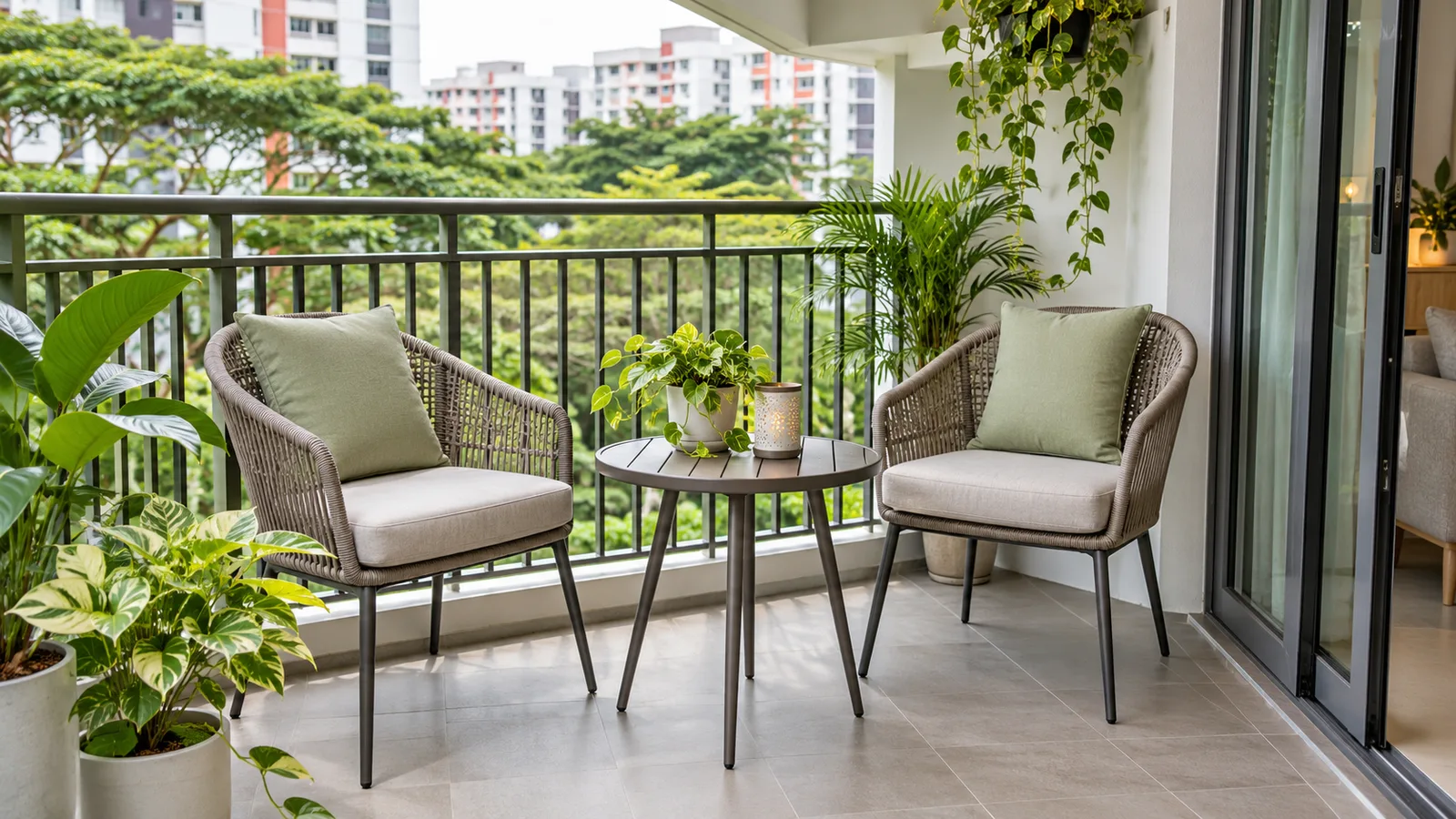
Choose a layout for what you do outside most often
Start with the most frequent use. A morning coffee for one or two people can fit a folding bistro table and chairs. Two people eating outdoors need room for plates, chair pull-out and the route back through the door. For quiet reading or an outdoor living area, check seat depth, side table space, cushion storage and the ability to reach the floor for cleaning. Draw the occupied space, including the person’s legs and the open door.
Think through the weather at that exact spot. A covered balcony can still get windblown rain near the edge, while an open patio may give the furniture direct sun and rain. Ask whether the frame, fasteners and fabric are specified for the exposure you expect. For a chair that will live near a doorway, check whether a folding design can be opened and stowed safely. Keep exits, drains and any routes your building requires free. Discuss heavier pieces and any balcony restrictions with the relevant building manager before ordering.
Compare three furniture examples sold in Singapore
| Example | Price and format | Buying check |
|---|---|---|
| IKEA TÄRNÖ table and two chairs | S$109.90. Folding square-format set. Table 55 × 54 cm, with solid acacia and powder-coated steel. | Try the 39 × 40 cm chair footprint and check storage for the folded set. |
| IKEA NÄMMARÖ table and two folding chairs | S$229. 75 × 63 cm table, solid acacia with acrylic stain. | Check the added table depth and product guidance for protection and maintenance. |
| Castlery Rio Outdoor Lounge Chair | S$799 for the advertised chair option on the product page. | Verify exact frame and upholstery variant, chair dimensions, cover and delivery scope displayed with your order. |
Product prices and stock can change. Prices here are reference points for different setups. Use the exact sizes and selected options in the retailer’s product page. Include a side table or extra seating only if it will fit once the main item is in use.
Measure balcony use, delivery and folded storage separately
Measure the clear usable area inside the railing, then mark the places where door travel, a drain cover, a tap or a planter reduce that space. Put painter’s tape or cardboard where the table and open chairs go. For example, a 54 cm-wide table and two chair positions extending 45 cm each from its sides occupy about 144 cm across under those assumptions. If the available depth is 150 cm, only about 6 cm remains within that test envelope. Try the layout with people seated and check the pinch point at the door. Use 45 cm as a mock-up dimension and check the turning space the household needs.
Measure folded pieces at the size you will actually store and confirm how they stand. Some configurations do not stand securely on their own. Check the opening and space for the cushion or chair indoors. For delivery, compare the dimensions of the largest package with the lift, hallway, final turn and balcony doorway. Ask whether the retailer delivers to the room or only to a prescribed point. If assembly requires floor space, identify where the team will work and what they are expected to remove afterwards.
Choose a material by exposure and care effort
For stained outdoor wood, follow the product’s cleaning and re-treatment instructions and verify how the maker describes normal appearance changes. IKEA lists solid acacia for both comparison sets and gives model-specific care instructions. Ask where you can keep the furniture when you cannot use it for an extended period. If an item is only occasionally used, folding it out of direct exposure can change how convenient the maintenance is.
For coated metal, check what the finish and hardware are made from, especially if you will regularly fold or stack the item. Inspect coating condition at assembly and ask about care and repair if it is scratched. For woven furniture, check the frame underneath and how to clean between the weave. For cushions, read the directions on drying, cleaning and use of a cover. A seller’s water-repellent description refers to that specified product and its care. Ask how it should be stored during prolonged rain and where replacement cushion covers or pads can be obtained.
Price the setup including covers and delivery
Choose whether you need cushions, a protective cover, indoor storage or assembly. For example, combining the S$799 Rio chair example with a matching S$80 separately listed cover gives S$879 before any applicable delivery charges. Confirm that the cover matches the selected chair variant and whether parts are bundled in a different offer. For a set, check how many chairs, cushions and fasteners are included. Ask about availability for replacing one chair if an existing set is damaged.
Compare by checkout amount and where the items will be put. If the lift and doorway create special handling requirements, ask the retailer what happens to delivery charges when an item will not fit. Review the retailer’s current returns and rescheduling rules before unboxing. Keep packaging until you have checked dimensions, condition and all parts. If the seller offers assembly, ask it to confirm that the item sits level and that all moving or locking parts operate before signing the handover.
Make a usable arrangement for an exposed balcony or patio
Put light movable pieces in positions that can be secured or safely stored when the weather changes. Ask the manufacturer and building management about safe placement. Keep the balcony’s drainage and access clear and avoid positioning a chair or low storage box where a child could use it to climb near a railing. Before choosing a shade product or other accessory, check the mounting, wind and clearance conditions for your location. Use the product’s specified restraints and engage an appropriate professional where work requires one.
In a covered or sheltered area, test where water collects and move seats or cushions away from that edge. An outdoor frame and a dry seat make different demands on where you can store things. If several people use the balcony at different times, agree where the folded pieces and cushions go. Keeping an access path clear makes it easier to take the pieces inside and to clean after rain.
Use the product care and warranty for what you actually bought
Save the product name and SKU, finish and retailer’s care instructions. For a table bought in parts, keep the instructions for each material. Review the terms for damage at delivery, normal weathering, maintenance and defects. Photograph any damage or missing hardware promptly and follow the reporting procedure. Before paying for repairs or a cover from another source, check compatibility, dimensions and whether using another product affects the warranty.
Choose a cleaning routine the household can sustain. Keep weather-exposed areas clear of pooled water and ask which products can be used on coating, wood or fabric. Review the instructions on storing cushions dry. In a narrow space, check periodically that the set still folds freely and that you can reach the drain. If the frame or locking mechanism is damaged, follow the retailer’s advice before continuing to use it.
Use a mock-up to choose between a dining set and a lounge chair
Try both possible setups on the floor. For two occasional users, mark a small table, folded storage and the delivery route. For one frequent reader, mark the deeper lounge footprint and the side table within easy reach. Picture the layout with a laundry rack or planter already in place. Walk through it during normal use and after moving the furniture to storage. Compare how the room works on the days you will actually use it, then verify the dimensions and stock with the retailer.
Compare care, repair and replacement as part of the purchase
Give the seller a description of the surface and exposure. Explain whether it will live in full exposure, under a deep shelter or at a doorway you can close when it rains. Ask if removable fabric covers may be washed, whether cushions need shelter, and whether a replacement cover can be ordered for the selected colour. Ask how to get the correct leg cap or hardware if a folding chair is damaged. Save the product code with the receipt so you can order the right part later.
For a simple planning example, an advertised S$229 set plus hypothetical S$40 delivery and S$35 for suitable storage would cost S$304 before assembly. A smaller S$109.90 set that can be carried and stored by your household could have fewer extras but a smaller usable top. Compare those choices only if both layouts give you the right seats and stability. If the preferred arrangement includes a cover or fitted cushions, price those accessories at checkout and check whether they need separate delivery.
At delivery, make space to check the most vulnerable parts before the team departs. For a folding piece, follow the maker’s operating directions and confirm there is space to use it without trapping fingers against a wall or planter. For a permanent patio group, make sure cushions and covers are where you can easily take them inside. Identify the nearest practical place to let covers dry. Where the set will be beside a door, review which route remains accessible when seating is occupied and which route still works when chairs are stored. Take measurements for these two states separately and compare them with the manufacturer’s model drawing before placing the final order.
Keep space for entry doors and balcony drainage
Trace how the balcony door opens before ordering and walk the route from inside to the outside seat. Leave a path to sweep and reach drains in an area that is safe to access. If you need to move a table ahead of cleaning or heavy rain, plan where it can stand indoors without blocking another door. Ask the retailer whether individual pieces fold or stack, and check the dimensions in that state. For shared households, show everyone the storage location for loose seat pads, covers and removable parts so the setup stays easy to put away.
Sources
- IKEA Singapore TÄRNÖ outdoor setPrice, table and chair sizes, materials and care.
- IKEA Singapore NÄMMARÖ folding setPrice, dimensions and surface materials.
- Castlery Singapore Rio Outdoor Lounge ChairListed chair price, variant information and dimensions.
- Castlery Singapore Rio coverSeparate cover price and current accessory scope.