
Find an activity that fits your headcount and space
| Format and operator | Headcount and price | What to confirm |
|---|---|---|
| Private laser tag, LaserTag.SG | Minimum eight, advertised from S$25 per player. | Tai Seng arena or mobile setup. Check the number playing at once and whose quote covers room hire, equipment transport and extra hosts. |
| Offsite escape game, The Escape Artist | From 10. Its Standard fee is S$300 plus S$20 per person. Immersive adds a higher base fee. | Per-game capacity and whether venue admission or hire is separate. Scenarios suitable for the largest groups may require the Immersive tier. |
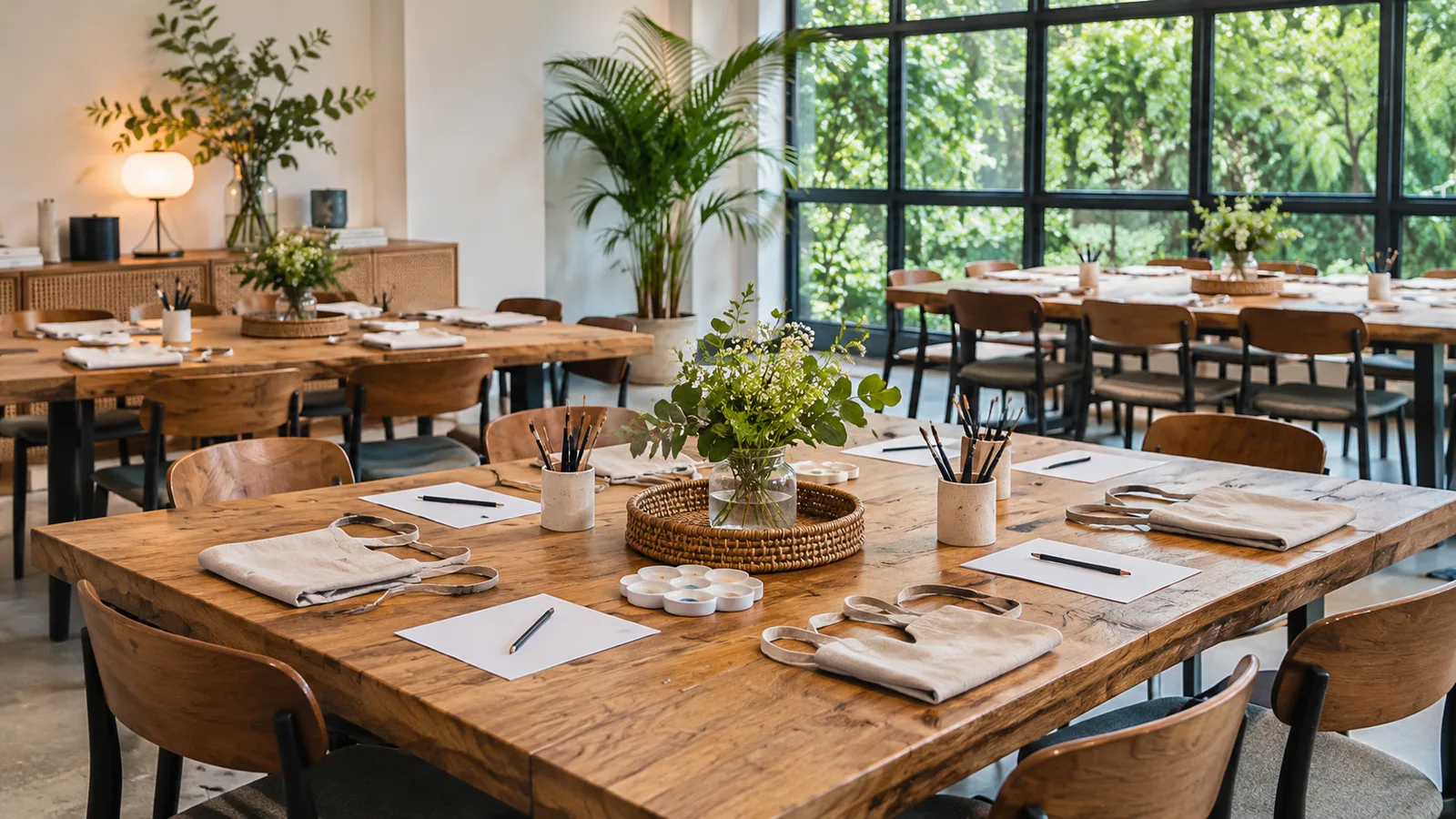
| Cooking workshop, Food Playground | Operator lists groups of 8–80. A 90-minute traditional treats workshop is S$70 nett per person. Two-hour one-dish workshops are S$80 nett. | Whether the chosen workshop includes a full meal, what ingredients are used, and which preparation tasks can be done seated. |
| Pottery workshop, SG Pottery | Quote required. The studio advertises configurations from small groups to 150 participants. | Whether everyone can work simultaneously, whether firing is included and how finished pieces are collected. |
| Reservoir adventure, Forest Adventure | Custom weekday quotes, excluding public holidays. The operator offers aerial and ground-based activities. | Which ground activities are available at your headcount, which course restrictions apply and what happens if weather interrupts the booking. |
Estimate the total before you request approval
For 20 people, the advertised LaserTag.SG starting rate works out to S$500 before any extras. The Escape Artist's Standard rate comes to S$700 before venue charges. The cooking treats workshop works out to S$1,400 at the published nett rate. These are different products. Compare what each covers, especially room use, time and catering.
For 100 people, the offsite game's published Standard fee is S$2,300. If a venue charges a hypothetical S$12 per person for admission, add S$1,200 for a total of S$3,500 before any other costs. Check that your chosen scenario supports the entire group and that the quoted price applies. Ask for the final total with any venue admission, transport, catering, taxes and service charges itemised.
Plan around the people and time you have
For a 90-minute office block, ask for an activity that fits inside the time left after changing rooms, checking in and packing up. If people need to move in waves, request the running order. A workable event has a task, a seat or a break for the people waiting rather than a queue around a doorway.
For a mixed-mobility group, ask whether a lower-movement role can work alongside the main activity and whether restrooms and the venue entrance are usable for everyone. For a food workshop, ask the host how it separates ingredients and equipment when a guest has an allergy or needs a particular dietary option. For pottery, confirm the pickup plan. SG Pottery lists about eight weeks for kiln-fired pieces, while air-dry pieces can go home that day and are decorative.
What to send in the first enquiry
Send two possible dates, minimum and maximum headcount, venue or preferred area, the total budget, active time available, activity goal, accessibility requirements and whether you need food. Ask the vendor to return the game plan, capacity per round, dry-weather fallback, pricing, deposit and deadline for changing the headcount. Use the same brief for all quotes so you can compare them directly.
If the team prefers a community activity, see volunteering opportunities and contact the charity using its corporate or large-group route.
Start with the kind of participation you want
| Team needs | A suitable format | What to confirm |
|---|---|---|
| Meet colleagues outside their usual teams | A guided shared task, such as a relaxed cooking workshop. | How groups are assigned, who leads and how much time everyone gets to take a turn. |
| Work on communication or problem-solving | A facilitated puzzle or timed game with a short debrief. | How many people remain active, whether clues suit the group and if instructions can be adapted. |
| Move together outdoors | A physical activity with ground-based and higher-intensity options. | Rain plan, footwear, accessible travel and how people can contribute if they choose to stay on the ground. |
| Include colleagues with different physical needs | A seated or adaptable task near the normal workplace. | The venue route, distance to toilets and a way to opt into a meaningful role without standing for the full activity. |
Ask the team what kind of day they can realistically attend and work within those constraints. Give people a way to state a dietary, access or participation need privately. Request a practical adaptation before committing to a competitive or physically demanding activity. Try to retain the shared outcome, such as solving part of the puzzle or building something together, regardless of which role a participant chooses.
What actual operator formats change the running order?
At Food Playground, choose between a timed competitive Cook-Off and a guided Kitchen Creations Workshop. Its operator page lists 8–70 participants for both and describes varying duration and menus by package. Ask how people are split across stations and what they do if they cannot handle a particular ingredient. The provider describes using halal-certified ingredients. Confirm the arrangement you need instead of assuming that this statement describes a premises-level certification or every accommodation.
The Escape Artist describes facilitated offsite games that vary by site and by headcount. Its listing distinguishes a game you can run at an indoor venue from games tied to a particular attraction. A game requiring admission to a separate site can add another ticket, check-in and movement between spaces. Request one named game and its full running order. Set a budget for any admission or room rental alongside the game price.
Forest Adventure’s group programme describes both aerial and ground-based challenges at Bedok Reservoir. Ask which ground activity would run while others use the ropes, how the two groups rejoin and whether there is an indoor weather alternative. Give people a choice while making the ground group part of the event.
Set a headcount that makes the activity work
Ask the vendor to give its smallest working group, the maximum active headcount and the total number who may attend. A vendor may be able to host 40 people by rotating groups of ten through stations. Decide whether that schedule works when you only have a two-hour block. Ask for the duration of each active turn, the longest gap and what people can do while waiting.
If you are organising for 20 people and the vendor needs groups of five, invite colleagues from different functions into each team before the session. Share where they sit or queue once they arrive. If you have 23 people, ask whether some teams can have six or whether another facilitator is required. Check the effect on price and how the vendor responds to late arrivals.
Hold your attendance cutoff before payment becomes binding. Ask what happens if additional people join, whether substitutions are allowed and how charges change below the booked minimum. Keep a point of contact for the vendor and a single internal organiser who can make decisions on the day.
Check the venue before confirming the session
For an offsite programme, use the event spaces guide to compare layouts. Send the vendor a floor plan and ask which fixtures need to move. Decide who provides tables, power, extension leads and any cover from rain. Allow time for setup and restoration. If you pay by the hour, confirm whether those tasks happen within the paid time.
Agree with the vendor on a short closing activity that fits the aim. A five-minute debrief can ask how each team worked together while it is still fresh. A social workshop may instead finish with a shared meal and time to raise questions with colleagues. Tell attendees when the session ends, what clothing fits it and where they can find the venue access information.
An example running order for a two-hour office session
Ask the provider to account for all 120 minutes from the time the group enters until the time it leaves. One example is 10 minutes for arrival and instructions, 70 for the main task, 20 for a shared finish and 20 for people to eat a snack, pack up and leave. If the vendor quotes a full 120-minute game, ask how much longer the room must be held. Reserve a bigger time block if you cannot shorten the programme.
For an afternoon with teams rotating through activities, post the rotation with the start and finish and each station’s host. Put a person who can answer access and dietary questions at the welcome point. Set the room up so people can find instructions without crowding the venue entrance. A team that is waiting should know which part it will do next and which supplies to bring. For an all-team finale, state whether it requires food handling, standing or leaving the venue so participants can choose a suitable role.
If attendance is optional, tell the organiser how many people have definitely signed up and calculate the food and event costs against that confirmed number. Confirm the venue’s deadline for changes. After the booking, share the final timings and remind people what to wear and whether they need to bring identification, a water bottle or another item specific to the venue.
Sources
- LaserTag.SG group package ratesMinimum group, starting rates, venue options and inclusions
- The Escape Artist corporate team buildingCorporate game formats and enquiry
- The Escape Artist offsite pricingStandard and Immersive price formula, headcount and venue charges
- Food Playground corporate cookingProgramme prices, timing, group size and menu options
- SG Pottery team workshopsGroup capacity, workshop formats and firing times
- Forest Adventure team buildingWeekday booking and aerial and ground-based options