
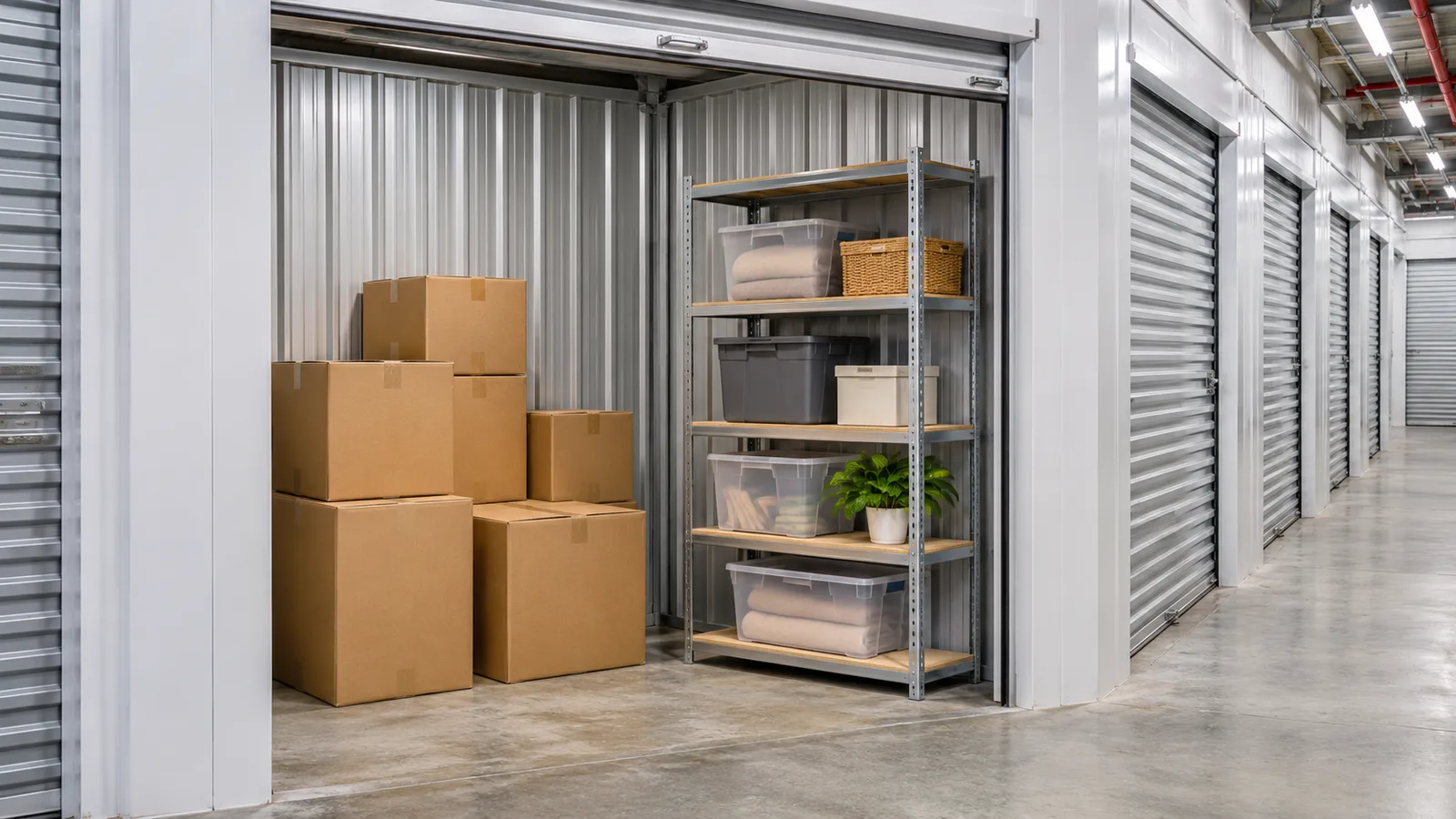
Choose a locker, walk-in unit or scheduled retrieval
A locker can suit cartons, keepsakes or luggage you can lift and arrange. Measure the largest sealed box and the height at which the locker door opens. Ask whether it sits on the floor or above another unit and how you would load heavier items. For furniture, frequent stock checks or mixed household contents, look at a walk-in unit. You may need open space to turn at the door and an aisle to reach items after moving in.
Self-storage gives you a defined space you normally visit yourself. Ask whether the stated access window applies to your unit, car park and goods lift. Valet storage is useful when you can arrange pickup and later delivery of labelled boxes or other items. Compare the number of items the provider can retrieve on each order, the notice and delivery time and the charge for an extra retrieval. Extra Space Asia’s valet terms give an example of a separate service covering collection, storage and delivery. Price it from the date you need belongings collected to the date you need them back.
Use provider prices as starting quotes for a real unit
| Provider | What it publishes | Check for your contract |
|---|---|---|
| Storefriendly | Advertises a 16 sq ft locker from S$89 per month including GST on its small-locker page. | Branch, exact dimensions, promotion, regular month and whether the locker is elevated. |
| Lock+Store | Publishes locker prices from S$100 monthly with variation by unit and facility. | Actual unit size, temperature and normal rent. Confirm total with GST and cover. |
| StorHub | Its 2026 facility guide quotes a S$54 monthly starting example at Woodlands Loop based on a July check. | It is a dated facility example. Ask which unit this applies to and get a live quote for exact size and cooling. |
These offers describe different unit types and may carry branch requirements. Ask for the actual unit number and opening dimensions before paying a reservation or deposit. Compare the quote with the directly available unit and note the last date you can accept the price.
Measure the whole path from the vehicle to the unit
Measure the largest item at the orientation in which it can be carried. Measure the storage door at its narrowest clear width and height. Ask about the internal height, supports, angles and the space in front of the door needed to turn in. A unit listed by floor area can be long and narrow. For example, a 4 ft × 4 ft unit and a 2 ft × 8 ft unit both measure 16 sq ft, while transmitting a tall cabinet or wider box through them can require different approaches.
Draw the usable footprint of stacked cartons and furniture. Leave a route to anything you plan to retrieve and a safe arrangement for items that cannot carry weight. Keep larger retrieval items nearest the door if you use them regularly. If an item would fit only after disassembly, ask the mover whether that work is included. At the branch, see where the van can park, how trolleys can be obtained and what size the goods lift accepts. Work backwards through the building restrictions before choosing the mover’s truck. Ask if the access route you inspected will be available at the booked hour.
Compare the actual rent across the whole planned stay
Write down the initial rent, regular monthly rent, promotion length, minimum term, required notice, tax, administration, lock, insurance and access charges. Keep any refundable deposit separate from the total you expect to spend. Some facilities quote by a regular monthly period and others attach offers to named dates or minimum commitments. Ask for a payment calendar with the first and last expected bills and what a partial month costs.
For a hypothetical four-month stay, a S$60 first month followed by three at S$120 plus S$25 in setup and S$8 per month in insurance totals S$477. A S$110 standard rate with S$10 setup and S$5 insurance per month totals S$470. These examples assume the same period and already comparable GST treatment. Compare the per-month cost of S$119.25 and S$117.50 before moving fees. Use the actual unit area to compare per-square-foot cost only when both shapes and access fit your needs. A remote unit may still cost more overall if you visit weekly or need a special vehicle each time.
Ask for measurable climate and item restrictions
Ask what a climate-controlled or air-conditioned product promises for the room you will rent. Check whether cooling applies continuously to the entire building or only in certain hours and whether the provider monitors humidity. Ask for its stated range and where measurements are taken if photographs, documents, instruments or valuable materials are sensitive. Follow the care requirements for your own objects. Clean and dry what you put away and use suitable protective packaging. If the requirements are stricter than the facility can confirm, check a specialist option before paying.
Read the prohibited-item list in the actual contract and ask about anything uncertain. Extra Space Asia’s storage policy gives examples covering flammable substances, batteries and personal mobility devices. Policies vary by product and item. Provide the exact item and material for approval when in doubt. Ask which value, water, heat or other event exclusions apply under any insurance or goods protection. Verify whether rental includes a basic charge, whether you can adjust the declared value and how a claim would be verified.
Price how often you will use the space
For a short overlap between two houses, choose a location and access time that fit both loading days. Verify whether you can collect a smaller batch before arranging the second truck. For business inventory or hobby equipment used weekly, check parking charges, the route from loading to unit and whether a colleague or additional authorised person can get in. Take the cost and time of every expected trip into account. Ask what changed-hours notice the operator sends and whether support is available around the time you plan to visit.
If access is occasional, get a valet quote for the same list and dates. Include packing or box charges, pickup, storage, standard retrieval delivery and re-storage if you put the item back. Make a numbered inventory and ask whether retrieval is at a box level or only done when closing or changing the service. An inexpensive monthly product can become less attractive if you need repeated fast access to specific items. For a whole-home move, use the moving quotes guide to make the transport cost visible in both directions.
Record condition on arrival and plan your checkout date
Confirm the loading slot, paperwork and current unit condition before bringing a full vehicle. Photograph existing marks, the door and any sign that the unit needs cleaning or inspection. Ask what the provider needs if the allocated unit is different from the quote. Once accepted, keep a list of boxes and photos of any important goods. Make key, lock or access-code arrangements with the people authorised under the contract and keep contact details current.
Set a reminder well before the contract notice deadline. Ask whether notice must be given in writing and which day becomes the last charged day. Confirm whether the unit must be empty, clean and unlocked and what happens to any deposit. Book transport within the final access period and ask how to get a written checkout confirmation. If you need to extend, ask the operator to confirm the renewal amount and end date before relying on continued access. Keep the last bill and any disposal record until the account is closed and the deposit outcome is clear.
Use the contract questions before handing over the items
Send the operator your expected move-in and move-out dates, the largest object, likely access frequency and proposed vehicle. Ask for the unit dimensions, access times, postal address and normal renewal price. Confirm anything incompatible with the intended use, including delivery acceptance or an extra lock. Keep a written record and schedule a branch viewing where access, temperature or fit could change your decision.
Compare a planned three-week move with a renovation that might extend
For a three-week move between flats, select the day the supplier can accept your load and the date you can get the belongings into the new room. Ask which rental period the provider bills for those dates and whether you would pay a second month if the keys arrive just after the agreed cutoff. If the first truck can only be rescheduled once, confirm the costs of changing the booking before committing to a fixed storage date. Box the items you need during the gap separately and keep them with you when practical.
For a renovation that could extend, ask how the initial term renews and whether an extension would use a normal rate. Suppose the contractor asks for another two weeks. Check whether that triggers a full additional billing period and whether your mover can collect at the new date. Make a note of the furniture that can go back into unaffected rooms and anything that requires a separate delivery. It may be possible to move part of the load out without ending the contract, provided the access and transfer are worth the cost.
For both cases, keep the move-out requirements and any refundable deposit timeline on the booking. If a unit is offered only with a long minimum, price that entire term even if you expect to leave earlier. Verify whether complimentary access, padlocks or cover change after renewal. Switch plans only once you have the revised rent and both transport quotes for the new dates in writing.
Sources
- Storefriendly small storage lockersPublished locker size and starting price example.
- Lock+Store climate-controlled storageLocker starting example, quote variation and access information.
- StorHub aircon facilities guideDated starting rate example and facility-based cooling options.
- Extra Space Asia storage policyItem restrictions and self-storage conditions.
- Extra Space Asia valet termsScope of valet collection, storage and retrieval workflows.