
Ask for an inspection that matches the symptom
Tell the provider what you saw, where it appeared and over what period. Describe whether activity occurs near food, a drain, timber or a sleeping area. Add a photo if you can capture it safely. Mention building work, a recent move or similar signs in shared areas if you already know about them. Label those as observations so the operator can verify them. Several household pests can leave similar-looking marks or debris.
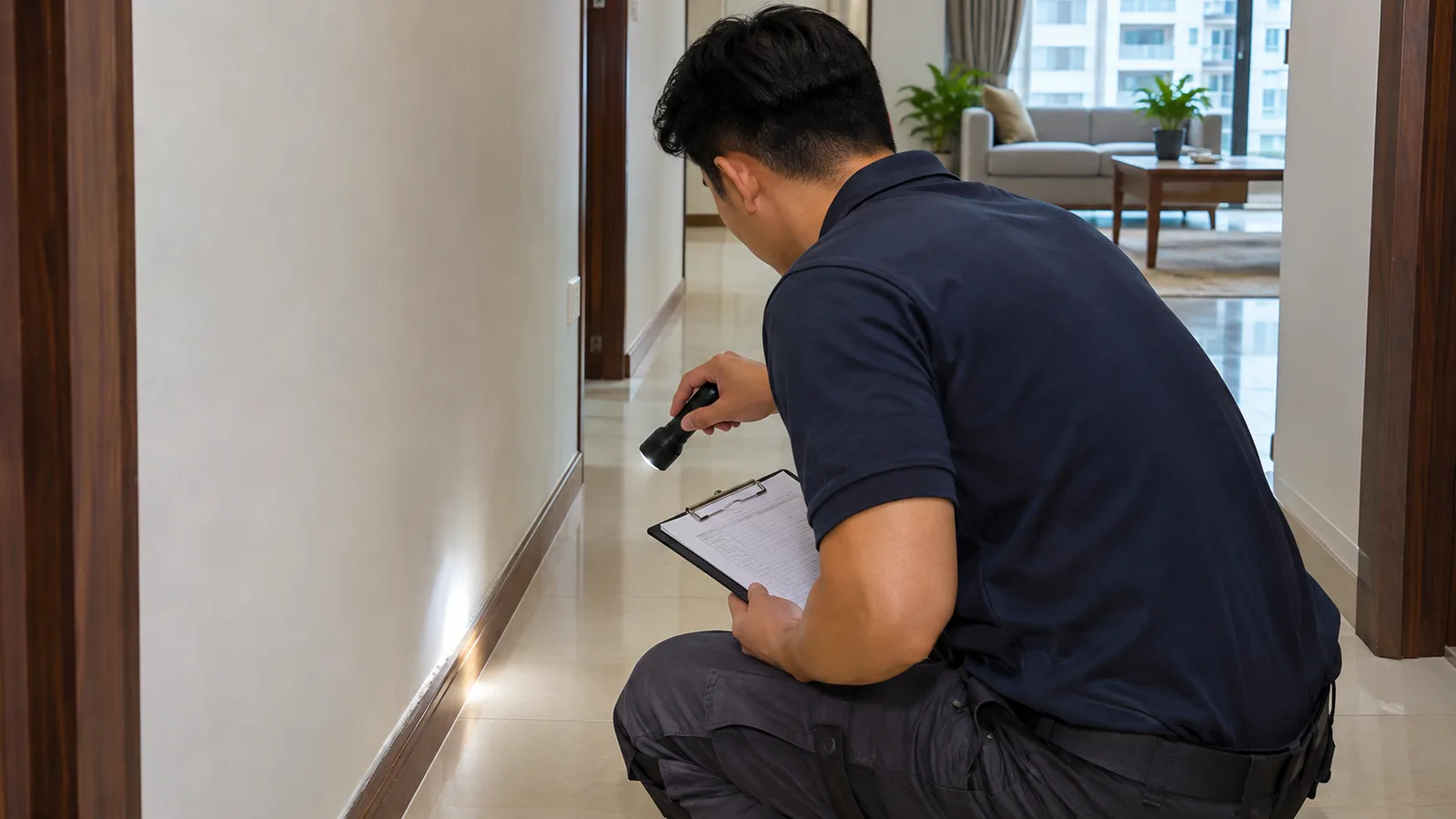
Ask how the firm identifies the problem and which parts of the home it needs to inspect. An assessment for cockroaches or rats may include locations where food, moisture or entry points are present. A suspected termite issue needs an appropriate pest specialist to assess the affected timber or other evidence. For suspected bed bugs, tell the service where people sleep and which furniture it should inspect. Let the provider decide what applies. Avoid disturbing or moving suspect furniture before you have the company’s directions.
Verify the actual company carrying out vector control
The National Environment Agency’s vector control page directs customers to licensed Vector Control Operators for applicable work, including cockroach treatment. Check the exact company taking the job against the list or verification route on the NEA page. If a booking platform, cleaning business or building manager arranged the visit, ask which company performs it. Use the business name and details on its quotation. NEA’s licensing notice explains that the requirement applies even when another kind of service provider advertises the work.
Use the current scope and company status before paying. Ask which staff will inspect or treat the property and how the company documents attendance. For other work such as a timber or building defect, ask if the proposed quote depends on another trade. For a common-area problem, contact your building management or town council before asking a private operator to treat space outside your unit. Confirm which person is authorised to approve the work and who receives the records.
Compare the published prices by pest and number of visits
| Published offer | Price and scope | Confirm in your quote |
|---|---|---|
| Protect Pest Control cockroach treatment | S$140 listed for a one-off HDB visit. | Which rooms and follow-up are included and what changes after inspection. |
| Protect bed bug programme | S$450 for a 3-room HDB and S$500 for a 4-room HDB, with two treatments listed. | Actual affected rooms, preparation, timing of second visit and extra charges. |
| Rentokil Singapore | States that pricing starts from S$180 and varies by pest, property, method and severity. | Obtain the actual written proposal, including visits, inspection, recurrence terms and any taxes. |
Compare each price with its identified pest, room count and treatment or inspection scope. A one-off programme can include multiple scheduled visits. Ask whether the provider’s price assumes easy access, limited affected areas, or a specific method. Check GST and after-hours terms before booking, especially if the first visit is inspection only.
Separate the treatment from the building issue that might bring pests back
For repeated signs at the same location, ask the technician to identify possible entry or harbourage points and what can be handled in the home. Ask which items need action from the owner or building manager, such as an access gap or a shared refuse area. Record what is known and who is responsible for arranging any building work. If a neighbour has seen the same activity, ask management whether a shared inspection is possible.
For suspected termite damage or another issue involving timber, ask for findings and photos before approving cosmetic repairs. Check what is included in monitoring and whether the provider notes any affected or inaccessible parts of the property. If there is dampness or a leak, arrange appropriate building assessment and tell the pest operator its status. Agree who will check whether the condition is resolved. For possible bed bugs, tell the service which rooms and soft furnishings are relevant before agreeing a one-room scope. Ask the operator what to do with belongings used in more than one room before moving them.
Use the inspection to obtain comparable written proposals
Ask each provider for its findings, areas it will treat, number of planned visits, spacing of follow-up, what it will document and how it defines a return for recurrence. Get a line for inspection and another for the programme. Include any required monitoring, separate repairs, call-out fees, taxes and any cost for additional rooms. Ask whether a fee paid for the initial visit is credited if you go ahead. Find out which factors can change the total once staff are on site.
Suppose an operator offers a S$160 inspection and treatment visit with one follow-up available for S$120. If you expect that extra visit, the comparison is S$280. A S$250 plan that covers both visits might cost less in this hypothetical example. Compare what happens if the second visit establishes a different pest or if extra rooms are involved. A recurring plan needs its total cost for the actual term, conditions to pause it and the response when activity appears between routine visits. Check who is allowed to request a second visit and how quickly the company can attend.
Get household instructions before the visit
Give the company the details of any pets, fish tanks, children and people who need to plan access or temporary absence. Ask for written instructions for preparation, safe access during work, re-entry and any cleaning restrictions afterwards. The timing depends on the specific treatment and surfaces. Follow the instructions from the professional for your home. If an instruction conflicts with what someone on site says, ask the provider to clarify it before treatment begins. NEA’s registration page gives the regulatory route for products intended against public health vectors.
Confirm where the crew can access furniture and which rooms should remain closed before arrival. Ask which food containers, utensils or textiles need handling and what the company expects the household to do. Get approval from the owner or building office where it is needed, and share any planned cleaning date so the providers can coordinate. Arrange a safe place for people and animals to wait during the specified period. If you do not receive clear instructions, contact the provider before the scheduled visit.
Keep the treatment record and use the follow-up appointment
Request a record showing the pest or evidence found, areas inspected, service date and what the technician did. Set the follow-up date before the first visit ends if the plan calls for one. Ask what observations are expected, what would count as activity needing a return and how to report it. Keep sightings by date and room with photos where safe. This gives the operator better information than a broad report that the treatment failed.
Read the recurrence policy for the named pest, affected areas and covered period. Ask about exclusions for new activity, unreachable parts of the property or an action the owner must complete first. If renting or sharing a home, keep the written plan and ask who needs to approve any extra work. Before taking out a new contract, compare the earlier findings and visits with the new scope. If the problem spans several homes or shared building components, involve the relevant manager.
Choose a one-time treatment or ongoing monitoring by purpose
For a newly identified problem in one area, ask the operator what a complete plan looks like and what change would justify a second inspection. For a property with recurring activity, compare an ongoing service against the repairs and monitoring it actually covers. Count the visits, find out who can request extra attention, and ask whether a site report is issued. For a vacant home after moving, confirm whether staff can inspect safely before belongings arrive and whether any later activity should be reported within a defined period. Use that timetable to coordinate the move and clean.
Plan a response when several people manage a property
In a rented flat, contact the landlord or managing agent with a dated description of the problem and the rooms involved. Ask which authorised party should commission an inspection and how charges and approvals will be handled under the tenancy. If you need access to a locked room or another part of the building, establish who can arrange it before the technician comes. Keep a record of any prior treatment and ask the provider to review it.
For an owner in a strata property or an HDB estate, keep private unit observations and common area observations separate. Mark the place and dates where you actually saw activity. Share common area reports with the relevant building manager or town council so it can review the source and choose the permitted response. Ask the private operator to describe what it can do within the home and which building actions are outside its own scope. Plan a coordinated follow-up where multiple units or shared routes may be affected.
Use a single contact to collect the site report, list who must carry out each action and confirm the next date. If one party did not receive the preparation instructions or needs another date, update the provider before it arrives. A shared agreement is especially useful when a room is still furnished, when another trade needs to repair a defect first or when the resident must arrange a different place to wait during the visit.
Sources
- NEA vector control companies and personnelProvider verification and licensing scope.
- NEA vector control operator notice2026 licensing reminder for companies that advertise and perform covered work.
- NEA public health pesticide registrationOfficial registration information for products against vectors.
- Protect Pest Control published pricesProvider prices by service, property and visits.
- Rentokil Singapore pest control pricesPublished starting price and the quote factors that can change it.