
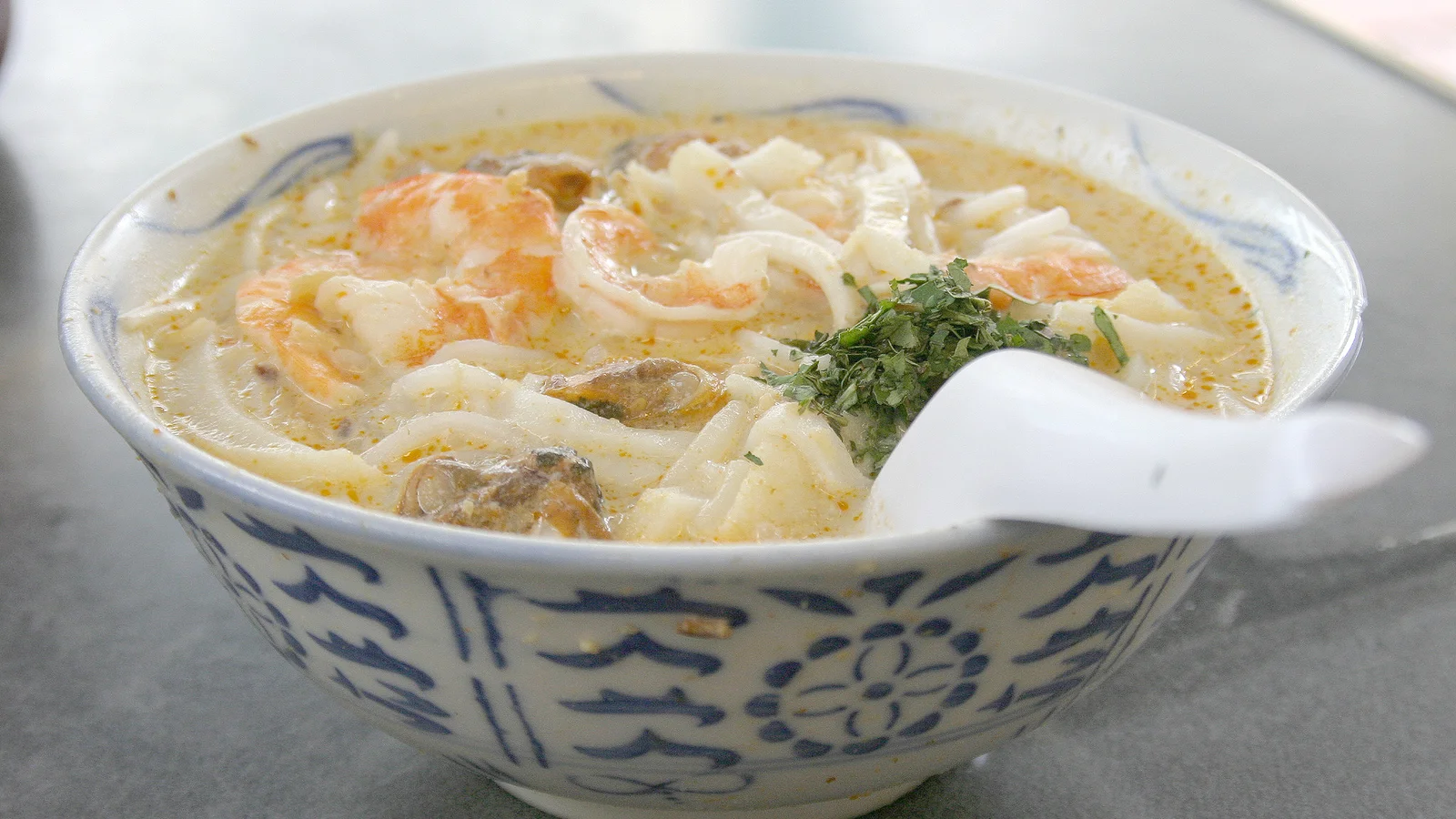
Choose which kind of laksa you want
| Venue | What to order | Where it fits |
|---|---|---|
| 328 Katong Laksa | A Katong-style bowl centred on coconut gravy and rice noodles. | The operator publishes 51 and 216 East Coast Road as well as a United Square branch. Choose East Coast Road for a meal on a Katong and Joo Chiat walk. |
| Famous Sungei Road Trishaw Laksa | A hawker bowl from the stall profiled in an interview with proprietor Daniel Soo. | Hong Lim Market & Food Centre at 531A Upper Cross Street, #02-66. Confirm current opening before a special trip, as the proprietor interview is older. |
| National Kitchen by Violet Oon | Dry laksa, where rice noodles are tossed in gravy and served with prawns, tau pok and beansprouts, as shown on the restaurant’s menu. | A sit-down option at National Gallery Singapore. Check the current menu for availability. |
Coconut broth or dry laksa?
Choose a coconut-broth bowl if you want to sip the gravy as you eat. Katong-style laksa is associated with short noodles you can eat with a spoon. In the dry preparation, the noodles carry the gravy and leave less liquid in the plate. Order the dry version if you are sharing several dishes, and ask for sambal on the side where the venue offers it. Singapore Tourism Board’s Katong and Joo Chiat guide.
Go to the right branch or stall
Put the exact East Coast Road number into maps if you are meeting someone at 328. In Chinatown, search for the full name Famous Sungei Road Trishaw Laksa and look for the Hong Lim unit, as similarly named stalls serve elsewhere. For a hawker-centre stop, check the centre directory and cleaning notices.
Check the gravy as well as the toppings
If you avoid shellfish, ask what the kitchen uses to make the gravy or sambal as well as what goes on top. Removing prawns alone leaves the stock question open. If you are looking for a halal meal, check the exact venue before going. For more Peranakan dishes, see the Peranakan food guide.
Plan a two-style tasting without rushing across town
For a Katong outing, pick one 328 Katong Laksa location as the meal stop and compare the short noodles, gravy and sambal in one bowl before trying a second version. A shareable dry laksa makes more sense on another day when you are already heading to the Civic District. If you want a same-day comparison, the Hong Lim hawker bowl and National Gallery dry plate are the closer pairing of the examples in this guide. Plan around the hawker stall’s lunch hours and allow time between plates. A whole bowl and a whole dry plate can be more food than two people need at one sitting.
Before treating dry laksa as a small side, check the National Kitchen menu and ask how its portion fits the other dishes you have in mind. Try the wet bowl once before adding condiment and see what changes when it is stirred through. On the dry plate, compare how much of the gravy coats the rice noodles. That changes the texture with each bite even when the two dishes share familiar laksa flavours.
Compare what is in the bowl with what is in a dry laksa plate
For a first tasting, look at the gravy before adding a topping. With a Katong-style soup, decide how much broth you want with a spoonful of noodles. In a drier preparation, the sauce clings to the noodles and the toppings are part of each bite. The National Kitchen menu lists its dry laksa at S$29 before applicable charges, with prawns, tau pok and bean sprouts. Two listed orders would start at S$58 before sides, service and tax. Ask how a single serving works if it will be shared with other dishes.
At a hawker centre, ask whether the listed price includes all the visible toppings or whether a larger order brings different additions. Compare a small and large serving by the full contents. If you are trying two places, decide whether you want to compare a similar soup style or compare wet and dry formats. The first choice answers a question about kitchens. The second answers a question about how you prefer to eat laksa.
Choose a branch around the direction of the outing
For a Katong walk, choose the exact East Coast Road address first. The official operator site also lists Queensway Shopping Centre and United Square. Those shops can fit a shopper who wants the same operator on a different day. If you are meeting friends, send the street number and the outlet name as one message so the group does not scatter between nearby addresses. Look up each branch’s hours instead of using the first listed time across all outlets.
At Hong Lim, identify the floor and unit for the hawker stall and think about one backup dish you can order at the same centre. An older proprietor profile can help identify the dish and business, while a current notice tells you whether the centre is operating. If the stall is the point of the trip, check its trading details before leaving. If the broader destination matters more, use the walk to try a second food stop.
Check the gravy, sambal and serving arrangement as separate choices
Choose a mild first taste, then add sambal to the part of the bowl you intend to eat if the vendor provides it separately. For a shared order, leave some unseasoned so another diner can choose their heat. For takeaway, ask how the kitchen packages the broth, noodles and sides. A pre-mixed soup and a separately packed bowl can eat differently after travelling, so check the vendor’s preference for when to combine them. If you need to avoid shellfish or another ingredient, ask how the gravy is prepared and whether it can be changed for that exact dish. Get that answer before paying for a bowl with a topping removed.
Add a side or a second meal only where it adds something distinct
For a small appetite, look at the standard bowl before ordering branded sides. If you are tasting with another person, split one bowl where the vendor can provide a spare dish and try the gravy, noodles and toppings together. A side with a crisp texture or an earlier snack can make a useful contrast with a rich broth. If you are buying a later meal as well, pace the first bowl around that outing and check if the kitchen has a small serving. Save the dry version for a separate outing if the two portions would otherwise overlap.
Sources
- 328 Katong LaksaExact street addresses and operator dish information
- Famous Sungei Road Trishaw Laksa proprietor interviewStall name, Hong Lim address and preparation background
- National Kitchen by Violet OonNational Gallery location and links to menus
- National Kitchen menuDry laksa ingredients and dish format
- Singapore Tourism BoardKatong and Joo Chiat neighbourhood context