
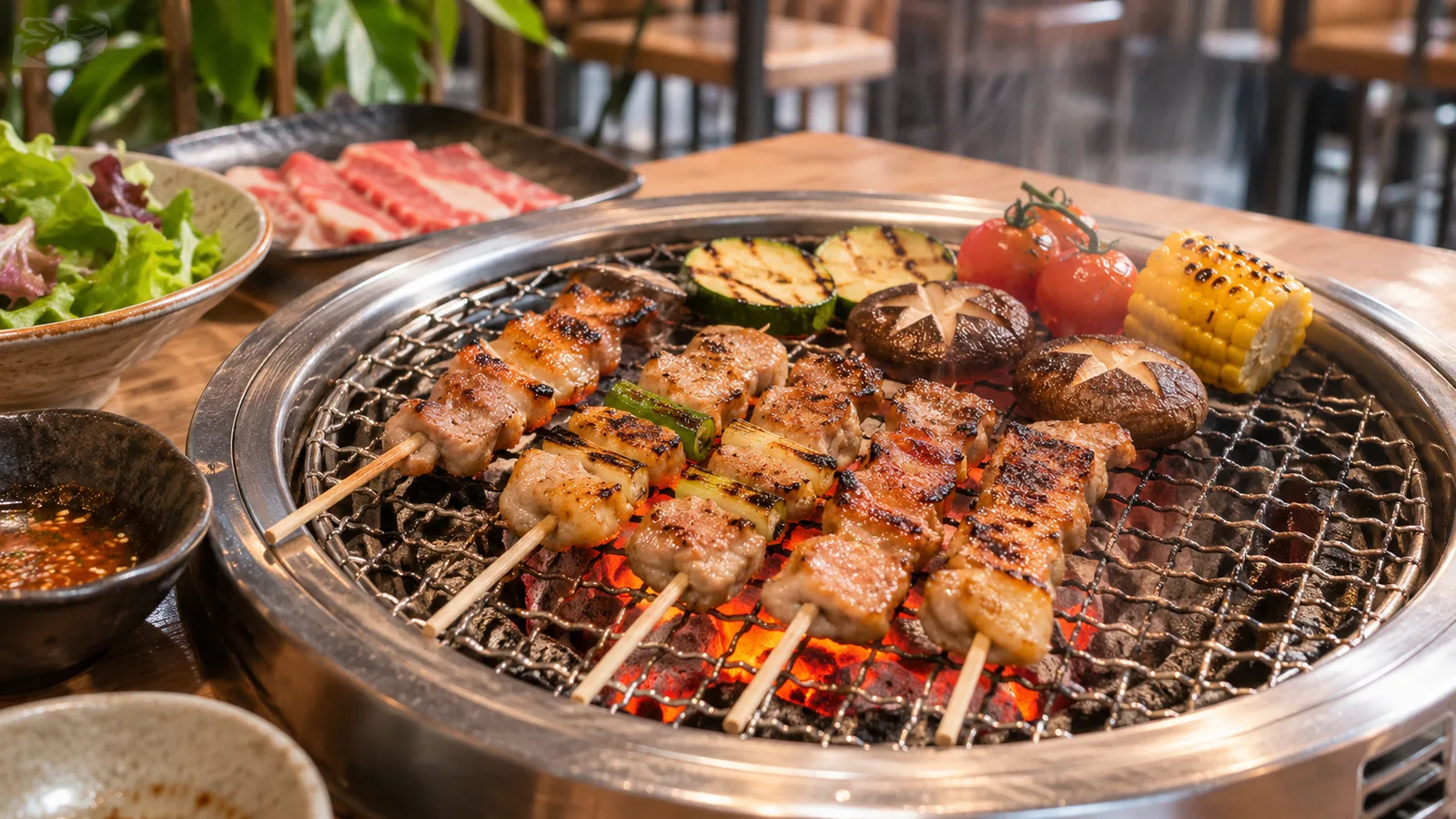
Decide how you want to eat
| Venue | Grill format | Check before booking |
|---|---|---|
| Wang Dae Bak Cross Street | À la carte charcoal BBQ. Cross Street has separate weekday lunch and dinner menus. | Confirm meat portions and any minimum grill order. Book the Cross Street branch if you selected its charcoal menu. |
| Seorae Jib | Charcoal grill with a smoked-meat programme using hay and oakwood. The outlet page lists individual service hours. | Select a grill menu and ask which items are offered at your branch. The advertised low-priced weekday lunch is for selected lunch dishes such as rice pots, stews or noodles. |
| Seoul Garden, Bugis Junction | The mall listing describes a buffet that combines tabletop grilling and steamboat. | Ask the outlet for the current tier, per-person charge, children’s price, time limit and halal certificate if needed. |
À la carte budget versus buffet budget
For à la carte meat, divide the cost of a platter by the number of adults sharing and add sides, drinks and charges before comparing with a buffet rate. A smaller party may prefer one platter and a stew, while an all-you-can-eat format can make costs easier to divide for a group with similar appetites. At a buffet, check the meat tier you actually want and whether extra broth or premium cuts cost more.
Pick cuts that suit your group
Choose a balance of a plain cut and a marinated cut so you can adjust intensity with banchan and lettuce wraps. If someone avoids pork, check the meat list and whether the same grill and tongs are used. If halal certification is part of your booking decision, look up the exact trading name and outlet address in the MUIS establishment directory before booking.
Branch and service details
Wang Dae Bak publishes separate branches and menus, including its Pocha and Holland Village formats. Seorae Jib lists its branches and last orders individually. Look at those pages after choosing the time, then confirm whether the table offers both grilling and cooked main dishes if your party includes people who prefer either format. Wang Dae Bak branches and Seorae Jib locations.
Check who grills and how much usable meat is in the order
When comparing a two-person set with a bigger platter, look for the listed grams and the cuts they apply to. A platter that names several marinated and unseasoned cuts gives a different meal from the same weight of one meat. If a set includes bone-in meat or a stew, use the description to decide how much grill food you are actually buying. At Seorae Jib, open the grill menu alongside the lunch set menu. Pick the grill if cooking and tasting several cuts is the point of the visit, even if a different lunch format costs less.
Ask whether staff cook the meats or leave you to manage the grill. If the group wants help tending the grill, ask whether staff can cook at the table and when they can change the grill plate. A group that wants several rounds should check how a refill is ordered and whether the kitchen stops taking requests before the seating ends. For a real booking, confirm charcoal at the selected venue and inspect the current Wang Dae Bak Cross Street menu before setting the budget.
Put a weekday rice lunch and a full charcoal meal in separate budgets
Seorae Jib advertises weekday lunch options from S$10.90 and describes sotbap, stews or noodles with banchan and soup. Read which specific menu you want before treating that amount as a starting cost. For two diners choosing a rice or stew option each at the quoted minimum, the food starts at S$21.80 before additional charges or drinks. A meal centred on a charcoal grill has a separate menu and different portions to divide. At Wang Dae Bak Cross Street, the venue separates its weekday lunch, beverage and dinner menus and identifies which days its weekday lunch excludes.
For a grill meal, collect the price and weight of the intended meat basket before setting the table budget. Find out whether side dishes repeat automatically, whether broth or rice belongs in the set and what each diner receives. Two people choosing the same lunch set have a straightforward comparison with a separate restaurant set. Four people ordering à la carte can build a more varied meal by adding a second cut and sharing stew or rice.
Build a tasting with the grill’s pace and amount of food in mind
Start with one unseasoned cut if the party wants to taste the meat before adding seasoning. Follow it with a marinated option. Ask the staff which order suits the selected cuts and whether they can help with cooking or replace the grill when needed. A large platter can take several rounds at one grill, so keep some greens, banchan or rice on the table while cooking the next portions. When comparing a smoked cut with a plain one, ask about the exact preparation instead of comparing dishes that vary both in cut and marinade.
At a buffet, track the number of portions everybody intends to eat and what can be ordered in the next round. Check the last request time and any fee for leftovers before ordering far more than the table can use. At an à la carte restaurant, ask for enough raw and cooked serving space and arrange the table so everyone has access to the pieces as they are cooked.
Make reservations with different appetites and ages in mind
Give the restaurant an adult and child headcount, and tell it if one person wants a prepared dish. Ask whether a grill reservation covers the full table and how many people comfortably share one cooking surface. If your venue serves both grill and hotpot dishes, decide which diners will use the broth and which will concentrate on the grill. For a larger party, find out how splitting the table would affect ordering and the number of grills. Confirm branch-specific charges and the exact address, including the operator’s published hours.
For guests with requirements involving meat or shared equipment, ask what the restaurant can provide before paying. Verify halal certification for the precise branch if required and distinguish that check from the availability of a suitable dish or separate preparation.
Compare payment for individual appetites
When some guests plan to eat considerably less than others, work out how you want to divide a shared platter or which dishes should go on each person’s order. At a per-person buffet, check whether the same tier applies to the whole table. At a charcoal restaurant, price a shared tray and separate mains alongside each other. If two people want one extra dish, decide whether it belongs in the table order or will be paid by those diners. The calculation helps the group choose between predictable individual meals and a wider selection that everyone wants to share.
Sources
- Wang Dae Bak Cross StreetBranch lunch and dinner menu links
- Wang Dae BakCharcoal, Pocha and Grill branch details
- Seorae Jib menusCharcoal BBQ, smoking method and weekday lunch format
- Seorae Jib locationsOutlet addresses and hours
- Bugis Junction outlet listingSeoul Garden branch and grill-and-steamboat buffet format
- MUISCheck branch-specific halal certification