
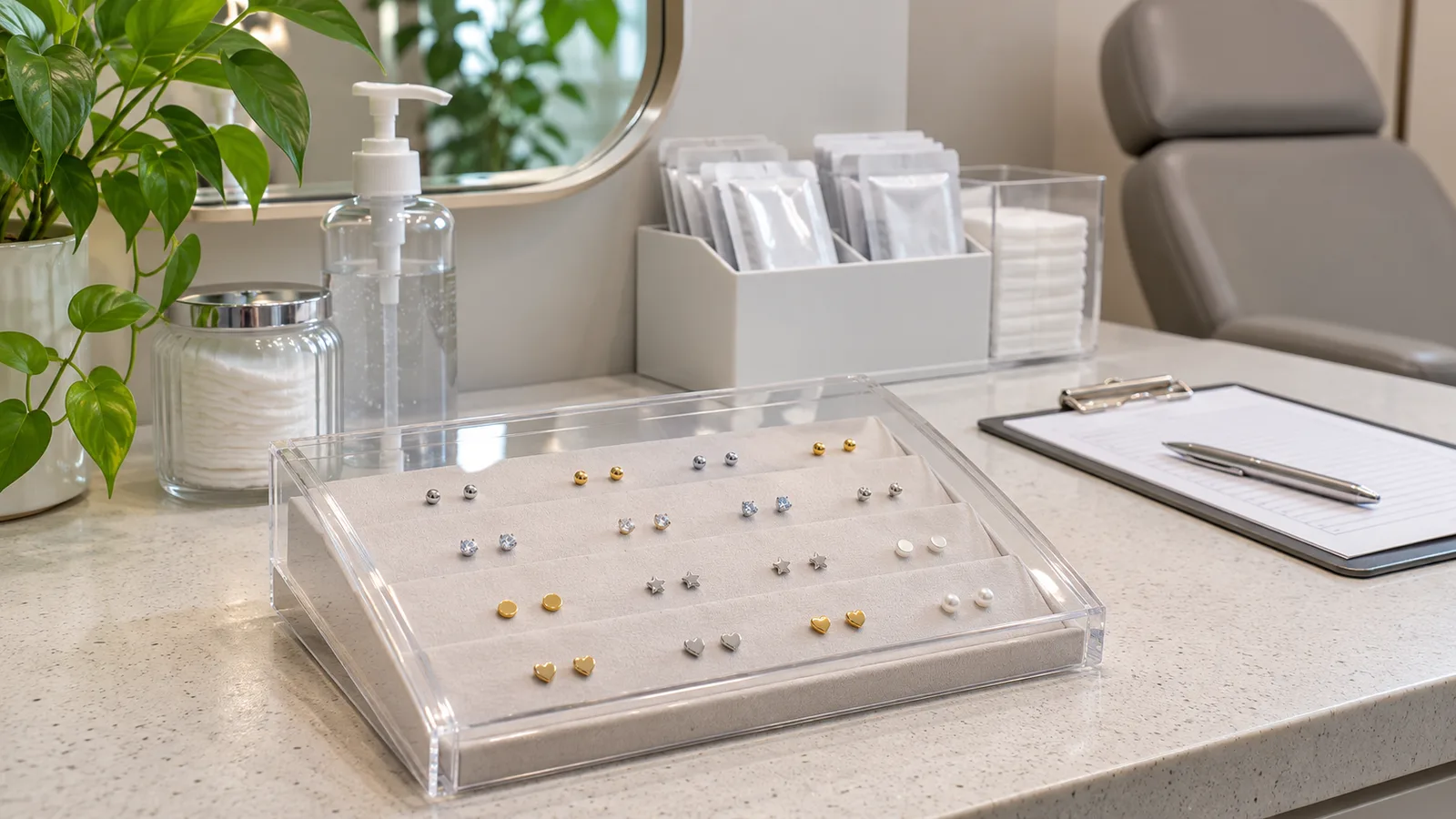
Compare local examples by piercing site and method
Start with the location on the ear, the number of piercings and the method you want. The earlobe and the outer cartilage require different conversations. Confirm which piercer does that site, what starter jewellery is included and what age rules apply. A price for one site can be quite different from the total for two lobes or for a design that needs separate appointments. All prices below come from the providers and should be reconfirmed with the exact location and product.
| Provider | Published method and price | Ask before booking |
|---|---|---|
| Memory Lane Tattoo Studio | S$20 per ear-lobe site for a disposable device, or S$50 per site for its manual needle option. It lists 316L steel starter jewellery with the price. | Confirm that the exact site is offered, what the studio can document about the jewellery and the cost of an alternative. Get its age and guardian rules directly. |
| The Piercing Clinic | S$80 needle lobe, S$90 needle helix and S$100 needle tragus or conch in its published charges. Its listed starting steel selection and separate aftercare fees can affect the total. | Confirm whether the quote is per piercing, which piece is supplied and the current pricing if you prefer titanium or need a follow-up. |
| Lovisa selected stores | Piercing service with purchase of a stud using the operator’s pre-sterilised disposable cartridge system. The stud choice determines the payable price. | Check that the branch offers the service, which placements it can assess, and the exact price and metal of suitable jewellery. Ask about documents for minors. |
For two individual sites at S$50 each, the arithmetic is S$100 if the same rate applies to both. A two-site service can have a separate quote or use different jewellery. Ask whether both pieces, the aftercare kit, any deposit and an appointment to assess the fit are in the amount you pay. Include a possible replacement or check-up fee in your comparison if the piercer expects it as part of the follow-up. Before travel, confirm that your chosen piercer is working at that branch and has the jewellery you want.
What to ask about a needle, cartridge and sterile technique
Ask the piercer to name the method for the exact site you want. A dedicated studio can use single-use needles. Some retail providers describe a hand-pressured instrument with a pre-sterilised disposable cartridge. Ask what is discarded after each client, what is reused and how reusable items are sterilised. The practices vary by provider and equipment. A label on a booking page gives you a way to start that conversation.
The Association of Professional Piercers’ consumer guide describes a clean work area, appropriate hand hygiene, gloves and sterile needles, tools and jewellery. Ask to see the sterile packs opened in front of you or the equivalent sterile setup if appropriate. Its client guidance calls for a sterile single-use needle and safe disposal. The association’s separate equipment guidance explains why it rules out reusable guns for its members. These are the professional association’s recommendations. Ask the individual studio to demonstrate its own process before proceeding.
Use an appointment to find out whether a piercer will assess the placement and talk through the fit before opening any equipment. For a matching pair, ask to see both placement marks upright before agreeing. If you intend to add another earring later, explain that preference so the piercer can consider spacing at the consultation. It is reasonable to take time before agreeing to the placement or method.
Discuss jewellery and placement before choosing a style
Ask about the material and the documentation behind it. The APP initial jewellery guide gives specific examples of standards for acceptable metals, including ASTM F136 or ASTM F67 for listed titanium types and some specific steel grades. Ask for the standard of the actual piece offered. A general metal description does not establish a specific certification. If you know you react to particular jewellery, tell the piercer before the consultation.
Ask why they recommend a particular starter piece and when they expect to review the fit. Price materials, backing and any decorative front separately so you know which upgrade is aesthetic and which one changes the material you intend to wear. Keep a note of what you agreed to. Avoid buying a new earring online for an immediate change before your piercer has advised on timing for the site.
Ear anatomy and the location influence what a provider will offer. The Lovisa FAQ describes its system’s lobe and upper flat areas and makes placement dependent on suitability. Singapore General Hospital’s advice through SingHealth gives the risks of piercing through cartilage. Read it before deciding on a cartilage placement. For concerns about your own risks or healing, ask an appropriate healthcare professional.
Check age rules, consent and the plan if a child changes their mind
Ask the exact branch what age it accepts for the site and method. The Lovisa FAQ gives under 16 as a general threshold for a parent or legal guardian’s presence, says rules can vary and asks customers to check the store. Ask which ID or relationship documents it expects and who must sign. A general company policy does not settle a different provider’s rules.
For a child who wants a lobe piercing, explain that the visit starts with a consultation. Agree that you can leave if they change their mind. Ask a practitioner how the studio handles a two-ear appointment if the child wants to stop between sides. If making a booking for multiple siblings, check who needs to be present and whether several appointments can be held together. Avoid making the outing depend on every child going through with the plan.
If the child is young enough to need help with aftercare, check whether an adult can reliably supervise it. A guardian should ask the piercer about the documentation, follow-up and a way to get help. For an infant or a child with a health concern, discuss the decision with the child’s healthcare professional. Choose the timing when the child and parent can make the visit and manage the checks afterwards.
Collect written aftercare and the right follow-up contact
Before leaving, get written aftercare for the specific site, any appointment for a fit check and a phone number or email for the piercer. Explain your normal sports, swimming, travel and headphone use if these could affect the first weeks. Ask when it is appropriate to return for advice or a jewellery adjustment. The APP aftercare guide is a useful professional reference, including its discussion of pressure on cartilage piercing. A particular piercing needs its own follow-up plan.
Speak to a qualified healthcare professional promptly if you are concerned about signs of infection, worsening symptoms or cartilage complications. Bring the placement and jewellery information and tell them when you had it done. Follow the healthcare professional’s advice on care. A retailer or studio can answer questions about the original appointment and the item you bought.
Keep the itemised receipt with the studio name, piercer, placement and jewellery standard if supplied. This gives you a starting point if a subsequent piercer needs to know what you are wearing. Once you have the full written quote and aftercare plan, choose the provider that can clearly answer your questions about the placement, materials and follow-up.
Plan suitable timing for school, sports, travel or two piercings
School or work: check whether starter jewellery can stay in place under the applicable dress rules. If there is a no-earrings requirement or protective equipment that touches the site, resolve that before booking. Ask the studio to explain what it expects during the initial care period. A fresh piercing should be timed around your ability to follow its written advice.
Swimming, travel or sport: tell the piercer what is on your calendar and ask whether delaying is practical. Ask how to reach the studio if you are going away soon, if a suitable follow-up session is available when you are back and where to seek healthcare advice if something concerns you. If you use headphones, helmets or a side-sleeping support, discuss pressure near the planned site during consultation.
Two sites: confirm the itemised quote for each and whether the practitioner recommends one appointment or separate visits for your situation. Ask who can review the placement marks with you and when you can change your mind about one side. If two relatives are being pierced in the same visit, confirm each decision and estimate separately. For somebody who is unsure, a consultation can be the purpose of the first trip.
Save the starting jewellery description, care sheet and return timetable. If a price includes a free aftercare pack or a starter accessory, confirm what is inside before purchasing an additional product. Ask who you can reach if the studio is closed. These details help you compare the service price and the follow-up you will need.
For a first appointment, set aside time to read the care sheet before leaving the studio. Ask how the piercer prefers to check the fit and what information you will need if you return to a different branch.
Sources
- Memory Lane piercing menuPer-site rates, methods and starter jewellery
- The Piercing Clinic chargesPublished lobe and cartilage prices and optional charges
- Lovisa Singapore piercing studioStud purchase terms, cartridge and locations
- Lovisa piercing FAQGeneral consent and store check, method limitations
- APP consumer guide to picking a piercerHygiene, packaging and sterile procedure guidance
- APP client rightsProfessional single-use sterile needle and consent guidance
- APP piercing equipment positionDistinction of equipment and its membership requirements
- APP initial jewellery standardsSpecific ASTM and other materials standards
- SingHealth external ear and cartilage considerationsSingapore General Hospital guidance for cartilage risk
- APP aftercare referenceWritten professional aftercare reference and follow-up considerations